
1500W Fat Tire E-Bike: How Much Power Do You Need for Off-Road Riding?

Is a 1500W Fat Tire E-Bike Powerful Enough for Off-Road Riding?
A 1500W fat tire electric bike can provide significantly stronger motor output than many entry-level commuter e-bikes, making this configuration suitable for riders who need additional power for hills, rough roads and recreational off-road riding.
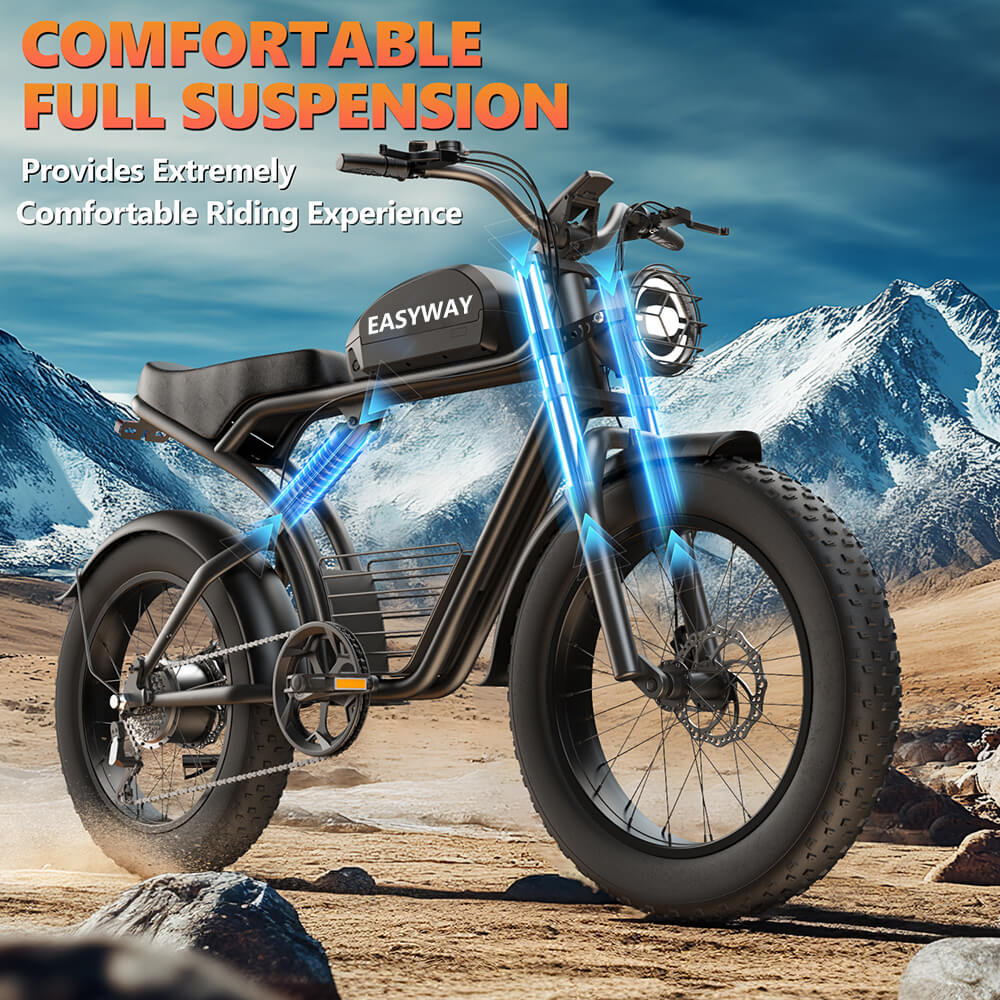
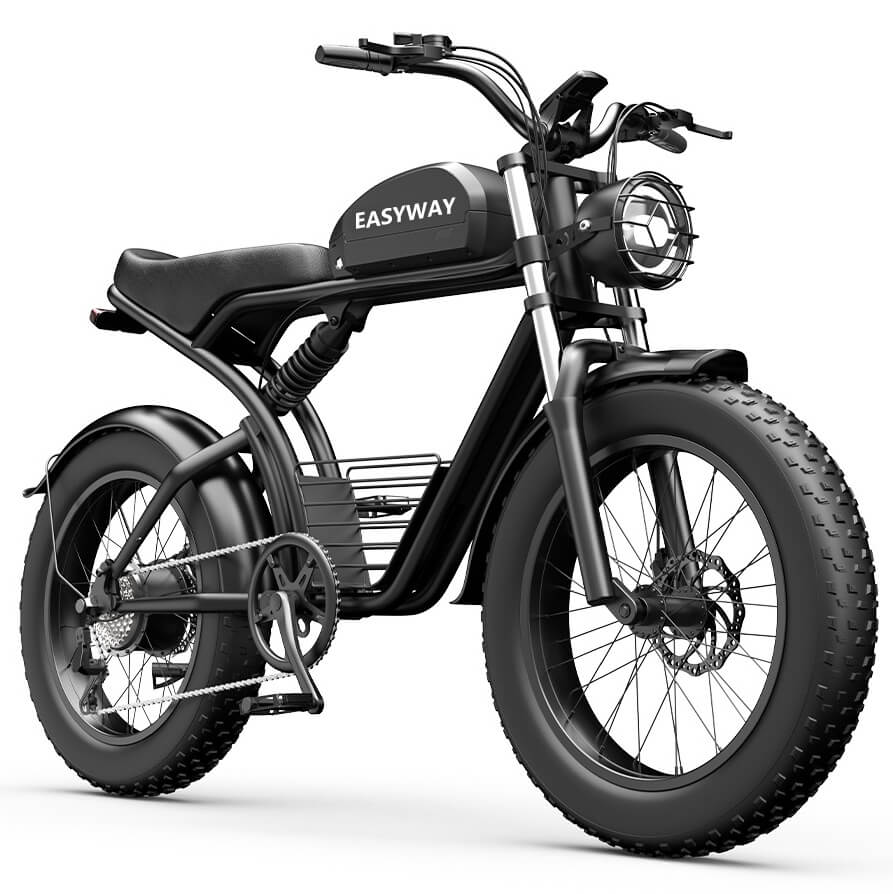
The Easyway F7 Fat Tire E-Bike combines a 48V 1500W high-speed brushless hub motor with a 48V 25A intelligent controller, 20×4.0-inch fat tires and full suspension. This combination is designed to provide a balance of propulsion, traction and control when riding beyond smooth city roads.
However, motor wattage should never be considered by itself. Actual performance depends on several factors, including rider weight, terrain, hill gradient, battery condition, controller output, tire pressure and riding mode.
In simple terms, 1500W can provide strong power for demanding riding, but the motor is only one part of a complete off-road electric bike system.
What Does 1500W Mean on an Electric Bike?
Motor wattage describes the electrical power rating associated with an electric motor. A 1500W configuration is designed for substantially stronger output than lower-power commuter configurations.
The F7 uses a:
- 48V 1500W high-speed brushless hub motor
- 48V 25A intelligent controller
- Pedal-assist mode
- Throttle mode
- Maximum speed specification of ≤50 km/h
The motor, controller and battery work together as an electrical system.
The motor converts electrical energy into mechanical power. The controller regulates how electrical power is delivered to the motor, while the battery supplies the energy required by the system.
This means a 1500W motor does not simply operate at 1500W under every riding condition. Actual power consumption varies according to acceleration, load, terrain, riding mode and other conditions.
For example, maintaining speed on flat pavement generally requires less power than accelerating up a steep hill or traveling across loose gravel.
For high-power e-bike projects, understanding the complete electrical system is therefore more useful than looking at motor wattage alone.
UL 2849 covers electrical systems for e-bikes and addresses components and system-level considerations including the drive unit, battery, battery management system, wiring and power-related components.
UL 2849 – Electrical Systems for eBikes | UL Standards & Engagement
Is 1500W Enough for Hill Climbing?
For riders who regularly encounter hills, motor power is an important consideration.
A 1500W configuration can provide a greater power reserve for climbing than lower-powered configurations. However, there is no single motor wattage that guarantees a specific climbing angle or speed.
Several factors affect hill-climbing performance.
Hill Gradient
The steeper the hill, the more force is required to move the combined weight of the rider and bicycle upward.
A moderate incline and a steep trail can therefore produce very different demands on the motor.
Total Load
The F7 has a stated maximum load of 150 kg.
A heavier rider or additional cargo increases the amount of energy required during acceleration and climbing.
Controller Output
The F7 uses a 48V 25A intelligent controller.
The controller influences how electrical current is delivered to the motor and therefore plays an important role in the overall power system.
Battery Condition
A battery’s voltage and available energy can affect how consistently the motor system performs, particularly under demanding loads.
Riding Surface
A paved hill, gravel hill and muddy trail can require different levels of motor effort because traction and rolling resistance change with the surface.
For this reason, buyers should evaluate the motor, controller, battery, tires and suspension as a complete system when selecting an off-road e-bike.
Why Does a 48V System Matter?
The F7 pairs its 1500W motor with a 48V electrical system.
This provides the electrical platform for the motor, controller and battery to work together.
A simplified way to understand an e-bike drivetrain is:
Battery → Controller → Motor → Wheel
The battery stores electrical energy.
The controller manages electrical delivery.
The motor converts electrical energy into mechanical movement.
The wheel transfers that movement to the riding surface.
For a high-power e-bike, these components need to be appropriately matched. A large motor paired with an unsuitable electrical system would not necessarily result in better real-world performance.
The F7 uses a 48V 23Ah lithium-ion battery pack based on 18650 cells, providing substantial energy capacity for a high-power fat tire configuration.
Why Are 20×4.0 Fat Tires Important for a 1500W E-Bike?
A powerful motor is only useful when the bicycle can effectively transfer that power to the ground.
The F7 uses 20×4.0-inch all-terrain fat tires.
The 4.0-inch width provides a substantially wider footprint than conventional narrow bicycle tires. This can help increase stability and traction when riding on loose or uneven surfaces.
Fat tires can be particularly useful for applications involving:
- Gravel
- Dirt
- Sand
- Snow
- Uneven roads
- Mixed urban and off-road terrain
However, fat tires should not be viewed as a guarantee of performance on every surface.
Actual traction depends on:
- Tire pressure
- Tread design
- Surface conditions
- Rider weight
- Riding speed
- Rider technique
For a high-power electric bike, this becomes especially important.
A strong motor can generate substantial torque, but if the tire cannot maintain sufficient contact with the surface, part of that potential power may not translate into useful forward movement.
This is why the F7 combines its 1500W motor with 20×4.0 fat tires.
How Does Full Suspension Help Off-Road Riding?
Off-road riding introduces impacts that are less common on smooth pavement.
Rocks, potholes, roots and uneven surfaces can cause repeated impacts through the wheels and frame.
The F7 uses a full suspension system, consisting of:
- Hydraulic front suspension
- Rear spring shock
The front suspension helps manage impacts through the front wheel and handlebar, while the rear shock helps absorb impacts transmitted through the rear of the bike.
Suspension does not increase motor power. Instead, it helps the bicycle manage the terrain that the motor is capable of taking it through.
This creates three different functions:
Motor: Provides propulsion.
Tires: Provide traction and contact with the terrain.
Suspension: Helps absorb impacts and maintain control.
This distinction is important when evaluating an off-road electric bike.
A high-power motor without suitable tires or suspension may not deliver the same practical riding experience as a complete system designed around off-road conditions.
Why Do Brakes Matter on a High-Power Electric Bike?
High-power riding is not only about acceleration.
Riders also need effective control when slowing down or descending.
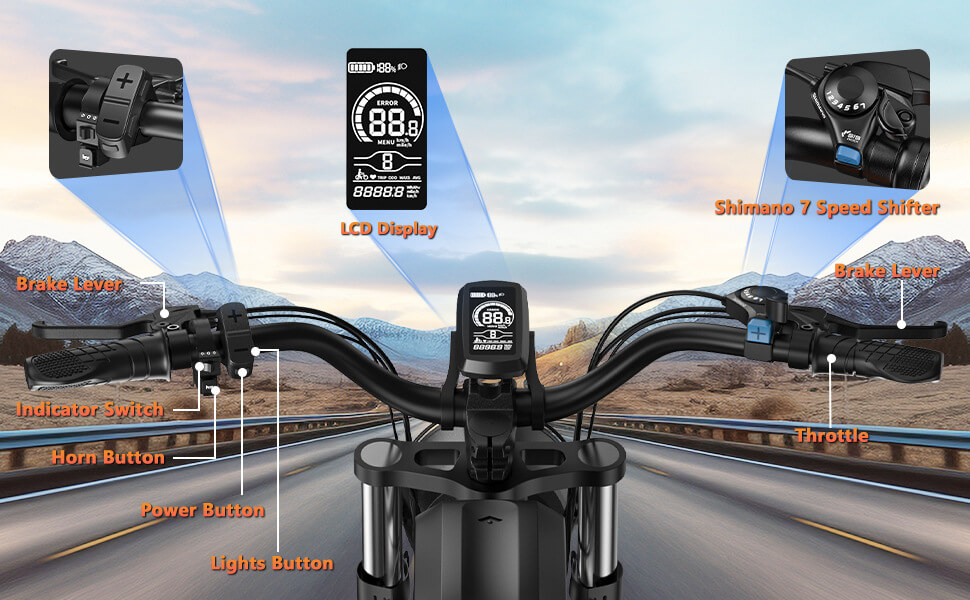
The F7 uses mechanical disc brakes, which provide a dedicated braking system at the wheels.
Braking requirements can increase when:
- Riding downhill
- Carrying a heavier load
- Traveling at higher speeds
- Riding on rough terrain
- Encountering changing surface conditions
The F7’s braking system therefore works together with its frame, tires and suspension to support overall control.
For B2B buyers, braking configuration should be evaluated according to the target market, intended speed, rider weight and local requirements rather than simply selecting the largest motor available.
How Do Pedal Assist and Throttle Modes Affect Riding?
The F7 supports both pedal-assist and throttle operation.
Pedal Assist
Pedal assist combines rider input with electric motor assistance.
This can be useful for riders who want to maintain an active riding style while receiving additional support on hills or longer routes.
Throttle
Throttle operation allows the rider to request motor assistance directly.
This can be convenient when additional acceleration or assistance is needed.
The appropriate mode depends on rider preference, terrain and local regulations.
For international B2B projects, buyers should verify whether throttle operation and the specified power/speed configuration are permitted in their target market.
What Should You Look for When Choosing a 1500W Off-Road E-Bike?
Motor power is important, but it should not be the only purchasing criterion.
A practical evaluation should include at least five areas.
1. Motor and Controller
Check:
- Motor power
- Voltage
- Motor type
- Controller current
- Riding modes
2. Battery
Consider:
- Voltage
- Ah capacity
- Cell type
- Battery management
- Charger specification
3. Tires
Look at:
- Width
- Diameter
- Tread
- Intended terrain
4. Suspension
Determine whether the bike uses:
- Front suspension
- Rear suspension
- Full suspension
5. Braking
Consider:
- Mechanical or hydraulic disc brakes
- Rotor specification
- Intended riding speed
- Rider and vehicle weight
- OEM/ODM
F7 1500W Fat Tire E-Bike: Complete Performance Configuration
The F7 brings the major components together into one high-power configuration.
Motor
48V 1500W high-speed brushless hub motor
Designed for riders looking for stronger motor output for hills and off-road applications.
Controller
48V 25A intelligent controller
Designed to work with the F7’s 48V electrical system.
Tires
20×4.0-inch all-terrain fat tires
Designed to provide stability and traction across a range of surfaces.
Suspension
Hydraulic front suspension + rear spring shock
Designed to improve impact management on uneven terrain.
Brakes
Mechanical disc brakes
Designed to provide controlled stopping performance.
Transmission
7-speed gear system
The gearing system allows riders to select different ratios according to terrain and riding conditions.
Safety and Market Requirements for a 1500W E-Bike
A high-power electric bike should always be evaluated according to the laws and technical requirements of its intended market.
Power and speed classifications vary between markets. A configuration that is suitable for an off-road recreational application may not automatically meet the legal definition of an electric bicycle for public-road use in another country.
For European-market projects, buyers should pay particular attention to the applicable requirements for electrically power-assisted cycles.
EN 15194 is the European standard covering electrically power-assisted cycles and specifies relevant requirements and test methods.
EN 15194:2017+A1:2023 – EPAC Bicycles | European Standard
For North American and other international projects, buyers should also verify the applicable electrical safety and product requirements for the final configuration.
UL Solutions explains that UL 2849 evaluates the electrical systems of e-bikes, including the interaction of the drive train, battery and charger.
UL Solutions – E-Bikes Certification & UL 2849
For this reason, the F7 specification “CE, UL 2849, EN15194 supported if required” should be understood as market/configuration dependent. Buyers should confirm the exact certification documentation and final product configuration required for their destination market before mass production.
Is a 1500W Fat Tire E-Bike Right for Everyone?
Not necessarily.
A 1500W e-bike is designed for users who prioritize stronger performance, but higher power is not automatically better for every application.
For example, a customer looking for a lightweight urban commuter may prefer a lower-power configuration.
By contrast, riders who frequently encounter:
- Hills
- Gravel
- Uneven roads
- Outdoor trails
- Long recreational routes
may have a stronger reason to consider a higher-power fat tire configuration.
The key is matching the specification to the application.
For international buyers, local regulations should also be considered before determining the final motor power and speed configuration.
Frequently Asked Questions
Is a 1500W electric bike good for off-road riding?
A 1500W configuration can provide strong motor output for off-road and recreational applications. Actual performance depends on terrain, rider weight, controller output, battery condition, tires and riding conditions.
Is 1500W enough for hills?
A 1500W motor can provide substantial power for hill riding, but climbing performance depends on gradient, total load, terrain, battery voltage, controller output and riding mode.
What tires does the F7 use?
The F7 uses 20×4.0-inch all-terrain fat tires, providing a wide tire footprint for stability and traction on various surfaces.
Does the F7 have full suspension?
Yes. The F7 uses a hydraulic front suspension and rear spring shock.
What is the maximum load of the F7?
The stated maximum load is 150 kg.
Does the F7 support throttle operation?
Yes. The F7 supports throttle and pedal-assist modes, subject to the applicable market configuration and local regulations.
What is the F7’s maximum speed?
The specified maximum speed is ≤50 km/h. The permitted operating speed depends on the regulations of the target market.
Conclusion
A high-performance electric bike is more than a powerful motor.
For off-road applications, motor output needs to work together with the battery, controller, tires, suspension, brakes and frame.
The Easyway F7 Fat Tire E-Bike combines a 48V 1500W brushless hub motor, 48V 25A intelligent controller, 20×4.0 fat tires, full suspension, mechanical disc brakes and a 7-speed transmission.
This configuration makes the F7 a potential solution for riders and B2B buyers looking for a high-power fat tire electric bike for hills, recreational off-road riding and mixed terrain.