
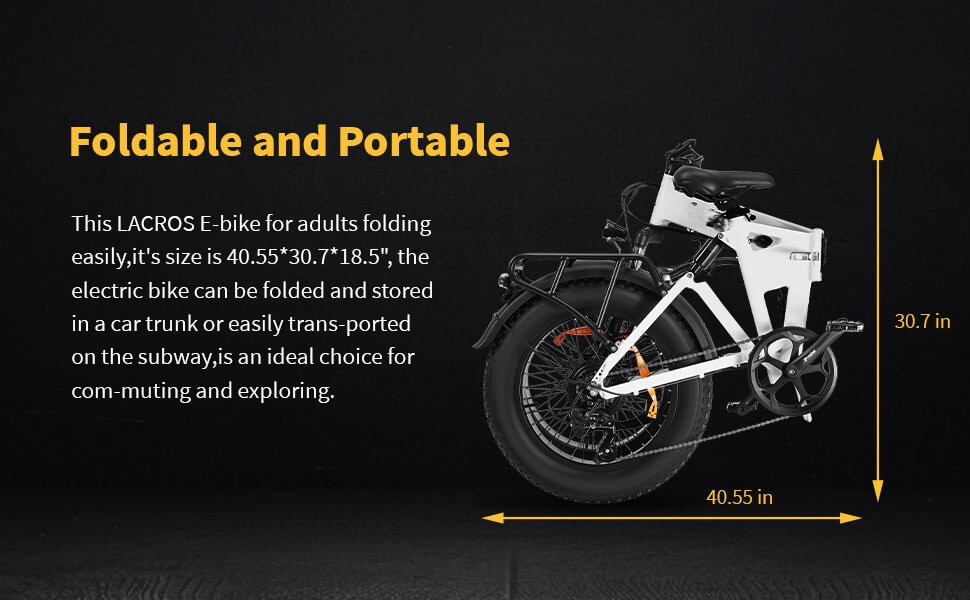
Why a Removable 48V Battery Makes the X38 Electric Bike More Practical

Why Is a Removable Battery Important for an Electric Bike?
Buying an electric bike is not only about choosing a motor and battery capacity.
How the battery is used every day can be equally important.
A built-in battery may require the entire bicycle to be positioned near a suitable power outlet when charging.
That can be inconvenient for people who live in:
- Apartments
- Condominiums
- Office buildings
- Shared housing
- Small homes
- Buildings without bicycle charging areas
A removable battery provides another option.
Instead of moving the entire electric bike, riders can remove the battery and take it to an appropriate charging location.
This is one of the key practical advantages of the X38.
The bike uses a removable 48V 12.8Ah lithium battery, allowing the battery to be separated from the bicycle for charging.
For riders who use their e-bike every day, this small design decision can make ownership much easier.
How Does a Removable E-Bike Battery Work?
A removable battery is designed to connect securely to the electric bike while riding and can be detached when charging or transporting the battery.
The basic process is simple:
Ride → Stop → Remove Battery → Carry Battery Indoors → Charge → Reinstall
This can eliminate the need to find a parking location directly beside a wall outlet.
For example, an office commuter may park the X38 in a designated bicycle area and bring the battery inside.
An apartment resident may store the bicycle downstairs while carrying the battery upstairs.
This creates a separation between:
Bike Storage
and
Battery Charging
That flexibility can be particularly valuable in urban environments.
What Does 48V 12.8Ah Mean?
When looking at an electric bike battery, two specifications are particularly important:
Voltage (V)
and
Amp-hours (Ah)
The X38 uses a:
48V 12.8Ah battery
Voltage indicates the electrical potential of the battery system.
Amp-hours describe the battery’s rated charge capacity.
A simple way to understand the nominal energy capacity is:
48V × 12.8Ah ≈ 614Wh
This is the battery’s approximate nominal energy figure.
However, this number should not be interpreted as a guaranteed riding range.
Real-world range depends on many variables, including:
- Rider weight
- Riding speed
- Terrain
- Wind
- Tire pressure
- Temperature
- Riding mode
- Frequency of acceleration
- Hill climbing
- Battery condition
Therefore, two riders using the same X38 can achieve different distances from a single charge.
Is 48V 12.8Ah Enough for an Electric Bike?
For many daily commuting and recreational applications, a 48V 12.8Ah configuration provides a practical balance between battery capacity, motor performance, and overall bike design.
The X38 is designed around a 48V electrical system and uses a 500W motor with 1000W peak output.
The battery therefore needs to provide sufficient energy for the motor system while remaining practical enough to remove and carry.
The X38’s stated riding range is approximately:
30–50 miles / 50–80 km
under varying riding conditions.
This should be considered an estimated range rather than a guaranteed distance.
For riders who travel primarily on flat roads using moderate pedal assistance, energy consumption can be lower.
For riders who frequently climb hills, ride at higher speeds, or use pure electric mode, energy consumption can be higher.
Why Samsung Cells Matter in a Lithium Battery
The X38 battery is specified with Samsung cells.
Battery cells are the fundamental energy-storage units inside a lithium-ion battery pack.
The quality and consistency of the cells can influence the overall design and performance of the battery system.
However, a battery should never be evaluated based on cell brand alone.
A complete battery system also depends on:
- Cell configuration
- Battery management system
- Protection circuitry
- Wiring
- Connectors
- Charger compatibility
- Mechanical protection
- Manufacturing quality
- Quality control
In other words:
Good cells + proper battery design + appropriate BMS + correct charger
are all important parts of a reliable battery system.
For a B2B buyer, this distinction is especially important because battery quality is not determined by a single component.
What Is a Battery Management System?
The X38 uses an intelligent BMS, or Battery Management System.
A BMS is an important electronic system used to monitor and manage a rechargeable battery pack.
Depending on the specific design, a BMS can monitor parameters such as:
- Voltage
- Current
- Temperature
- Charging conditions
- Discharging conditions
- Cell or pack protection conditions
The purpose is to help keep the battery operating within its designed electrical parameters.
This is particularly important for lithium-ion batteries because battery management is an essential part of the overall system design.
UL Solutions explains that battery packs for light electric vehicles are evaluated under UL 2271, while e-bike electrical systems are covered by UL 2849. It also emphasizes the importance of compatible, certified charging equipment.
For customers purchasing electric bikes for distribution, certification and system-level safety should therefore be considered alongside battery capacity and cell brand.
Why Battery Safety Is About the Whole System
It is tempting to think:
Samsung cells = safe battery
But this is too simple.
A battery pack is a complete electrical and mechanical system.
Safety can depend on:
Cells
BMS
Battery enclosure
Wiring
Connectors
Charger
Charging procedures
Manufacturing quality
This is why professional buyers should evaluate the complete battery system rather than only asking which cells are used.
For an e-bike manufacturer, battery design and quality control are particularly important because the battery is one of the most critical electrical components of the vehicle.
Why the Charger Matters
A compatible charger is an essential part of the battery system.
The X38 battery should be charged using the charger specified for the product.
The U.S. Consumer Product Safety Commission specifically advises users of e-bikes and other micromobility products to use the supplied charger and approved replacement batteries. It also warns consumers not to use incompatible “universal” chargers.
CPSC recommends being present while charging micromobility products, following the manufacturer’s charging instructions, and using approved replacement batteries.
This is a useful reminder for both consumers and distributors:
Battery compatibility matters.
A charger that physically fits a connector is not necessarily the correct charger electrically.
How Long Does the X38 Battery Take to Charge?
The X38 battery is listed with a charging time of approximately:
6–8 hours
Actual charging time can vary depending on:
- Remaining battery level
- Charger output
- Battery temperature
- Battery condition
- Charging environment
A battery that is nearly empty will naturally require more time than a battery that still has substantial charge remaining.
For daily riders, overnight charging can therefore be a practical routine, provided that charging is performed according to the manufacturer’s instructions.
Why Removable Batteries Are Useful for Apartment Living
Apartment living is one of the strongest use cases for a removable electric bike battery.
Imagine a commuter living on the fourth floor of an apartment building.
Moving a full-size electric bike upstairs every night may be inconvenient.
With a removable battery, the rider can:
Park the bike → Remove battery → Carry battery upstairs
The bike can remain in a suitable secure bicycle storage area while the battery is charged separately.
This can also help riders who do not have access to a dedicated e-bike charging station.
The same concept applies to office environments.
A rider can park the bicycle outside or in a bicycle room and bring the battery into the office for charging, where permitted.
Removable Battery vs Built-In Battery
Which is better?
It depends on the user’s priorities.
| Feature | Removable Battery | Built-In Battery |
|---|---|---|
| Indoor Charging | Convenient | Requires bike near outlet |
| Apartment Use | Very practical | Potentially less convenient |
| Battery Carrying | Possible | Usually not |
| Bike Appearance | Depends on design | Often cleaner |
| Battery Access | Easy | More integrated |
| Maintenance Access | Convenient | Can be more complex |
| Travel Flexibility | Higher | Depends on design |
For users who prioritize convenience and flexible charging, a removable battery can be a significant advantage.
Battery Safety: What Should Riders Know?
Lithium-ion batteries are widely used in portable electronics, electric vehicles, and micromobility products.
However, like other energy-dense battery systems, they need to be used correctly.
The CPSC has issued multiple safety warnings involving defective or improperly configured e-bike batteries.
This does not mean lithium-ion batteries are inherently unsafe.
Instead, it highlights the importance of:
- Proper battery design
- Certified products
- Correct chargers
- Approved replacement batteries
- Manufacturer instructions
- Proper storage
- Appropriate charging practices
CPSC’s micromobility battery charging guidance specifically recommends using products designed and certified to applicable safety standards and avoiding modified or reworked battery packs.
What Is BMS Protection?
An intelligent BMS can help monitor the battery system and provide protection functions according to its design.
These may include protections related to:
- Overcharge
- Over-discharge
- Over-current
- Short circuit
- Temperature
- Abnormal operating conditions
The exact protection functions depend on the battery and BMS architecture.
This is why manufacturers should provide clear battery specifications and safety documentation to B2B customers.
For distributors and retailers, having accurate battery documentation can also make it easier to answer customer questions about:
- Charging
- Storage
- Replacement batteries
- Transportation
- Warranty
- Maintenance
How Battery Capacity Affects Riding Range
A battery’s capacity is one of the major factors influencing range, but it is not the only factor.
The X38’s approximate 614Wh nominal battery energy provides a useful reference point.
However, real-world range can change significantly.
Flat Road
Energy consumption can be relatively moderate when riding on smooth, flat roads.
Hilly Terrain
Frequent climbing requires more energy.
High Speed
Higher speeds generally increase energy consumption.
Pure Electric Mode
Using the motor without continuous pedaling can consume more energy than lower-assistance pedal riding.
Heavy Rider or Cargo
Higher total weight can increase the energy required to accelerate and climb.
Therefore, manufacturers should present range figures as test or estimated values rather than promising one fixed number for every rider.
Four Riding Modes Help Manage Battery Usage
The X38 offers four riding modes:
Classic Bike Mode
Traditional cycling without electric propulsion.
Pedal Assist Mode
The rider pedals while the motor provides assistance.
This can be useful for longer rides and commuting.
Pure Electric Mode
Electric propulsion without continuous pedaling, where permitted under local regulations.
Walking Assist Mode
Low-speed assistance when walking with the bike.
Different riding modes give riders more control over how much electrical assistance they use.
For someone trying to maximize range, pedal assist can be used strategically.
For a short trip where convenience matters more than battery consumption, riders may choose greater electric assistance.
Why a Removable Battery Is Valuable for B2B Buyers
Battery design is also an important consideration for distributors and wholesalers.
A removable battery can provide additional product selling points:
Easier Customer Charging
Customers do not need to move the entire bicycle to the charging area.
Easier Battery Replacement
Depending on the manufacturer’s support system, removable batteries can simplify replacement procedures.
Better Apartment Compatibility
The product can appeal to customers living in buildings without dedicated bicycle charging facilities.
Easier After-Sales Service
A removable battery architecture can potentially simplify inspection and replacement.
More Flexible Product Positioning
The same e-bike can be marketed toward commuters, recreational riders, urban users, and customers with limited storage space.
Why Battery Certification Matters in Different Markets
Battery and e-bike regulations can vary by country and city.
For example, certain jurisdictions have introduced requirements around certification of batteries and micromobility devices.
UL Solutions notes that UL 2271 is the standard for batteries used in light electric vehicle applications, while UL 2849 addresses the electrical systems of e-bikes.
This distinction is important.
A buyer should not simply ask:
“Does the battery have UL?”
A better question is:
“Which component has been evaluated, to which standard, and for which market?”
This level of detail can be particularly important for B2B buyers preparing products for North American distribution.
How Should an E-Bike Battery Be Stored?
When the bicycle is not being used for an extended period, riders should follow the manufacturer’s battery storage instructions.
General considerations include:
- Keep the battery in a suitable dry environment.
- Avoid extreme heat.
- Avoid visible battery damage.
- Do not use damaged batteries.
- Keep the battery away from sources of excessive heat.
- Follow the manufacturer’s recommended storage charge level.
- Inspect the battery before use.
If a lithium-ion battery shows signs of swelling, physical damage, overheating, unusual odor, or other abnormal behavior, users should stop using it and contact the manufacturer or an appropriate qualified service provider.
X38 Battery Configuration at a Glance
| Battery Feature | X38 Configuration |
|---|---|
| Battery Type | Lithium-ion |
| Voltage | 48V |
| Capacity | 12.8Ah |
| Approx. Nominal Energy | 614Wh |
| Cell Brand | Samsung |
| Battery Type | Removable |
| BMS | Intelligent BMS |
| Charging Time | Approx. 6–8 hours |
| Stated Range | Approx. 30–50 miles / 50–80 km |
| Motor | 500W |
| Peak Motor Output | 1000W |
| Riding Modes | 4 |
Who Benefits Most from a Removable Battery?
The X38’s removable battery design can be particularly useful for:
Apartment Commuters
Take the battery upstairs while leaving the bicycle in a secure storage area.
Office Riders
Bring the battery into the workplace for charging where permitted.
Recreational Riders
Remove the battery during transportation or storage.
RV and Travel Users
A removable battery can provide additional flexibility when transporting or storing the bike.
B2B Rental and Mobility Businesses
A removable battery architecture can make battery inspection, replacement, and charging logistics more flexible depending on the business model.
Frequently Asked Questions
Is a removable e-bike battery better?
A removable battery can be more convenient for users who need to charge indoors, live in apartments, or cannot easily move the entire bicycle to a charging location.
How much energy does a 48V 12.8Ah battery hold?
Its nominal energy is approximately 614Wh, calculated by multiplying 48V by 12.8Ah. Actual usable energy and riding range depend on system design and riding conditions.
How far can X38 travel on one charge?
The stated range is approximately 30–50 miles (50–80 km), but actual range varies according to speed, terrain, rider weight, riding mode, weather, tire pressure, and other conditions.
Does X38 use Samsung battery cells?
Yes. The X38 is specified with a 48V 12.8Ah removable battery using Samsung cells.
What is BMS?
BMS stands for Battery Management System. It is an electronic system used to monitor and manage battery operating conditions and provide protection functions according to its design.
Can I use another charger?
Use only the charger specified or approved for the X38 battery system. CPSC advises against using incompatible “universal” chargers with micromobility products.
Can the X38 battery be customized for different markets?
Battery specifications, connectors, chargers, and other configurations can be discussed as part of an OEM/ODM project, subject to product engineering and target-market requirements.
Conclusion: A Better Battery Is About More Than Capacity
When evaluating an electric bike battery, capacity is only one part of the equation.
The X38 combines:
48V
12.8Ah
Samsung Cells
Intelligent BMS
Removable Battery
6–8 Hour Charging
into a battery system designed around everyday usability.
The removable design makes charging more flexible.
The 48V 12.8Ah configuration provides a practical energy platform for daily riding.
Samsung cells provide a recognizable cell platform.
The intelligent BMS supports battery monitoring and protection functions.
And the complete system is designed to work with the X38’s 500W motor and four riding modes.
For consumers, this means easier charging and more flexible ownership.
For distributors and mobility brands, it creates a product with several practical selling points that can be communicated clearly to different customer groups.
Explore X38 for Your Market
Looking for a fat tire electric bike with a removable 48V battery for your market?
Easyway provides electric bike manufacturing, wholesale, OEM, and ODM solutions for distributors, retailers, rental companies, and mobility brands.
Contact Easyway to discuss X38 wholesale, OEM, battery configuration, and OEM/ODM opportunities.