
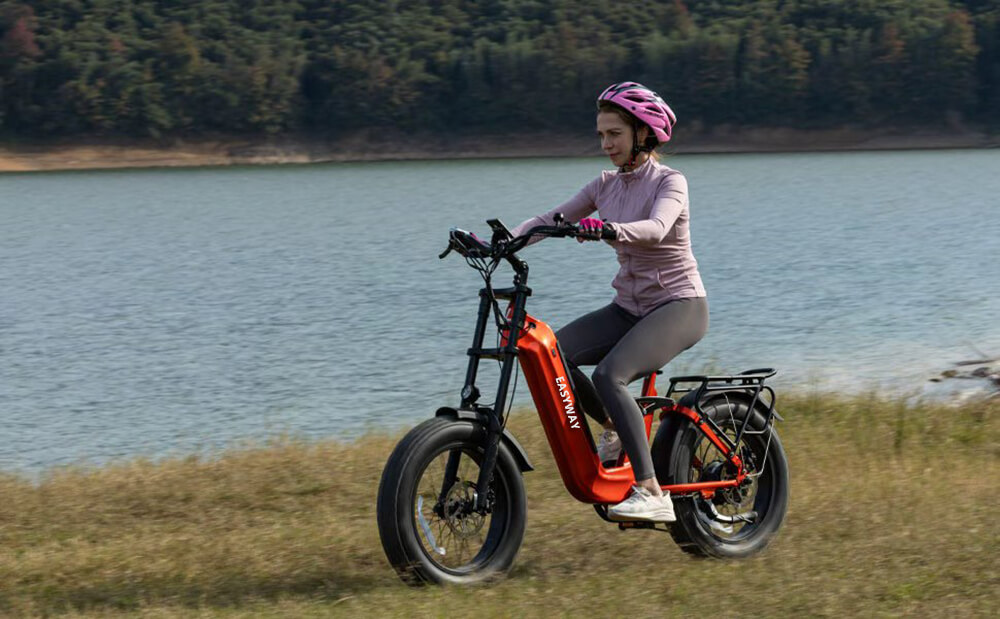
S39 City E-Bike: How Hydraulic Brakes, 7-Speed Gears and Smart Controls Improve Urban Riding

When people compare electric bikes, motor power and battery capacity often receive most of the attention.
However, an electric bike is more than its motor and battery.
For everyday urban riding, the ability to control speed, manage different road conditions, shift efficiently, monitor riding information, and stop confidently can be just as important as acceleration and range.
This becomes particularly relevant for performance-oriented electric bikes.
The S39 City E-Bike combines a powerful electric drive system with several components designed to improve rider control, including front and rear hydraulic disc brakes with 180mm rotors, a Shimano 7-speed drivetrain, and a smart LCD display.
Together, these components create a more complete riding system for commuters, recreational riders, and customers looking for a versatile urban electric bike.
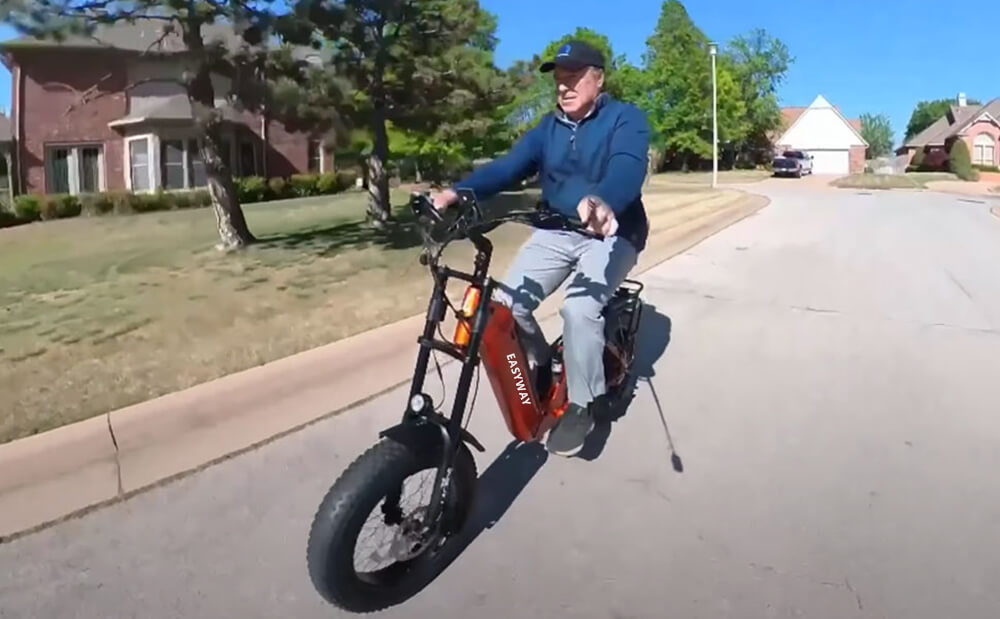
Why Does Rider Control Matter on an Electric Bike?
An electric bike can accelerate more easily than a conventional bicycle because the motor provides additional assistance.
That means riders also need effective ways to manage speed and respond to changing road conditions.
Urban environments can be unpredictable.
A rider may encounter:
- Traffic intersections
- Pedestrians
- Parked vehicles
- Bicycle lanes
- Downhill sections
- Sudden obstacles
- Wet pavement
- Uneven roads
- Stop-and-go traffic
A well-designed electric bike therefore needs more than a powerful motor.
It needs a braking system, drivetrain, controls, and display that allow the rider to understand and manage the bicycle.
The S39 approaches this through a combination of hydraulic disc brakes, Shimano 7-speed gearing, pedal-assist controls, and a smart LCD display.
This combination gives the bicycle a more complete control-oriented configuration.
Hydraulic Disc Brakes: Why Do They Matter?
One of the most important control components on the S39 is its braking system.
The bike uses front and rear hydraulic disc brakes with 180mm rotors.
Hydraulic disc brakes use hydraulic fluid to transfer force from the brake lever to the brake caliper.
When the rider pulls the brake lever, pressure is transmitted through the hydraulic system, causing the caliper to press the brake pads against the rotor.
This system differs from traditional mechanical cable-operated disc brakes.
For an electric bike designed for higher-performance urban riding, hydraulic braking can provide a responsive braking feel and consistent control when properly adjusted and maintained.
However, braking performance is influenced by many factors, including rider weight, speed, road surface, tire condition, brake pad condition, and weather.
The braking system should therefore be considered as part of the complete bicycle rather than as an isolated specification.
What Does a 180mm Brake Rotor Do?
Rotor size is another important part of the S39 braking configuration.
The bike uses 180mm front and rear disc rotors.
A larger rotor can provide greater mechanical leverage at the wheel, helping the braking system manage heat and braking forces effectively when compared with a smaller rotor under otherwise similar conditions.
For an urban electric bike, this can be useful when riders need to slow down repeatedly during commuting.
For example, a rider may need to brake at:
- Traffic lights
- Intersections
- Pedestrian crossings
- Downhill sections
- Busy bike lanes
- Parking areas
Frequent braking makes thermal management and consistent brake performance important considerations.
This is one reason why brake specifications should be evaluated alongside motor output and overall vehicle weight.
Why Are Hydraulic Brakes Useful for Urban E-Bikes?
Urban riding involves constant changes in speed.
A commuter might accelerate after a traffic light, maintain a steady speed, then slow down again within a few hundred meters.
This repeated acceleration and braking places greater demands on the bicycle’s control system than a simple recreational ride on a quiet road.
The S39’s hydraulic disc brakes are designed to provide a direct braking interface between the rider and the braking system.
A responsive brake lever can help the rider modulate braking force according to the situation.
However, no brake system can eliminate stopping distance.
Stopping distance depends on speed, rider reaction time, road surface, tire grip, slope, weather, and braking technique.
The U.S. Consumer Product Safety Commission recommends that riders follow safe riding practices and inspect key components of micromobility products before use.
CPSC Micromobility Safety Center
For riders and B2B buyers, the takeaway is simple: a high-performance electric bike should be evaluated as a complete system that combines propulsion, braking, tires, frame, and rider controls.
Shimano 7-Speed Gears: Why Does an E-Bike Need Multiple Gears?
Electric assistance does not make traditional bicycle gearing irrelevant.
In fact, a multi-speed drivetrain can make an electric bike more adaptable to changing terrain.
The S39 uses a Shimano 7-speed rear derailleur system.
The purpose of multiple gears is to allow the rider to select an appropriate gear ratio for different riding conditions.
Lower gears can make pedaling easier when climbing.
Higher gears can allow the rider to maintain efficient pedaling at higher speeds or on flatter roads.
This means the rider does not have to depend entirely on the electric motor.
Instead, the motor and drivetrain can work together.
How Does a 7-Speed System Improve Hill Riding?
Consider an urban route with a long incline.
The rider can shift into a lower gear to maintain a comfortable pedaling cadence.
The electric motor can then provide additional assistance.
This creates a combined system:
Human Pedaling + Electric Assistance + Appropriate Gear Ratio
Instead of treating the motor as the only source of propulsion, the rider can use the drivetrain to optimize how they interact with the terrain.
This can make the bicycle feel more natural and controllable.
On flatter roads, the rider can shift into a higher gear.
When approaching an incline, the rider can shift down.
This flexibility is especially useful for cities where terrain changes throughout a commute.
Why Is Pedal Assist Better With Multiple Gears?
Pedal-assist systems work by adding electric assistance when the rider pedals.
The S39 uses a 25A intelligent controller with PAS, allowing the motor assistance system and rider input to work together.
With multiple gears, the rider can adjust mechanical resistance while the electric system provides additional assistance.
For example:
Flat Road: Higher gear + moderate assistance
Mild Incline: Medium gear + moderate assistance
Steeper Incline: Lower gear + higher assistance
This gives riders greater control over how much effort comes from the rider and how much comes from the motor.
It can also make the riding experience more adaptable.
Smart LCD Display: Why Is Riding Information Important?
Another control-oriented component of the S39 is its smart LCD display.
An electric bike display provides riders with information about the bicycle while they are riding.
Depending on the configuration, information may include:
- Speed
- Battery status
- Pedal-assist level
- Distance
- Riding information
- System status
The purpose of a display is not simply to make the bike look more advanced.
It helps riders understand what the electric system is doing.
For example, a rider who notices that battery consumption is increasing can adjust the pedal-assist level or riding behavior.
Similarly, seeing the current speed can help riders maintain a more appropriate pace.
For daily commuting, this information can make the riding experience easier to manage.
How Does the LCD Display Work With Pedal Assist?
The S39’s intelligent control system allows the rider to interact with the electric assistance system.
Rather than simply turning the motor on or off, pedal-assist riding allows the rider to choose how much electric assistance is appropriate for the current situation.
This creates a more flexible riding experience.
For example, a rider may use a lower assistance setting during a flat section of a commute.
When the road becomes steeper, the rider can increase assistance.
The LCD display provides an interface for understanding and adjusting this relationship.
This makes the display part of the bicycle’s control system rather than simply an information screen.
Why Is Human and Electric Power Better Together?
One of the advantages of an electric bicycle is that the motor does not have to replace human effort.
Instead, it can supplement it.
The S39 combines:
Pedaling
Shimano 7-Speed Gearing
Pedal Assistance
Rear Hub Motor
This gives riders several ways to manage effort.
A rider who wants more exercise can pedal more actively and use lower motor assistance.
A rider who wants to reduce physical effort can increase assistance.
A rider climbing a hill can combine a lower gear with higher assistance.
This flexibility is one of the reasons electric bicycles can serve such a wide range of users.
How Do Hydraulic Brakes and Gearing Work Together?
Braking and gearing may appear to be separate systems, but they both contribute to speed management.
Consider a downhill section.
The rider can shift into an appropriate gear and control speed using the hydraulic brakes.
When approaching an intersection, the rider can reduce speed using the brakes.
After the intersection, the rider can shift to a more appropriate gear and accelerate again using electric assistance.
This creates a continuous cycle:
Accelerate → Maintain → Shift → Brake → Stop → Accelerate
The better these systems work together, the more predictable the riding experience can become.
For an urban e-bike, this type of control is often more relevant to everyday usability than simply increasing maximum motor power.
What Should Riders Check Before Using Hydraulic Brakes?
Hydraulic braking systems require regular inspection and maintenance.
Riders should pay attention to:
- Brake lever feel
- Brake pad wear
- Rotor condition
- Unusual noises
- Hydraulic fluid leakage
- Changes in braking performance
If braking performance changes significantly, the bicycle should be inspected before continued use.
CPSC safety guidance also emphasizes checking the bicycle before riding and following manufacturer recommendations.
For commercial users, distributors can also provide customers with basic maintenance recommendations as part of their after-sales service.
Why Is UL 2849 Relevant to an Electric Bike?
While hydraulic brakes and Shimano gearing are mechanical components, an electric bicycle also contains an electrical system.
The S39 combines its motor, battery, controller, charger, and display into an integrated electrical platform.
For B2B buyers, understanding electrical safety standards is important when evaluating an electric bike.
UL Solutions describes UL 2849 as a standard addressing electrical systems for e-bikes, including combinations of the electrical drive train, battery system, and charger system.
The S39 supports CE, UL 2849, and EN15194 certification requirements where required, allowing distributors and OEM customers to consider market-specific compliance needs.
It is important to distinguish electrical certification from mechanical performance.
UL 2849 concerns the electrical system; it does not mean that every mechanical component of the bicycle has been evaluated under the same standard.
This distinction helps B2B buyers create more accurate product information for their target markets.
What Makes the S39 Suitable for Urban Riding?
Urban transportation requires versatility.
A commuter may travel on a flat road in the morning, climb a hill later in the day, stop frequently at intersections, and encounter changing traffic conditions.
The S39 is designed around this type of mixed urban environment.
Its control-focused configuration includes:
Hydraulic Disc Brakes
For responsive speed control.
180mm Rotors
For the front and rear braking system.
Shimano 7-Speed
For adapting pedaling effort to different terrain.
Smart LCD Display
For monitoring riding information.
PAS System
For adjustable electric assistance.
Together, these features give the rider more control over the bicycle’s behavior.
Why Does Control Matter for B2B Electric Bike Buyers?
For distributors and wholesalers, a product’s selling points need to translate into clear customer benefits.
Instead of simply listing:
“Hydraulic Brakes”
a retailer can explain:
Better braking control for everyday urban riding.
Instead of simply listing:
“7-Speed Shimano”
the product can be positioned as:
Flexible gearing for flat roads and hills.
Instead of simply listing:
“Smart LCD”
the retailer can communicate:
Clear riding information at a glance.
This makes technical specifications easier for consumers to understand.
For OEM and private-label brands, these components can also contribute to a more premium product positioning.
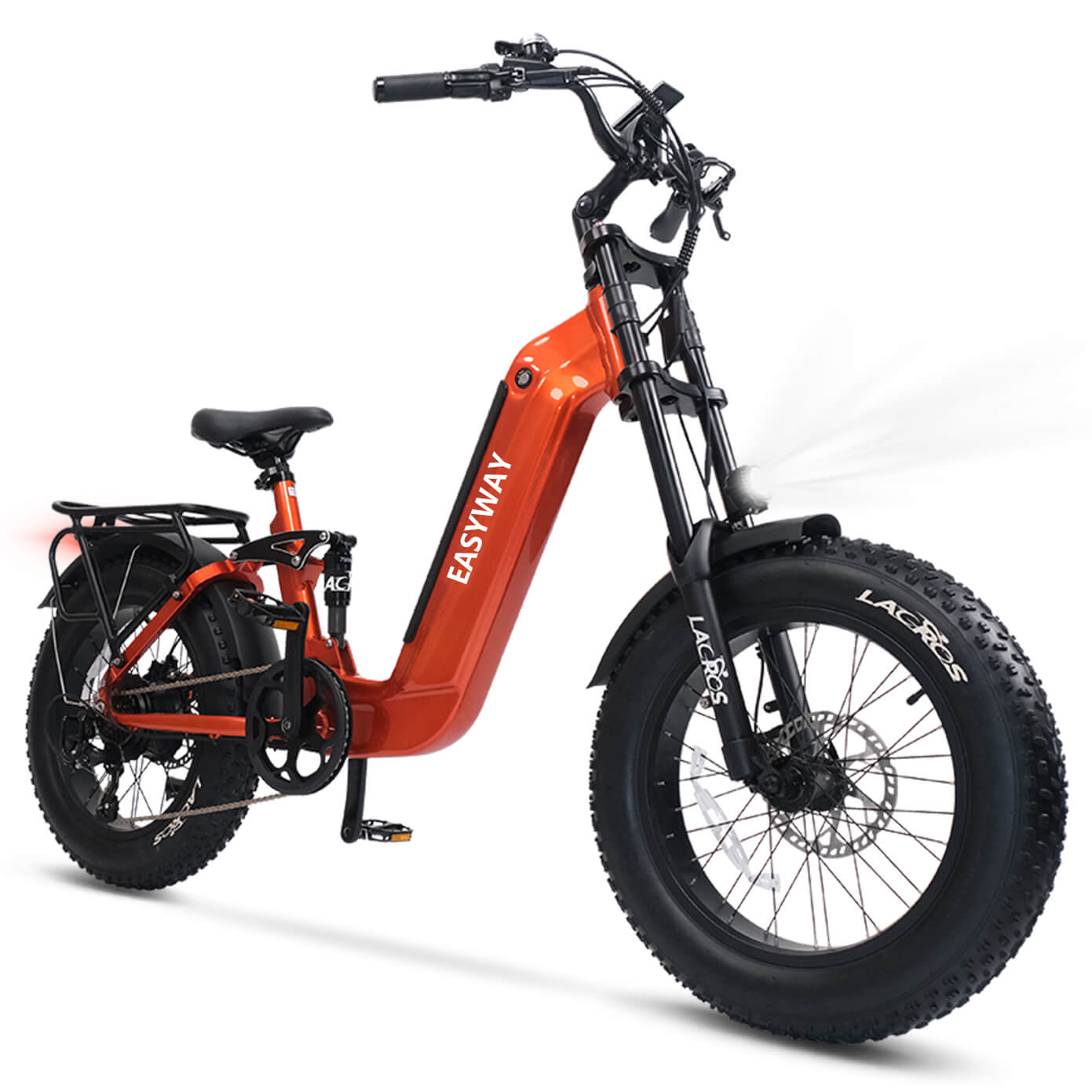
S39 Control and Drivetrain Configuration
The S39 combines several components designed to support controlled urban riding:
Motor: 48V 750W Brushless Rear Hub Motor
Peak Power: 1400W
Controller: 25A Intelligent Controller with PAS
Display: Smart LCD Display
Transmission: Shimano 7-Speed Rear Derailleur
Brakes: Front & Rear Hydraulic Disc Brakes
Rotor Size: 180mm F/R
Tires: 20×4.0 Fat Tires
Frame: 6061 Aluminum Alloy
Load Capacity: 150 kg
This configuration creates a balanced platform where propulsion, gearing, braking, and rider information work together.
Final Thoughts: A Good E-Bike Is More Than Motor Power
Motor power may attract attention, but control determines how riders interact with that power.
The S39 combines a performance-oriented electric drive system with hydraulic disc brakes, 180mm rotors, Shimano 7-speed gearing, pedal assist, and a smart LCD display.
These components serve different purposes, but together they create a more complete riding experience.
The hydraulic brakes help manage speed.
The Shimano drivetrain gives riders more control over pedaling effort.
The LCD display provides useful riding information.
The PAS system allows riders to adjust electric assistance.
This combination makes the S39 more than a high-powered electric bicycle.
It is a complete urban riding platform designed around power, control, flexibility, and everyday usability.
Looking for a Performance-Oriented Urban E-Bike?
For wholesalers, distributors, retailers, and OEM brands looking for an electric bike with a strong control-focused specification, the S39 offers a distinctive combination of hydraulic braking, Shimano 7-speed gearing, smart LCD controls, and powerful electric assistance.
Contact Easyway to discuss S39 wholesale pricing, OEM customization, private-label opportunities, and market-specific electric bike solutions.