
Electric Bike Safety and Certification: What Buyers Need to Know

Meta Description: Learn what buyers should know about electric bike safety and certification, including UL 2849, EN 15194, CE compliance, battery safety, chargers, brakes, IP ratings and manufacturer documentation.
Why Electric Bike Safety and Certification Matter
Electric bikes are becoming increasingly popular for commuting, recreation, outdoor riding and personal mobility. As e-bike adoption grows, product safety and regulatory compliance have also become important considerations for consumers, distributors, importers and retailers.
When evaluating an electric bike, looking only at motor power, battery capacity or riding range is not enough. A reliable e-bike should also have a properly designed electrical system, suitable battery and charger, effective braking components, a structurally appropriate frame and documentation that supports compliance with the requirements of its target market.
For buyers, the key question is not simply:
“Is this electric bike powerful?”
It is:
“Is the complete electric bike system designed, tested and configured appropriately for its intended market and use?”
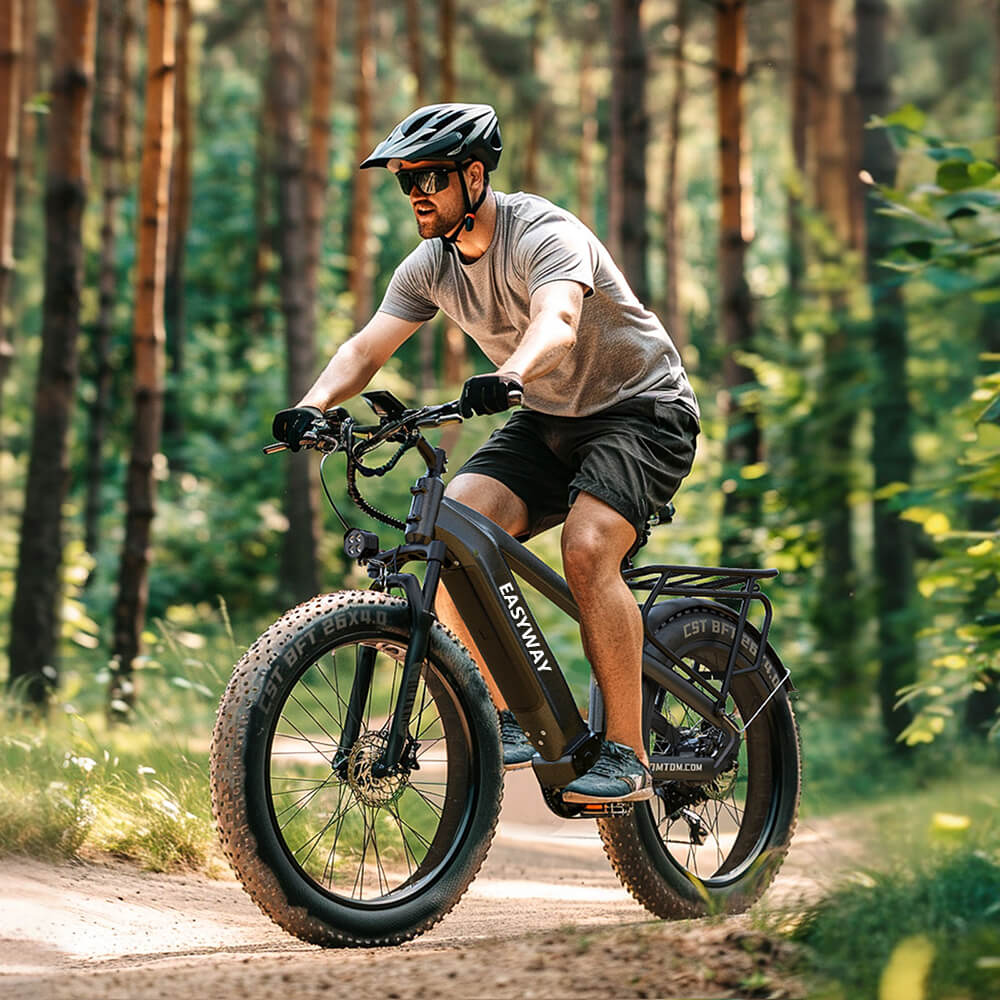
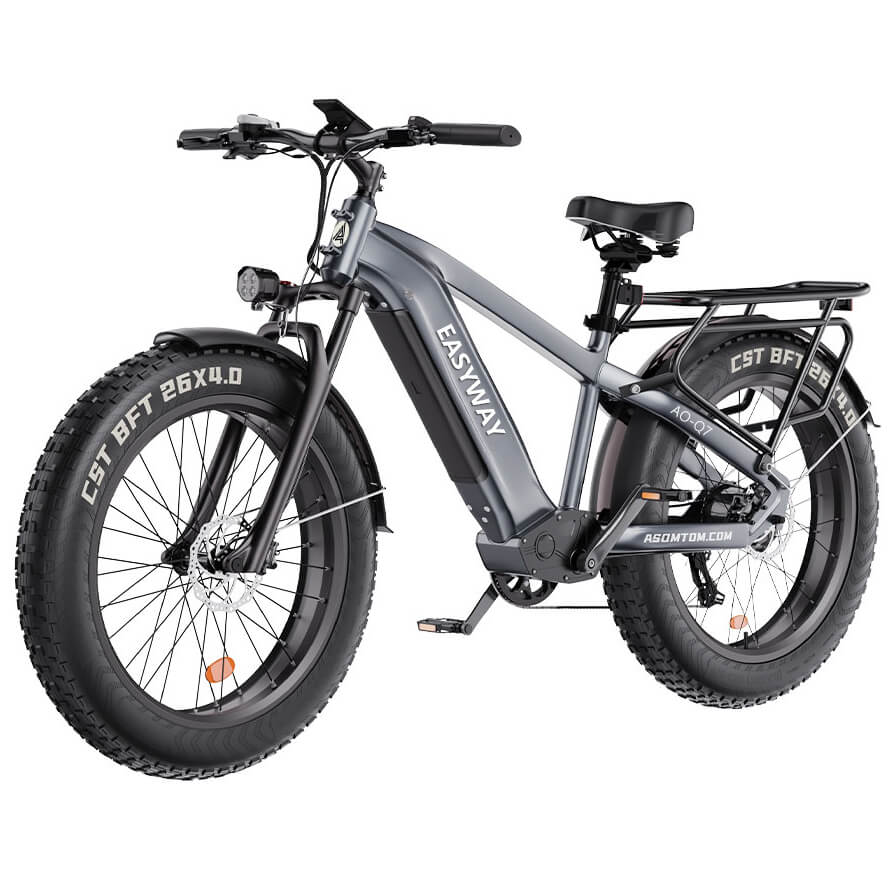
The Q7 all-terrain electric bike provides a useful example of how these factors can be considered together. It features a 48V 750W BAFANG brushless hub motor, 48V 15.6Ah lithium battery, 48V 25A intelligent controller, front and rear hydraulic disc brakes, waterproof wiring harness and IPX5 water-resistance rating. CE, UL 2849 and EN15194 support are available according to the required market configuration.
For international buyers, however, certification should always be verified for the specific product configuration and destination market rather than assumed from a general product description.
1. What Are the Main Safety Risks of an Electric Bike?
Electric bike safety involves much more than the mechanical components that riders can see.
The major areas that buyers should consider include:
- Lithium-ion battery safety
- Charger compatibility
- Electrical wiring
- Motor and controller integration
- Braking performance
- Frame and fork strength
- Tire and wheel condition
- Water and environmental exposure
- Proper use and maintenance
- Compliance with applicable standards and regulations
Among these areas, the battery and electrical system deserve particular attention.
Lithium-ion batteries store a significant amount of energy in a relatively compact package. Poor-quality cells, inappropriate charging equipment, damaged battery packs or unauthorized modifications can increase safety risks.
The U.S. Consumer Product Safety Commission has repeatedly emphasized the importance of using micromobility products and batteries designed and manufactured to comply with applicable safety standards. It also recommends using the charger supplied with or specifically approved for the device.
CPSC Micromobility Safety Guidance
2. Why Battery Safety Is Critical
The battery is one of the most important components of an electric bicycle.
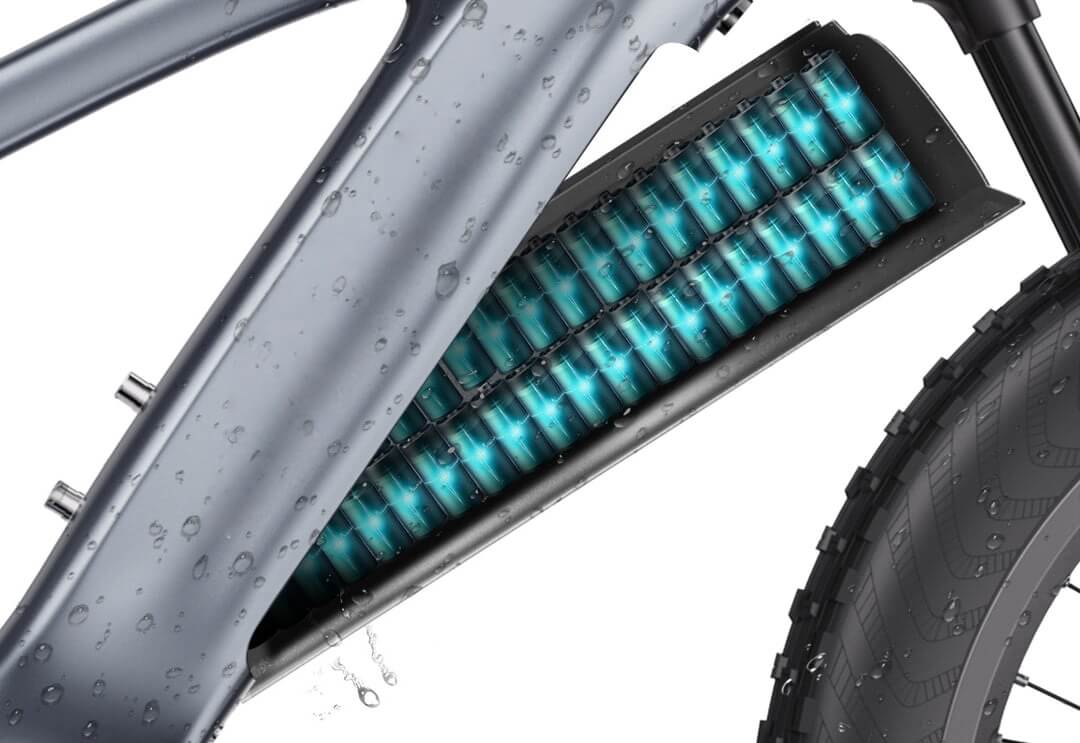
The Q7 uses a:
48V 15.6Ah Lithium Battery
The battery supplies electrical energy to the controller and motor, making battery quality, protection and charging compatibility essential parts of the overall product design.
A responsible battery system should take into consideration:
- Cell quality
- Battery pack construction
- Electrical protection
- Charging compatibility
- Temperature management
- Wiring and connectors
- Battery enclosure
- Manufacturer quality control
Battery capacity alone does not tell you whether a battery system is safe.
For example, a battery advertised with a high Ah figure may still be unsuitable if the cells, protection system, charger or pack construction are not appropriately matched.
This is why professional buyers should request technical and compliance documentation rather than relying only on marketing specifications.
3. Why Charger Compatibility Matters
The charger is part of the electrical safety system.
The Q7 is configured with a:
54.6V 2A Charger
for its 48V lithium battery system.
A charger should never be selected simply because its connector physically fits an electric bike.
Electrical compatibility also matters.
The CPSC specifically warns consumers against using so-called “universal” micromobility chargers unless they have been tested and approved for safe compatibility with the particular device. A charger that appears to fit may still be electrically incompatible.
For manufacturers, distributors and importers, charger specifications should therefore be confirmed during product development.
Important factors include:
- Output voltage
- Output current
- Connector
- Polarity
- Battery chemistry
- Charging protocol
- Applicable market requirements
For consumers, the safest general approach is to use the charger supplied by the manufacturer or an explicitly approved replacement.
4. What Is UL 2849?
UL 2849 is one of the most recognized safety standards associated with e-bike electrical systems in the United States.
UL Solutions describes UL 2849 as the Standard for Electrical Systems for eBikes. Its evaluation considers the electrical drivetrain, battery system and charger system combinations of e-bikes, including electrical shock and fire-safety considerations.
This is important because an electric bike is an integrated electrical system.
The motor cannot be evaluated completely separately from:
- Battery
- Controller
- Charger
- Wiring
- Electrical protection
For buyers, there is also an important distinction between:
A component being certified
and
The complete e-bike system being certified.
For example, having a UL-certified battery does not automatically mean that the complete electric bicycle is UL 2849 certified.
UL Solutions specifically notes that buyers should distinguish between a UL-certified micromobility product and individual certified components such as a battery, motor or charger.
UL 2849 E-Bike Electrical System Safety Standard
For B2B buyers, this distinction is particularly important when reviewing supplier certification claims.
5. What Is EN 15194?
For buyers targeting European markets, EN 15194 is another important standard to understand.
EN 15194 is associated with electrically power assisted cycles and covers requirements relevant to EPAC bicycles.
However, buyers should not treat “EN15194” as a universal approval that automatically allows every e-bike configuration to be sold everywhere in Europe.
European product compliance can involve multiple requirements, depending on the product configuration and intended market.
This is why a professional manufacturer should help buyers identify the applicable requirements for the exact model, configuration and destination market.
For Q7 projects, EN15194 support can be discussed according to market requirements and final product configuration.
6. What Does CE Marking Mean for an Electric Bike?
CE marking is often misunderstood in international e-bike sourcing.
CE marking indicates that a product manufacturer declares conformity with applicable EU legislation. It is not simply a universal “quality certificate.”
The applicable EU requirements depend on the characteristics of the product.
For electric bikes, buyers should therefore ask:
- Which EU requirements apply?
- Which standards were used?
- What testing has been performed?
- What technical documentation is available?
- Who is responsible for the Declaration of Conformity?
- Does the final configuration match the documented product?
This distinction is particularly important for OEM projects.
If a buyer changes:
- Battery
- Charger
- Motor
- Controller
- Display
- Electrical wiring
the compliance situation may need to be reassessed.
In other words:
Certification and compliance should follow the actual product configuration.
7. Why Braking Safety Matters
Electrical safety is only one part of an e-bike’s overall safety.
Mechanical safety is equally important.
The Q7 uses:
Front & Rear Hydraulic Disc Brakes with Power Cut-Off
Brakes are particularly important for heavier electric bikes and models designed for mixed-terrain riding.
When a rider travels downhill or carries a heavier load, the braking system needs to provide predictable control.
Important braking considerations include:
- Brake type
- Rotor size
- Hydraulic or mechanical operation
- Brake pad condition
- Cable or hydraulic-line condition
- Power cut-off function
- Maintenance requirements
For distributors and retailers, braking specifications should be included in product evaluation rather than treated as secondary equipment.
8. What Does IPX5 Mean?
The Q7 has an:
IPX5 water-resistance rating
IP ratings are used to describe the degree of protection provided by an enclosure against specific forms of ingress.
However, IPX5 does not mean waterproof under every condition.
An IPX5 rating should not be interpreted as permission to:
- Submerge the bike
- Ride through deep floodwater
- Wash the battery directly with high-pressure water
- Leave the bike exposed to prolonged heavy water conditions
The exact protection level relates to defined test conditions.
For outdoor electric bikes, riders should still use reasonable care around water and follow manufacturer maintenance instructions.
This is especially important for a model such as Q7 because its intended applications may include outdoor and mixed-terrain riding.
9. Electrical Safety Requires a Complete System
A safe electric bike is not created by simply installing a good motor or a large battery.
The electrical system should be considered as a whole.
The Q7 integrates:
48V 750W BAFANG Brushless Motor
48V 15.6Ah Lithium Battery
48V 25A Intelligent Controller
54.6V 2A Charger
3.5-inch LCD Display
The components need to be correctly matched.
For example, the charger must be compatible with the battery, while the controller must be suitable for the motor and electrical system.
Wiring, connectors and protection systems also contribute to overall electrical safety.
This is one reason why buyers should be cautious when mixing components from unrelated suppliers without engineering validation.
Q7 48V 750W All-Terrain Electric Bike
10. What Should Buyers Check Before Purchasing an Electric Bike?
For consumers and B2B buyers, the following checklist can help organize the evaluation process.
Battery
Ask:
- What cells are used?
- What is the battery voltage?
- What is the capacity?
- Is there a protection system?
- Is the battery removable?
- What charger is supplied?
Electrical System
Check:
- Motor specification
- Controller specification
- Wiring
- Connectors
- Display
- Charger compatibility
Mechanical Components
Review:
- Frame
- Fork
- Wheels
- Tires
- Brakes
- Suspension
- Load capacity
Certification and Compliance
Request:
- Applicable test reports
- Certification documentation
- Declaration of Conformity where applicable
- Product specifications
- Battery documentation
- Charger documentation
Manufacturer Information
Ask about:
- Quality control
- Sample testing
- Production inspection
- Warranty
- Spare parts
- After-sales support
11. Why Certification Should Match the Target Market
One of the most important points for international buyers is that there is no single certification that automatically makes an e-bike compliant everywhere.
Different markets can have different:
- Speed limits
- Motor-power definitions
- Road-use requirements
- Electrical safety requirements
- Battery requirements
- Labeling rules
- Documentation requirements
For example, a configuration designed for one market may need to be adjusted before being sold in another.
This is particularly important for a relatively high-performance model such as the Q7, which has a configured maximum speed of up to 45 km/h.
The technical capability of the vehicle and its legal road-use classification are not necessarily the same thing.
Therefore, manufacturers and importers should confirm the target country’s requirements before finalizing:
- Motor configuration
- Speed configuration
- Controller settings
- Lighting
- Reflectors
- Braking requirements
- Product labeling
- Certification documents
This approach reduces the risk of discovering compliance issues after production.
12. What Does Safe Charging Look Like?
Safe charging should be treated as part of normal e-bike ownership.
The CPSC recommends that users follow the manufacturer’s charging instructions, remain present while charging, avoid charging while sleeping, use the supplied or approved charger and only use replacement batteries that are approved for the specific device.
Good charging practices include:
- Use the correct charger
- Inspect the battery before charging
- Do not use visibly damaged batteries
- Charge in a suitable location
- Keep the charging area clear
- Follow the manufacturer’s instructions
- Disconnect the charger when charging is complete
- Do not modify the battery pack without qualified technical support
For commercial users, distributors and rental operators should also establish clear charging and battery-storage procedures.
13. Q7 Safety-Oriented Configuration
The Q7 combines several features that are relevant to buyers evaluating an all-terrain electric bike.
Electrical System
48V 750W BAFANG brushless hub motor
48V 15.6Ah lithium battery
48V 25A intelligent controller
Charging
54.6V 2A charger
Braking
Front and rear hydraulic disc brakes with power cut-off
Riding Information
3.5-inch LCD display
Environmental Protection
IPX5 water-resistance rating
Mechanical Structure
Aluminum alloy frame
150 kg maximum load capacity
Certification Support
CE, UL 2849 and EN15194 support according to applicable market requirements
These specifications should be considered together rather than individually.
14. What Should Importers Ask an Electric Bike Manufacturer?
Before placing a bulk order, B2B buyers should ask the manufacturer several specific questions.
Product Questions
- What is the exact motor rating?
- What battery cells are used?
- What is the battery capacity?
- What controller is installed?
- What charger is included?
- What is the maximum load?
Safety Questions
- What battery protection system is used?
- What charging instructions are provided?
- What electrical safety testing has been completed?
- What quality-control procedures are used?
Compliance Questions
- Which certifications apply to this configuration?
- Can the manufacturer provide supporting documents?
- Does the documentation match the final product?
- Can the configuration be adapted for the target market?
Production Questions
- What is the MOQ?
- Can the product be customized?
- Can the manufacturer provide samples?
- What inspection procedures are used before shipment?
For OEM buyers, these questions should be answered before the final production specification is approved.
Electric Bike OEM and ODM Customization Services
15. Safety Is a Shared Responsibility
Even a well-designed electric bike still requires proper use and maintenance.
Manufacturers are responsible for product design, quality control and appropriate documentation.
Distributors and importers are responsible for understanding the requirements of their target market and communicating correct product information.
Riders are responsible for following operating and charging instructions, inspecting the bicycle and riding according to local laws.
This shared approach is especially important as e-bikes become more powerful and versatile.
For example, the Q7 can reach a configured maximum speed of up to 45 km/h, but the permitted road-use speed and classification can be different depending on the destination market.
Therefore, technical specifications should never be presented separately from the applicable legal and safety requirements.
Frequently Asked Questions
Is UL 2849 important for electric bikes?
UL 2849 is an important safety standard for e-bike electrical systems, particularly when evaluating products for the U.S. market. It addresses areas including the electrical drivetrain, battery and charger system combination. Buyers should verify whether the complete e-bike configuration is certified rather than assuming that certification of an individual component covers the entire bicycle.
What does EN 15194 mean?
EN 15194 is a European standard associated with electrically power assisted cycles. Buyers should confirm the exact requirements applicable to their product configuration and destination market.
Does CE mean an electric bike is fully certified?
CE marking indicates conformity with applicable EU legislation. It should not simply be interpreted as a universal quality certificate. Buyers should request the relevant technical documentation and verify that it corresponds to the actual product configuration.
Is IPX5 waterproof?
No. IPX5 indicates protection against water jets under defined test conditions. It does not mean that the electric bike can be submerged or safely exposed to every type of water environment.
Is a UL-certified battery the same as a UL-certified e-bike?
No. A certified battery and a certified complete e-bike are different things. Buyers should verify exactly which product or component has been evaluated.
What charger should I use with an electric bike?
Use the charger supplied by the manufacturer or an explicitly approved compatible charger. Do not assume that a charger is safe simply because its connector fits.
What should an importer request from an e-bike manufacturer?
Importers should request applicable certification or test documentation, technical specifications, battery and charger information, product drawings where necessary, quality-control information and other documents required for their target market.
Can the Q7 be configured for different markets?
Yes. Q7 OEM projects can be discussed according to destination-market requirements. Motor, speed, charger, electrical components, branding and other specifications should be confirmed before production.
Contact Easyway for Q7 Certification and OEM Inquiry
Conclusion: Look Beyond the Certification Label
Electric bike safety is not determined by a single number, component or certificate.
A reliable product requires a properly integrated battery, charger, controller, motor, wiring and mechanical system, supported by appropriate testing, quality control and market-specific compliance.
For the Q7, the combination of a 48V 750W BAFANG motor, 48V 15.6Ah lithium battery, 48V 25A controller, 54.6V charger, hydraulic disc brakes and IPX5-rated design provides a clear technical foundation for evaluating the product.
For international buyers, however, the most important step is to verify that the actual product configuration and documentation match the requirements of the destination market.
Whether you are purchasing one electric bike or developing an OEM product line, safety should be considered from the beginning of the project—not after production has already started.