
How to Choose the Right All-Terrain Electric Bike for Mountain, City and Beach Riding

Meta Description: Learn how to choose an all-terrain electric bike for city streets, mountain trails, gravel roads and beaches. Discover how motor power, fat tires, suspension, battery range, brakes and frame design affect riding performance.
How to Choose an All-Terrain Electric Bike
An all-terrain electric bike is designed for riders who want more flexibility than a traditional city e-bike can provide. Instead of being limited to smooth pavement, a suitable all-terrain model can handle a wider range of surfaces, including city roads, gravel paths, mountain trails, dirt roads and certain sandy environments.
However, not every electric bike is truly suitable for mixed-terrain riding. When choosing an all-terrain e-bike, buyers should look beyond motor wattage and consider the complete system: motor, battery, tires, suspension, brakes, gearing, frame, load capacity and riding conditions.
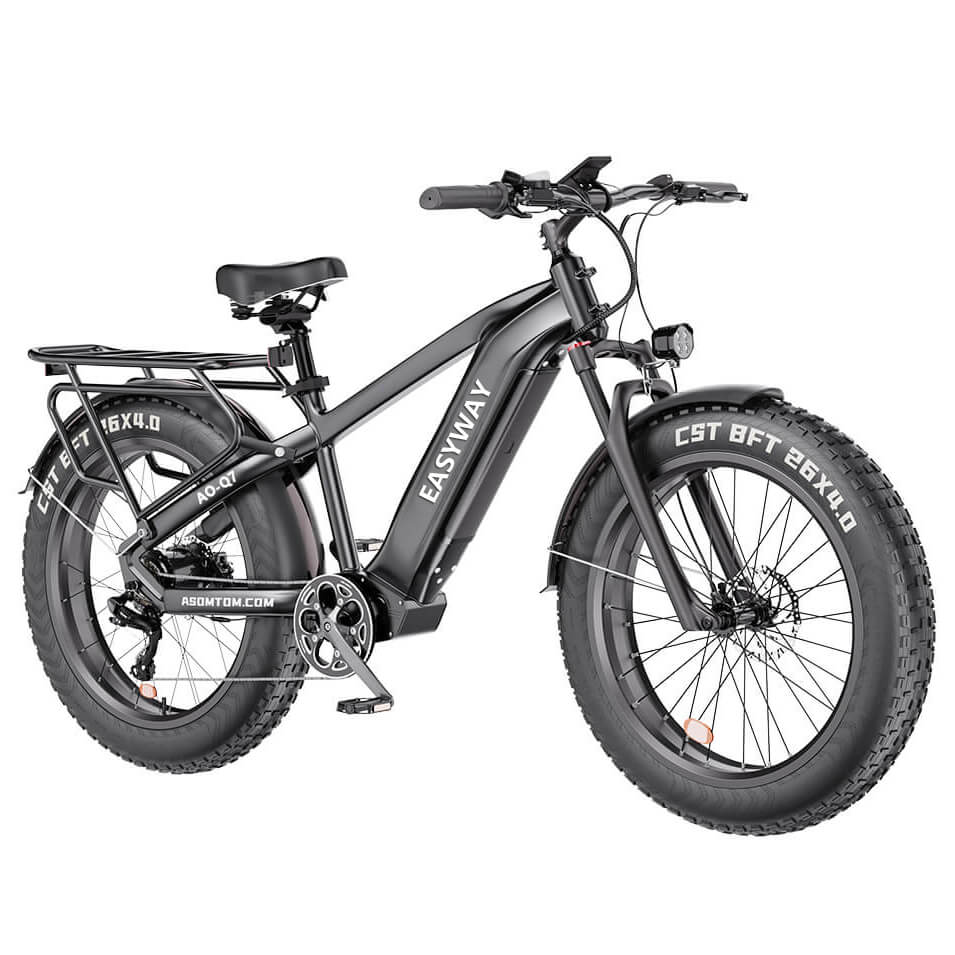
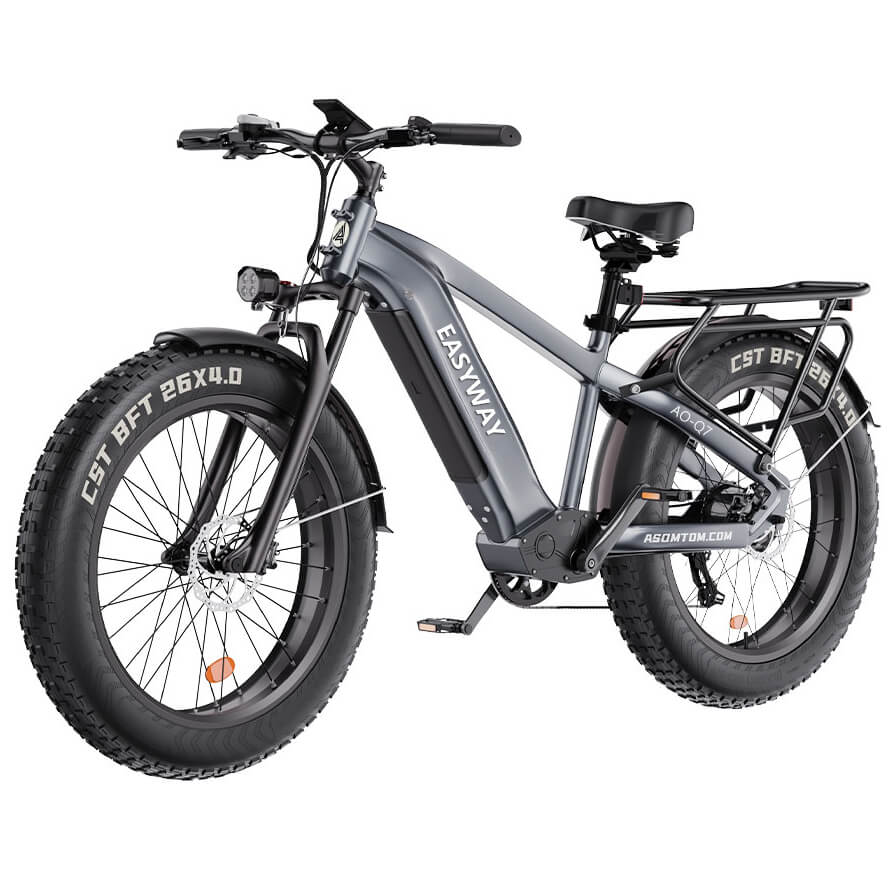
For riders looking for a versatile combination of power, stability and comfort, the Q7 all-terrain electric bike combines a 48V 750W BAFANG brushless hub motor, 48V 15.6Ah lithium battery, 26×4.0-inch fat tires, full suspension, hydraulic disc brakes and a 7-speed Shimano transmission.
What Makes an Electric Bike Suitable for All-Terrain Riding?
The term “all-terrain” should not simply mean that an electric bike has large tires. A practical all-terrain e-bike needs several components working together.
The most important factors include:
- Sufficient motor power
- Appropriate battery capacity
- Wide and stable tires
- Front and rear suspension
- Reliable braking performance
- Multiple gear ratios
- Strong but manageable frame construction
- Suitable rider weight capacity
These features become especially important when riding conditions change during the same trip.
For example, a rider may start on a paved city street, move onto a gravel road, climb a hill and eventually ride along a sandy coastal path. A bike designed only for smooth urban pavement may become uncomfortable or difficult to control when the terrain changes.
The European Commission recognizes cycling as a sustainable, accessible and affordable form of transportation and has highlighted the importance of better cycling networks, secure parking and e-bike charging infrastructure across Europe.
European Declaration on Cycling
1. Choose Motor Power Based on Your Terrain
Motor power is one of the first specifications buyers look at, but wattage should always be considered together with terrain, rider weight, controller configuration and local regulations.
For example, a lower-power motor may be perfectly suitable for flat urban commuting, while riders who frequently encounter hills, rough trails or heavier loads may prefer a higher-output configuration.
The Q7 uses a:
48V 750W BAFANG Brushless Hub Motor
This configuration is designed to provide strong assistance for:
- Hill climbing
- Mountain trails
- Gravel roads
- Outdoor recreational riding
- Mixed urban and off-road routes
The advantage of a 750W configuration is not simply higher speed. Motor output can also provide useful assistance when the riding environment becomes more demanding.
At the same time, buyers should always check the power and speed regulations applicable to their destination market. A technical capability does not automatically mean that the same configuration is legal for unrestricted road use in every country or region.
2. Why 26×4.0 Fat Tires Matter
One of the most recognizable features of an all-terrain electric bike is its fat tires.
The Q7 is equipped with:
26×4.0-inch Fat Tires
Compared with narrow urban tires, 4-inch-wide tires provide a larger contact area and can improve stability across loose or uneven surfaces.
They are particularly useful for:
City Streets
Fat tires can provide a more stable ride over potholes, road imperfections and uneven pavement.
Gravel Roads
The wider tire profile can help maintain stability when riding over loose stones and gravel.
Mountain Trails
On suitable trails, wider tires can provide additional traction and confidence.
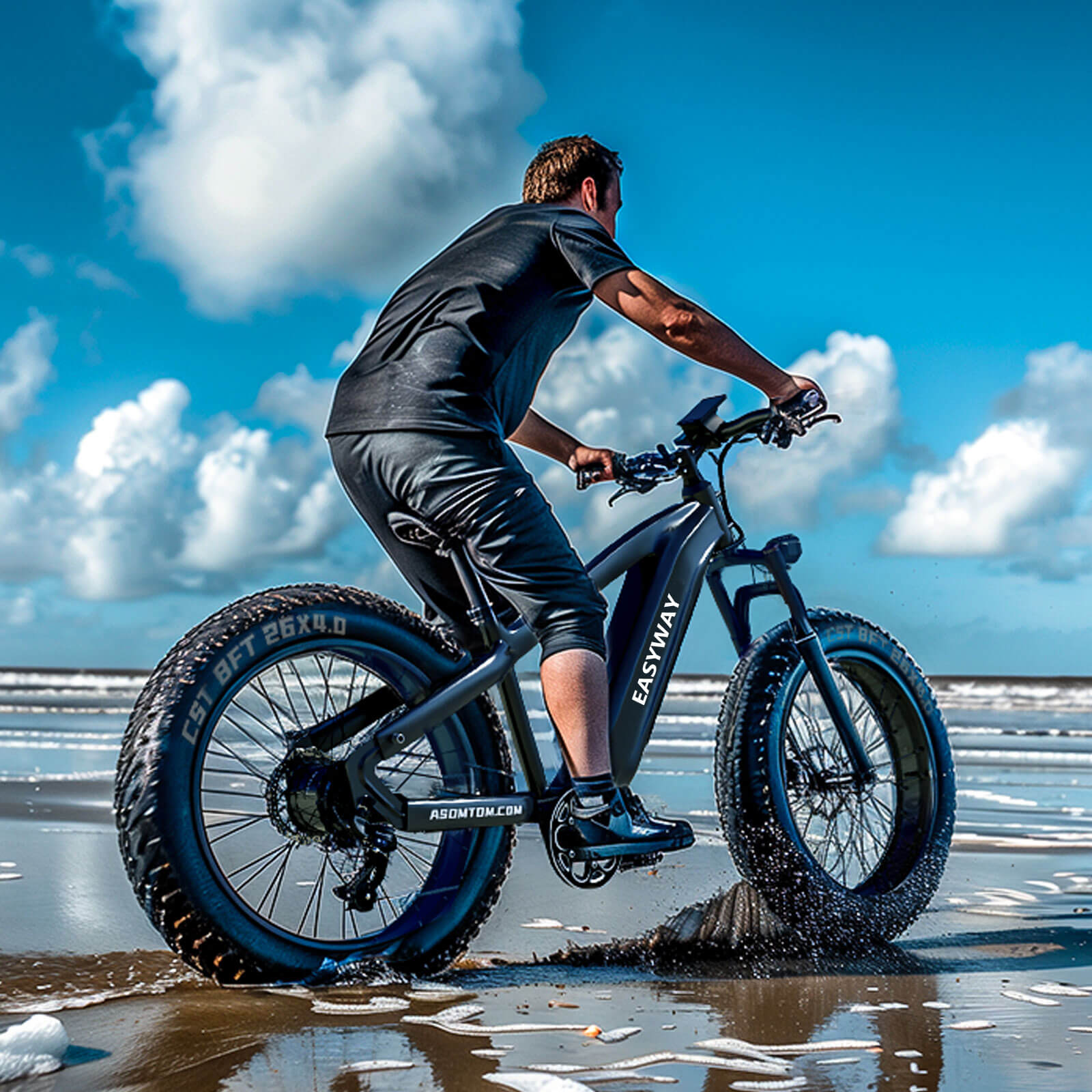
Sandy Areas
Fat tires are commonly chosen for riding on surfaces where additional flotation and stability are desirable.
However, buyers should remember that no tire makes an electric bike suitable for every type of terrain. Extremely soft sand, deep mud, steep technical trails or hazardous surfaces require appropriate tires, riding skills and route conditions.
3. Full Suspension Makes a Difference on Uneven Roads
If an electric bike is intended for mixed terrain, suspension deserves serious attention.
The Q7 uses a full suspension system with a front hydraulic fork and rear shock absorber.
On uneven terrain, the wheels constantly move over bumps, stones and changes in surface level. Suspension helps manage these movements and can make the riding experience more controlled and comfortable.
For example, on a rough gravel road, a rigid-frame bicycle can transmit more vibration directly to the rider. A full-suspension configuration provides additional shock absorption between the terrain and the rider.
This can be especially valuable during:
- Mountain riding
- Gravel riding
- Dirt-road riding
- Long recreational rides
- Uneven urban roads
Suspension is therefore not simply a comfort feature. It can also contribute to better control when the riding surface becomes unpredictable.
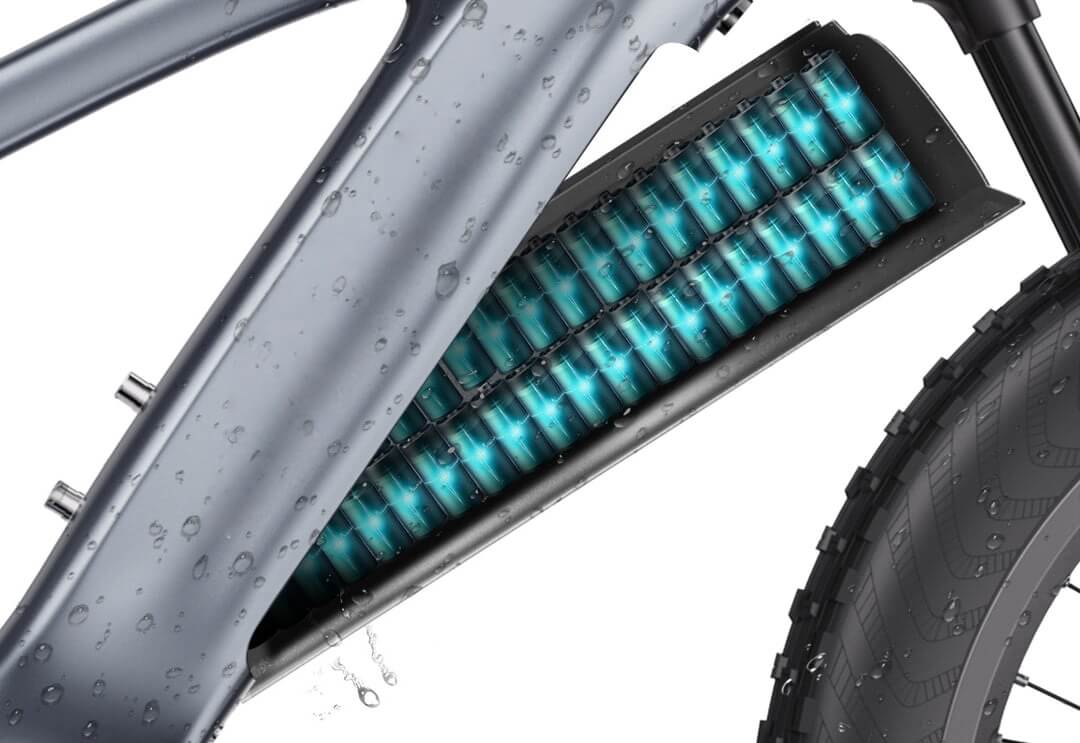
4. Battery Capacity and Real-World Riding Range
Battery capacity is another major factor when choosing an electric bike.
The Q7 uses a:
48V 15.6Ah Lithium Battery
Its stated range is:
50–70 km in PAS mode
This makes the Q7 suitable for riders who want enough battery capacity for longer recreational rides, mixed-terrain trips or daily journeys.
However, an important point should be made:
A manufacturer’s stated range is not a guaranteed distance for every rider.
Actual range can change according to:
- Rider weight
- Riding speed
- Terrain
- Wind
- Temperature
- Tire pressure
- Pedal-assist level
- Stop-and-go riding
- Load
- Battery condition
For example, riding continuously uphill at high assistance will generally consume more energy than riding at moderate speed on flat pavement.
Therefore, when comparing electric bikes, buyers should evaluate battery capacity together with the intended riding environment rather than looking at a range number alone.
5. Hydraulic Disc Brakes for Better Control
Power is only useful when riders can control the bike effectively.
The Q7 features:
Front & Rear Hydraulic Disc Brakes with Power Cut-Off
Hydraulic disc brakes are particularly valuable for heavier electric bikes and mixed-terrain riding because braking conditions can change significantly between pavement, gravel and downhill trails.
A well-designed braking system can provide better control when:
- Riding downhill
- Carrying heavier loads
- Riding on uneven roads
- Changing speeds frequently
- Riding in mixed environments
The power cut-off function is another useful safety-oriented feature because motor assistance can be interrupted during braking.
The European Commission also emphasizes cyclist safety, including the importance of appropriate bicycle equipment and safer infrastructure. Requirements can vary between EU countries, so buyers should verify the rules applicable to their specific market.
6. Why a 7-Speed Transmission Is Useful
Motor assistance does not replace mechanical gearing.
The Q7 uses a:
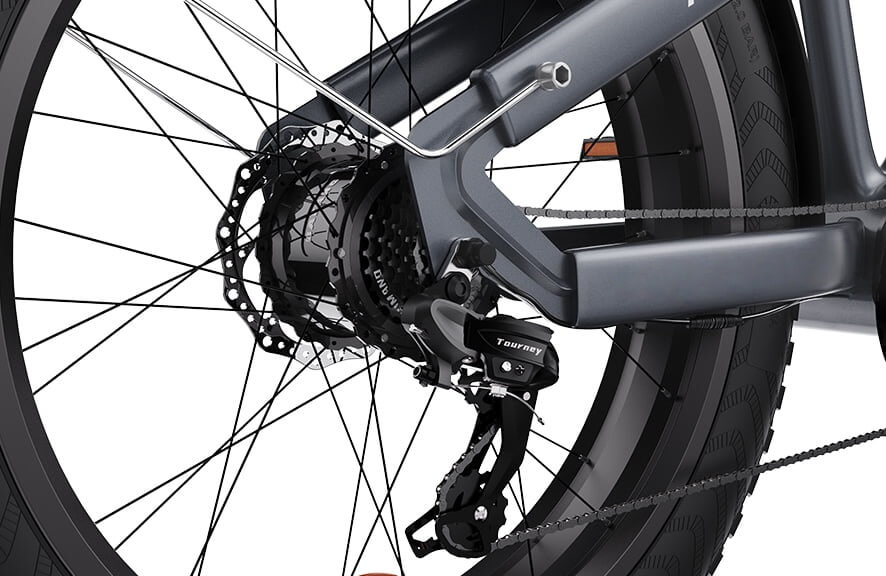
7-Speed Shimano Transmission
Multiple gears allow riders to adjust pedaling resistance according to the terrain.
On relatively flat roads, a higher gear can support a faster and more comfortable pedaling rhythm.
When climbing, a lower gear can make pedaling easier and allow riders to work with the motor instead of relying entirely on electric assistance.
This combination of:
750W motor + 7-speed transmission
provides flexibility across changing terrain.
For an all-terrain bike, this is particularly useful because the rider may encounter flat roads, slopes and rough terrain during the same trip.
7. Frame Strength and Rider Weight Capacity
An all-terrain electric bike needs to support not only the rider but also the forces created by uneven terrain.
The Q7 uses a:
Full Aluminum Alloy Frame
with a maximum load capacity of:
150 kg
The adjustable seat height of approximately 85–105 cm also makes it easier to adapt the riding position to different users.
For B2B buyers, distributors and retailers, load capacity is an important specification because customer profiles can vary significantly.
A bike designed only around a lightweight rider may not offer the same versatility as a model developed with a higher load capacity.
The overall bike weight should also be considered. The Q7 has a net weight of approximately 33.3 kg, reflecting its larger tires, suspension system, battery and reinforced all-terrain configuration.
8. Consider Water Resistance When Riding Outdoors
Outdoor riding means exposure to changing weather conditions.
The Q7 has an IPX5 water-resistance rating, which provides useful protection against water jets under specified test conditions.
However, an IP rating should never be interpreted as permission to submerge an electric bike or ride through deep water.
Riders should still:
- Avoid flooding electronic components
- Avoid submerging the battery
- Dry the bike after wet rides
- Store the battery appropriately
- Follow the manufacturer’s maintenance recommendations
This is particularly important for mountain and beach riding, where water and mud may be present.
IEC 60529 – Degrees of Protection Provided by Enclosures (IP Code)
IEC 60529 is the international standard associated with IP Codes used to classify the degree of protection provided by enclosures against ingress. Buyers should still confirm the exact test basis and product documentation for a specific model.
9. Match the Bike to Your Actual Riding Environment
Before purchasing an all-terrain electric bike, consider where you will actually ride it.
For Urban Riders
Prioritize:
- Comfortable suspension
- Reliable brakes
- Appropriate speed configuration
- Battery range
- Visibility and local compliance
For Mountain Riders
Prioritize:
- Motor assistance
- Full suspension
- Fat tires
- Hydraulic brakes
- Appropriate gearing
For Beach and Coastal Riding
Prioritize:
- Wide tires
- Stability
- Corrosion and maintenance considerations
- Appropriate riding surfaces
For Mixed-Terrain Riders
A balanced configuration becomes more important than any single specification.
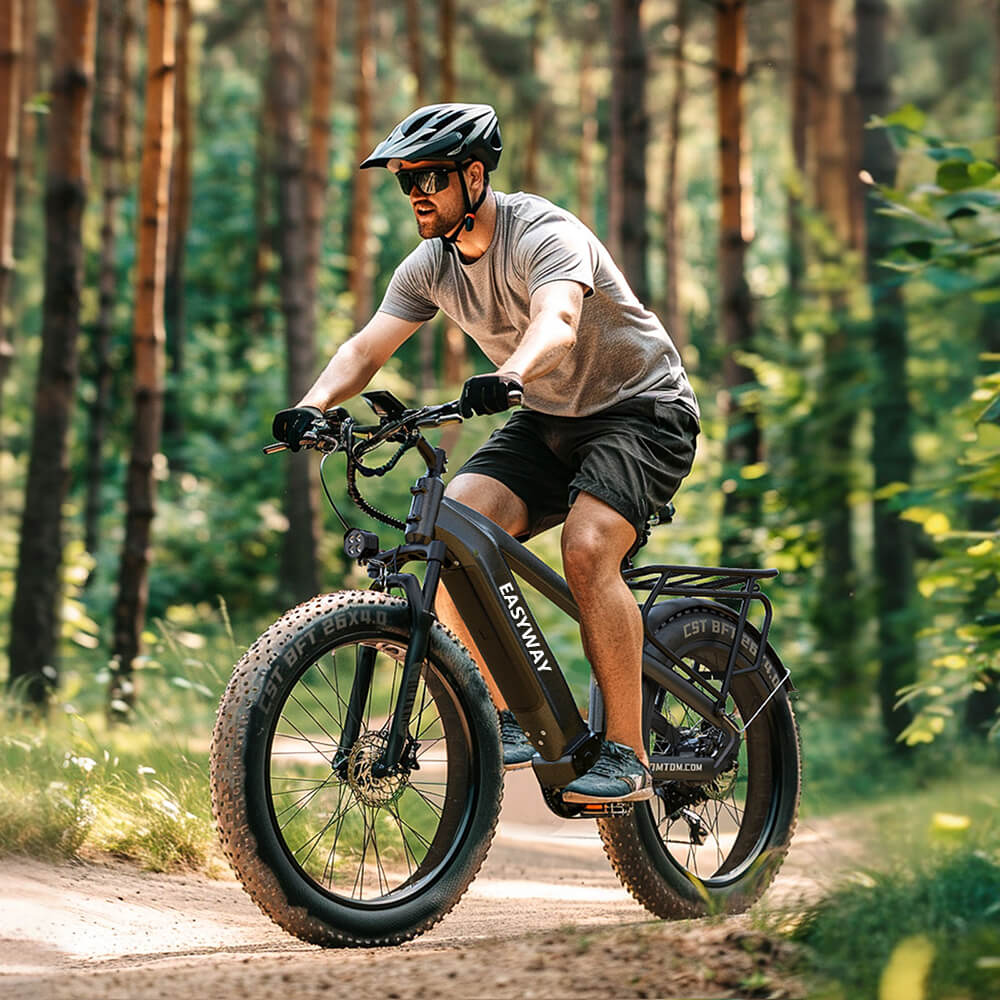
This is where a model such as the Q7 can be attractive because its design combines power, wide tires, suspension, gearing and braking into one platform.
10. Is a 750W Fat-Tire Electric Bike Right for You?
A 48V 750W fat-tire electric bike can be a strong choice for riders who want more than basic city transportation.
The Q7 is particularly suited to users who want to combine:
Urban Riding + Outdoor Recreation + Mountain Trails + Mixed Terrain
Its key configuration includes:
- 48V 750W BAFANG brushless hub motor
- 48V 15.6Ah lithium battery
- 50–70 km PAS range
- 26×4.0 fat tires
- Front hydraulic fork + rear shock
- Front and rear hydraulic disc brakes
- 7-speed Shimano transmission
- 150 kg maximum load
- IPX5 water resistance
- 3.5-inch LCD display
For distributors and brands, the model is also available with OEM customization options, including logo and color customization.
Electric Bike OEM/ODM Customization Services
Q7 at a Glance
For buyers who want a quick overview, the Q7 combines the major features needed for mixed-terrain riding into one configuration.
Its 48V 750W BAFANG motor provides strong electric assistance, while the 48V 15.6Ah battery supports a stated 50–70 km PAS range under specified conditions.
The 26×4.0 fat tires provide stability across a variety of surfaces, while the full suspension system helps manage vibration and uneven terrain.
The hydraulic disc brakes, 7-speed Shimano transmission, aluminum frame and 150 kg load capacity further support its positioning as an all-terrain electric bike.
Frequently Asked Questions
Is a 750W electric bike good for hills?
A 750W configuration can provide strong assistance for hill riding, although actual climbing performance depends on rider weight, gradient, controller configuration, gearing, battery condition and local regulations.
Are 26×4.0 fat tires good for city riding?
Yes. Fat tires can provide additional stability and comfort on urban roads, although they are generally heavier and may have more rolling resistance than narrow commuter tires.
How far can the Q7 electric bike travel?
The Q7 is specified with a 50–70 km PAS range. Actual range depends on riding conditions, rider weight, speed, terrain, temperature, tire pressure and assistance level.
Is full suspension necessary for an electric mountain bike?
Not necessarily for every rider, but full suspension can significantly improve comfort and control when riding over rough, uneven or mixed terrain.
Can the Q7 be customized for different markets?
Yes. The Q7 supports OEM customization, including branding and color options. Other configuration requirements should be confirmed according to the target market and project requirements.
What is the maximum load capacity of the Q7?
The Q7 has a maximum stated load capacity of 150 kg.
Conclusion: Choose the Complete System, Not Just One Specification
Choosing an all-terrain electric bike is not simply about finding the highest motor wattage or the largest battery.
A capable model needs a balanced combination of motor power, battery capacity, tires, suspension, brakes, gearing and frame design.
For riders who want to move between city streets, gravel roads, mountain trails and suitable sandy environments, the Q7 offers a practical all-terrain configuration built around a 48V 750W BAFANG motor, 26×4.0 fat tires, full suspension and hydraulic disc brakes.
For distributors, retailers and mobility brands, its combination of performance-oriented components and OEM customization options also makes it a potential platform for different outdoor and all-terrain e-bike markets.