
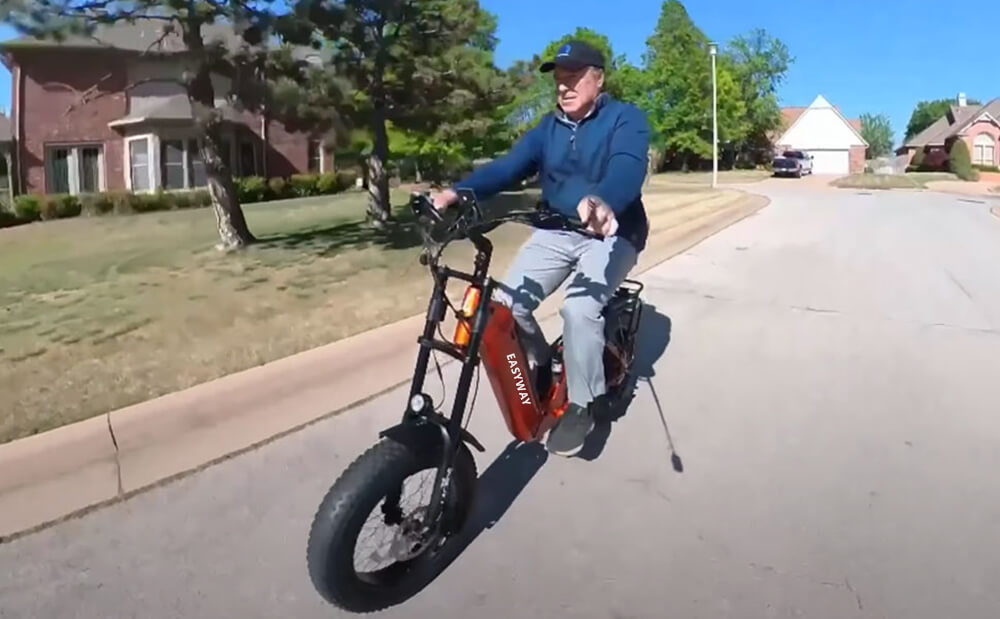
Long-Range Electric Bike With a 48V 20Ah Battery: What Riders Should Know

For many electric bike riders, range is one of the first things to consider before choosing a new e-bike. A bike may offer comfortable riding and strong performance, but if its battery requires frequent charging, it may not be practical for long commutes, recreational trips, or everyday transportation.
This is why battery capacity has become an increasingly important factor in electric bike design.
The S39 City E-Bike is equipped with a 48V 20Ah lithium-ion battery using LG21700 cells, providing a large energy capacity designed for extended urban riding. Depending on riding conditions and assistance levels, the S39 is positioned for approximately 50–80 km of PAS range, while the supplied marketing specification also references longer-range performance under suitable conditions.
Rather than looking at range as a single number, it is more useful to understand how battery capacity, riding conditions, battery cells, riding habits, and charging practices work together.
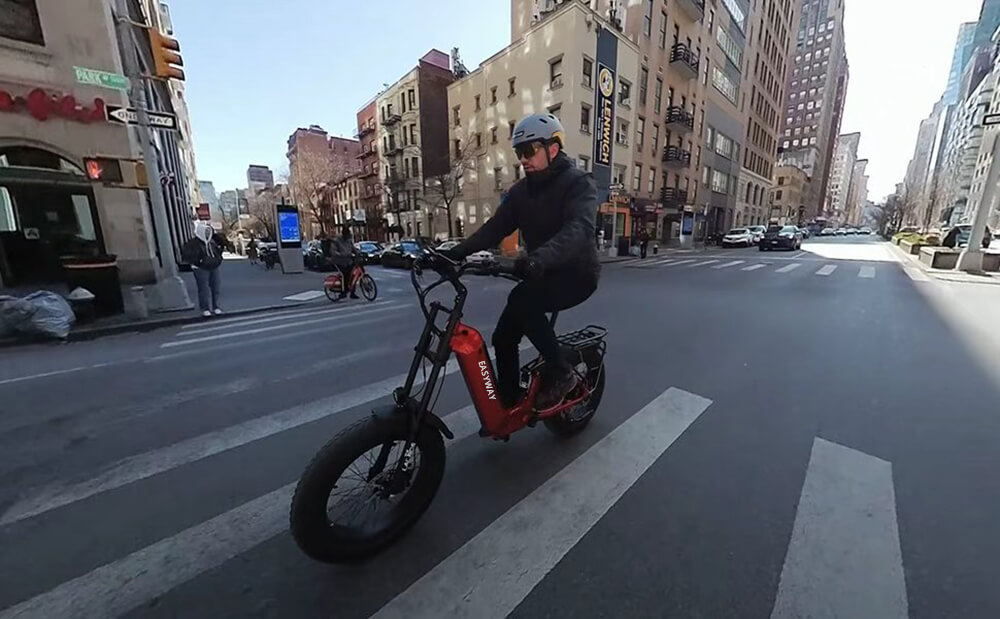
Why Is Battery Capacity Important for an Electric Bike?
An electric bike’s battery is essentially its energy source.
When the motor provides electric assistance, it draws energy from the battery. The amount of energy available affects how long the rider can use electric assistance before needing to recharge.
The S39 uses a 48V 20Ah lithium-ion battery.
The basic energy capacity can be estimated by multiplying voltage by amp-hours:
48V × 20Ah = approximately 960Wh
This gives the S39 a relatively large battery capacity for an urban electric bike.
A larger-capacity battery can be particularly useful for riders who travel longer distances, use higher assistance levels, or do not have convenient opportunities to recharge during the day.
For a daily commuter, for example, a larger battery can provide greater flexibility for completing a round trip without depending on a charging point at work or at another destination.
What Does a 48V 20Ah Battery Mean?
The terms 48V and 20Ah describe different aspects of an electric bike battery.
Voltage indicates the electrical potential of the battery system, while amp-hours indicate the amount of electrical charge the battery can store.
When these values are considered together, they provide a useful way to estimate the battery’s energy capacity.
For the S39:
48V × 20Ah = 960Wh
This does not mean that every rider will receive exactly the same amount of riding time or distance.
Actual range depends on many factors, including:
- Rider weight
- Riding speed
- Pedal-assist level
- Terrain
- Wind
- Tire pressure
- Road surface
- Temperature
- Stop-and-go riding
- Battery condition
Therefore, battery capacity should be considered a foundation for range rather than a guaranteed mileage figure.
This is particularly important for consumers comparing different electric bikes. A battery with a larger capacity can provide more stored energy, but real-world range still depends on how that energy is used.
Why Are 21700 Cells Used in Modern E-Bike Batteries?
The S39 uses LG21700 cells in its 48V 20Ah battery pack.
The 21700 format refers to a cylindrical lithium-ion cell that is approximately 21 mm in diameter and 70 mm long.
Compared with older cylindrical cell formats such as 18650, 21700 cells can offer higher capacity at the individual-cell level, depending on the specific cell chemistry and design.
For electric bike manufacturers, this can provide greater flexibility when developing battery packs with substantial energy capacity without simply increasing the physical size of the entire battery system.
For riders, the important point is that battery performance depends on much more than the cell format alone. Cell quality, pack design, battery management, thermal management, electrical connections, protection systems, and charging control all contribute to the overall battery system.
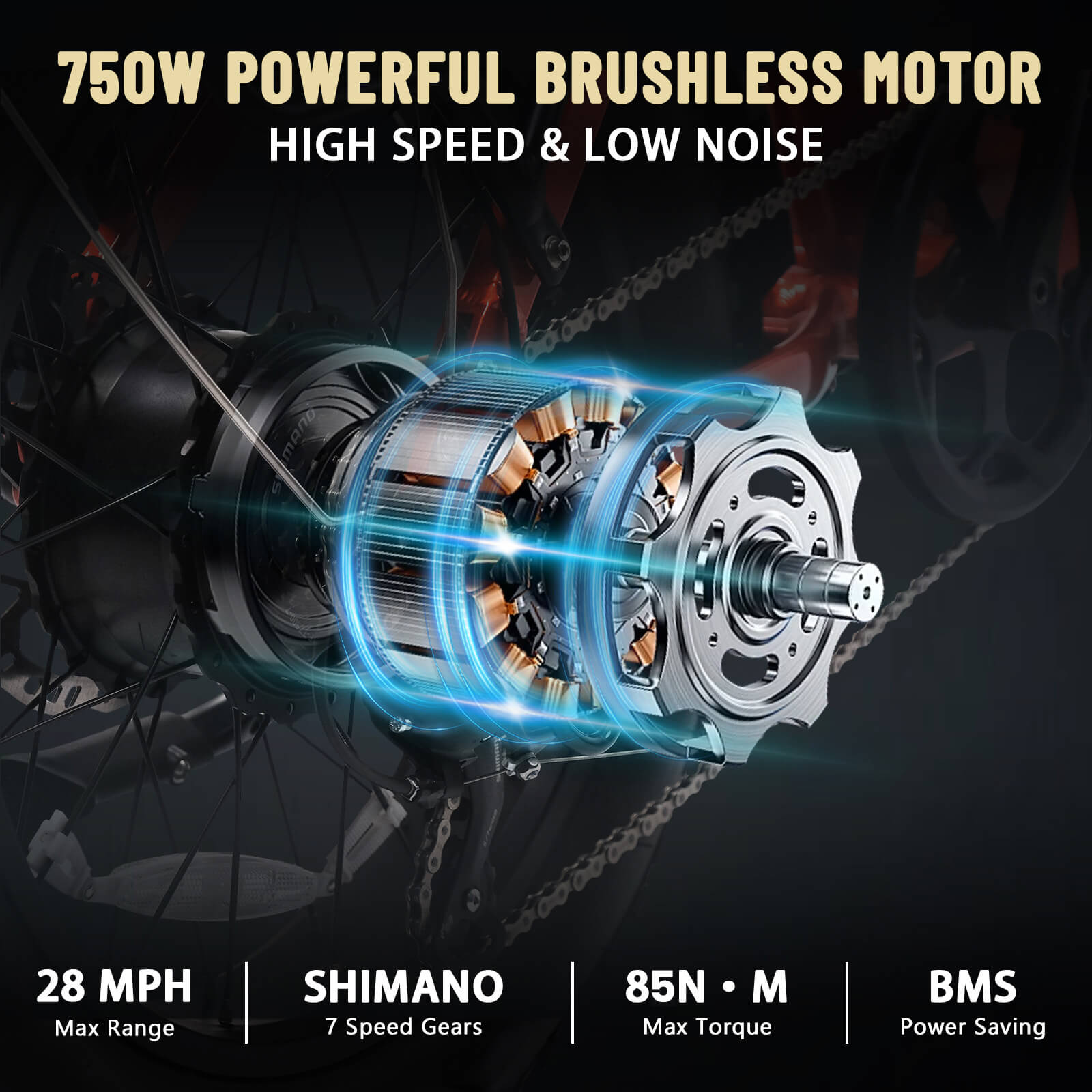
How Far Can a Long-Range Electric Bike Actually Go?
Range is one of the most frequently searched questions when people compare electric bikes.
The S39 is specified with a 50–80 km PAS range, while longer-range figures may be achievable under specific riding conditions.
However, no single range number can represent every rider’s experience.
For example, a rider using a low pedal-assist level on relatively flat roads may consume considerably less energy than someone riding at higher speeds on hills.
Similarly, a heavier rider traveling against strong wind will generally require more energy than a lighter rider traveling at a moderate speed on flat terrain.
This is why responsible e-bike range information should be presented as an expected range rather than an absolute guarantee.
For B2B buyers, this distinction is also important when preparing product information for different markets. Product pages, catalogs, packaging, and marketing materials should clearly distinguish between tested or stated range conditions and real-world riding conditions.
What Factors Affect Electric Bike Range?
Battery capacity is important, but it is not the only factor affecting range.
Riding Speed
Higher speeds generally require more energy because aerodynamic resistance increases as speed rises.
A rider who prioritizes maximum speed may therefore achieve a shorter range than someone using moderate speeds and lower assistance.
Pedal-Assist Level
Using a higher assistance level means the motor contributes more frequently and more strongly.
Using a lower assistance level and contributing more pedaling effort can help conserve battery energy.
Terrain
Flat roads generally require less energy than continuous uphill riding.
Routes containing steep slopes, frequent climbs, or rough surfaces can increase energy consumption.
Rider and Cargo Weight
The total load affects how much energy the motor needs to move the bicycle.
The S39 has a 150 kg load capacity, making its battery and motor system relevant to a broad range of rider applications.
Tire Pressure
Proper tire pressure can also influence rolling resistance.
For an electric bike with wide tires, maintaining appropriate tire pressure is an important part of everyday maintenance.
Weather Conditions
Cold temperatures, strong headwinds, and wet or difficult road conditions can influence energy consumption and riding efficiency.
For this reason, two riders using the same electric bike can experience different ranges.
Why Is a Long-Range Battery Useful for Daily Commuting?
For commuters, battery capacity is not simply about achieving the longest possible distance.
It is about reducing charging anxiety and increasing daily flexibility.
Consider a rider with a 30 km round-trip commute.
With a smaller battery, the rider may need to recharge frequently. With a larger battery, there may be greater flexibility to complete several trips before charging becomes necessary.
This can be especially useful for:
- Long-distance commuters
- Delivery-free personal transportation
- Suburban riders
- Recreational riders
- Riders living in areas without convenient charging stations
- Users who prefer charging less frequently
The S39’s 48V 20Ah battery is therefore designed around the idea of extended daily usability rather than short-distance transportation alone.
How Long Can an E-Bike Battery Last?
Battery lifespan is another important consideration when purchasing an electric bike.
The S39 battery is specified with a lifespan of more than 1,000 cycles under the supplied product specifications.
A battery cycle generally refers to the equivalent of using a full battery capacity and then recharging it, although one cycle does not necessarily mean charging from exactly 0% to 100% in a single session.
For example, using 50% of the battery and then recharging it, followed by another 50% usage later, can be considered approximately one full equivalent cycle.
Actual battery lifespan depends on operating temperature, charging practices, storage conditions, depth of discharge, cell characteristics, and battery management.
Therefore, a stated cycle figure should be viewed as a product specification rather than a guarantee that every battery will perform identically for the same number of years.
Why Is Battery Management Important?
A high-capacity battery requires more than quality cells.
A complete battery system also needs appropriate protection and management.
The battery management system, commonly known as a BMS, can help monitor and control important electrical conditions within a battery pack.
For example, battery management functions can be designed to help protect against conditions involving voltage, current, and temperature.
This is particularly important for electric mobility products because lithium-ion batteries store a substantial amount of energy in a relatively compact package.
The U.S. Consumer Product Safety Commission has emphasized the importance of using micromobility batteries that are designed, manufactured, and certified according to applicable safety standards, as well as using compatible chargers and following manufacturer charging instructions.
For consumers and B2B buyers, this highlights an important principle: battery capacity should always be considered together with battery safety and system design.
How Should a 48V 20Ah E-Bike Battery Be Charged?
Correct charging practices are an important part of maintaining an electric bike battery.
The S39 is supplied with a 48V 2.0A charger.
The charger should be compatible with the battery system and used according to the manufacturer’s instructions.
The CPSC specifically advises consumers to use the charger supplied with or recommended by the manufacturer and warns against using incompatible “universal” chargers with micromobility products.
For everyday use, riders should also follow the manufacturer’s instructions regarding charging location, charging time, storage, and battery maintenance.
The battery should not be modified or rebuilt using incompatible cells or components.
These practices are especially important for commercial products because a consistent charging and maintenance procedure can help distributors and fleet operators establish safer product-use guidelines for their customers.
Why Does UL 2849 Matter for E-Bike Electrical Systems?
Battery safety should not be viewed separately from the rest of the e-bike’s electrical system.
The battery, motor, controller, wiring, and charger all interact during operation and charging.
For this reason, electrical system evaluation can be an important part of electric bike development.
UL Solutions describes UL 2849 as a standard for electrical systems for e-bikes. Its evaluation considers combinations of the electrical drive train, battery system, and charger system.
For manufacturers and international distributors, this type of certification framework can help provide a clearer basis for evaluating electrical safety and developing products for different markets.
The S39 supports CE, UL 2849, and EN15194 certification requirements where required, allowing the product configuration to be considered for different international market needs.
How Can Riders Maximize Electric Bike Range?
Even with a large battery, riding habits can make a significant difference.
Riders who want to maximize range can consider several practical habits.
Use Appropriate Pedal Assistance
Using lower or moderate assistance when the terrain is easy can reduce unnecessary energy consumption.
Higher assistance can then be reserved for hills, acceleration, or more demanding road conditions.
Maintain Proper Tire Pressure
Underinflated tires can increase rolling resistance.
Regularly checking tire pressure can help maintain efficient riding performance.
Avoid Unnecessary Acceleration
Repeated hard acceleration can consume more energy than maintaining a consistent moderate pace.
Smooth acceleration and steady riding can contribute to better efficiency.
Keep the Battery in Suitable Conditions
Extreme temperatures can affect lithium-ion battery performance.
Following manufacturer recommendations for charging and storage can help maintain battery performance over time.
Plan Longer Routes
For long-distance riding, route planning can also be useful.
Knowing where charging opportunities are available provides an additional safety margin, particularly for unfamiliar routes.
Is the S39 a Good Long-Range Electric Bike for Urban Use?
The S39 combines its large battery capacity with a complete urban e-bike platform.
Its 48V 20Ah battery, LG21700 cells, pedal-assist system, smart LCD display, and 150 kg load capacity are designed to support extended everyday use.
The bike can be positioned for:
- Daily commuting
- Long urban rides
- Recreational cycling
- Suburban transportation
- Weekend trips
- Longer-distance personal mobility
The benefit of a larger battery is not simply the ability to travel farther.
It also gives riders more freedom in deciding when and where to recharge.
For people who use an electric bike regularly, that convenience can be just as important as maximum range.
Why Is Battery Capacity Important for B2B Electric Bike Buyers?
For distributors and wholesalers, battery configuration can have a direct impact on product positioning.
A 48V 20Ah battery allows a product to be marketed toward customers who prioritize:
Longer Range + Fewer Charging Stops + Daily Convenience
This creates a clear product category between entry-level commuter e-bikes and more specialized performance models.
For OEM customers, battery configuration can also be adapted according to target-market requirements, product positioning, and regulatory considerations.
Different markets may prioritize different combinations of range, charging time, battery size, and vehicle weight.
S39 Battery Configuration at a Glance
The S39 is equipped with a battery system designed around extended urban riding:
Battery: 48V 20Ah Li-ion
Cell Type: LG21700 Cells
Estimated Energy: Approximately 960Wh
PAS Range: 50–80 km according to supplied specifications
Long-Range Marketing: Longer range may be achievable under suitable conditions
Charger: 48V 2.0A
Load Capacity: 150 kg
Water Resistance: IPX5
Certification Support: CE, UL 2849, EN15194 where required
This configuration gives the S39 a clear long-range positioning within the urban electric bike market.
Final Thoughts: What Makes a Long-Range Electric Bike Practical?
A long-range electric bike is not defined by battery capacity alone.
A practical long-range e-bike needs a combination of sufficient battery energy, efficient power management, quality cells, appropriate charging equipment, and a design that supports the intended riding environment.
The S39 brings these elements together with a 48V 20Ah lithium-ion battery using LG21700 cells, providing a substantial energy reserve for urban transportation and recreational riding.
Its battery capacity can help riders reduce charging frequency, while the overall electrical system is designed to support consistent everyday use.
For riders, this means more flexibility.
For distributors, it creates a clear long-range product category.
For OEM and private-label brands, it provides a battery platform that can be considered for different market strategies and customer requirements.
Looking for a Long-Range Electric Bike for Your Market?
If you are a distributor, wholesaler, retailer, or OEM brand looking for a long-range urban electric bike, the S39 provides a strong platform built around a 48V 20Ah battery and LG21700 cells.