
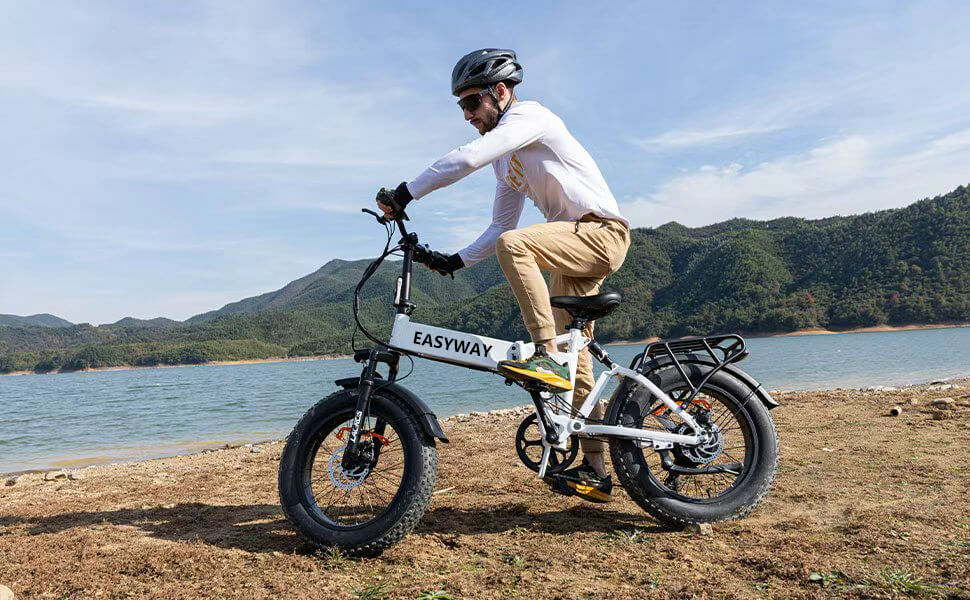
Why Fat Tire Electric Bikes Deliver Better Stability on Every Terrain

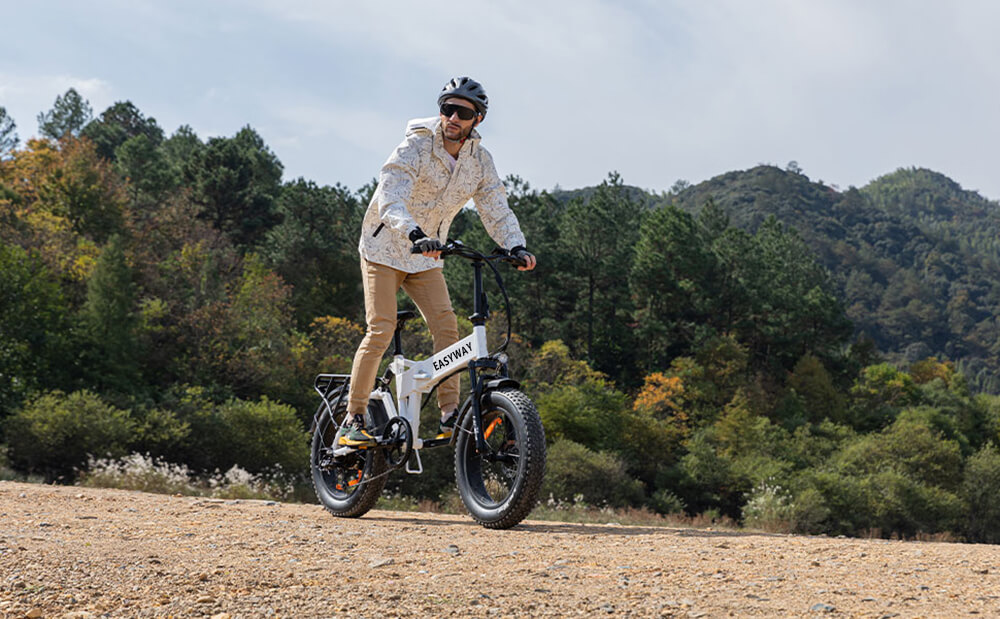
What Makes a Fat Tire Electric Bike Different?
Not every road is smooth, flat, or predictable.
A typical urban bicycle may perform well on clean pavement, but riders who frequently move between different surfaces may want additional stability and traction.
This is where a fat tire electric bike can offer a different riding experience.
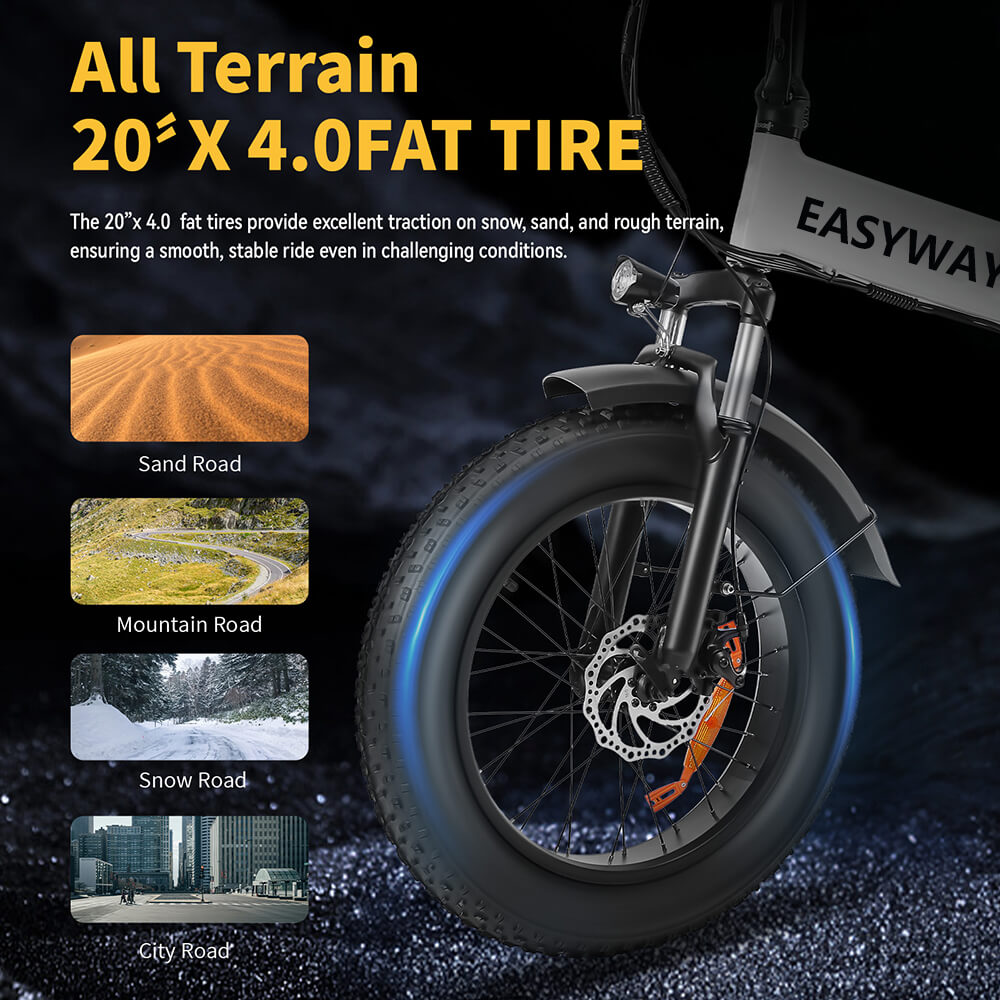
The X38 is equipped with 20×4.0 all-terrain fat tires, providing a much wider tire profile than conventional bicycle tires.
The wider tires are designed to provide:
- Greater contact with the riding surface
- Improved stability
- Better traction
- More cushioning over uneven surfaces
- Increased confidence on mixed terrain
This makes the X38 suitable for a variety of riding environments, including:
- City roads
- Gravel paths
- Mountain roads
- Park trails
- Sandy surfaces
- Snow-covered roads
- Weekend outdoor routes
The objective is not simply to make the bike look more rugged. The wider tire configuration is intended to make the bike more adaptable when road conditions change.
Why 20×4.0 Fat Tires Can Improve Riding Stability
One of the most noticeable characteristics of a fat tire electric bike is its wide tire profile.
A wider tire can create a larger contact area with the ground compared with a narrow tire, depending on tire pressure and riding conditions.
For everyday riders, this can translate into a more planted feeling when traveling across uneven surfaces.
Better Balance on Uneven Roads
City roads can contain cracks, potholes, rough pavement, and small obstacles.
Instead of requiring the rider to constantly avoid every imperfection, a wider tire can provide additional cushioning and stability.
This is particularly useful for riders who use their e-bike for both commuting and recreational riding.
Better Grip on Loose Surfaces
Loose surfaces such as gravel or sand can be challenging for narrow bicycle tires.
The X38’s 20×4.0 tires are designed for all-terrain applications, giving riders a broader tire platform when transitioning between paved and unpaved roads.
However, tire performance depends on factors such as tire pressure, rider weight, terrain, weather, and riding technique.
Fat Tires Are Not Only for Mountain Riding
A common misconception is that fat tire electric bikes are only designed for extreme off-road use.
In reality, their versatility makes them suitable for many everyday environments.
City Streets
On paved roads, the X38 provides a stable platform for commuting and casual riding.
The 20-inch wheel size also gives the bike a relatively compact overall profile compared with many full-size mountain e-bikes.
Gravel Roads
Gravel roads can introduce small movements and changes in traction.
The wider tires can help provide a more stable contact patch when riding across loose gravel.
Park and Recreation Trails
For weekend recreation, riders may encounter a combination of pavement, dirt, grass, and compacted trails.
An all-terrain fat tire design allows one bike to handle more than one type of surface.
Sandy Areas
Sand is particularly difficult for conventional bicycle tires because the wheels can sink or lose traction.
A wider tire can distribute the rider and bike’s load across a larger area, potentially reducing the tendency to sink compared with narrower tires.
Riders should still adjust tire pressure and speed appropriately for the specific terrain.
How Dual Suspension Complements Fat Tires
Fat tires are only one part of the X38’s all-terrain design.
The bike also features front and rear dual suspension, which works together with the wide tires to improve comfort and control.
When riding over rough surfaces, impacts can come from:
- Potholes
- Rocks
- Roots
- Gravel
- Road joints
- Uneven trails
The suspension system helps absorb vibration and movement from these surfaces.
The combination can provide a more comfortable experience than relying on tire width alone.
Why Front and Rear Suspension Matters for Off-Road Riding
Front suspension is familiar to most mountain bike riders because it helps manage impacts coming through the front wheel.
Rear suspension adds another layer of comfort by helping manage movement through the rear of the frame.
For an electric bike intended to move between urban and outdoor environments, dual suspension can be particularly useful.
For example, imagine a weekend ride:
City pavement → gravel road → forest path → uneven trail
The riding surface changes continuously.
A suspension system helps the bike adapt to these transitions without requiring the rider to dramatically change riding style every few minutes.
This makes the X38 a versatile choice for riders who do not want to purchase separate bikes for commuting and recreational riding.
500W Motor with 1000W Peak Power for Challenging Terrain
Terrain capability isn’t only about tires.
Motor performance also matters when the road begins to climb.
The X38 uses a 500W high-torque motor with 1000W peak power and a maximum speed of 21 MPH.
The motor provides electric assistance for:
- Uphill riding
- Long recreational routes
- Starting from a stop
- Mixed-terrain riding
- Daily commuting
When riding uphill, the motor works together with the rider’s selected gear and pedal input.
This means riders can choose a lower gear when climbing and use higher gears when traveling on flatter roads.
The result is a more flexible riding experience across changing terrain.
Shimano 7-Speed Gears Make Terrain Changes Easier
A powerful motor is helpful, but gearing still plays an important role in controlling an electric bicycle.
The X38 features a Shimano 7-speed drivetrain, giving riders multiple gear combinations for different riding situations.
For example:
| Riding Condition | Suggested Gear Approach |
|---|---|
| Steep Uphill | Lower gear |
| Moderate Incline | Mid-low gear |
| Flat City Road | Mid-range gear |
| Fast Flat Section | Higher gear |
| Rough Trail | Lower controlled gear |
The advantage of multiple gears is that riders don’t need to rely entirely on motor power.
By selecting an appropriate gear, riders can maintain a more comfortable pedaling cadence and better control their effort.
For mixed-terrain riders, this flexibility can be especially valuable.
Fat Tire E-Bikes for Snow, Sand, and Rough Roads
Different terrains create different challenges.
Snow
Snow can reduce traction and make steering more difficult.
The wide profile of a fat tire can provide a larger surface area and a more stable riding platform. However, riders should reduce speed and avoid icy surfaces where traction can become unpredictable.
Sand
Sand requires careful throttle and pedal control.
Sudden acceleration can cause wheel spin, so smooth power application is important.
The X38’s wide tires are designed to provide better adaptability than conventional narrow tires when riding on loose surfaces.
Gravel
Gravel can move beneath the tires, creating instability.
A wider tire can help provide a more stable contact area while the suspension helps absorb vibrations.
Outdoor E-Bike Riding Requires Understanding Local Rules
All-terrain capability does not mean every trail is automatically open to every electric bike.
Rules for e-bike use can vary by:
- Country
- State
- City
- Park
- Trail
- Land management agency
- E-bike class
PeopleForBikes provides resources explaining electric bike laws, trail access, and riding opportunities in the United States. Its guidance also emphasizes checking local rules before riding on specific public lands or trails. (PeopleForBikes)
For riders planning outdoor trips, checking the rules before departure is an important part of responsible riding.
Responsible Riding on Public Trails
Trail access is determined by the local land manager.
The U.S. Forest Service manages extensive public lands and trail systems, and e-bike policies can vary depending on the specific location and trail designation.
Before taking an electric bike onto a public trail, riders should verify:
- Whether e-bikes are permitted
- Which e-bike class is allowed
- Whether throttle use is restricted
- Whether helmets or other safety equipment are required
- Whether seasonal restrictions apply
Similarly, riders visiting U.S. national parks should check the individual park’s current rules before bringing an e-bike.
This is particularly important because an electric bike that is appropriate for one location may not have the same access rights in another.
X38: One Fat Tire E-Bike for Multiple Riding Scenarios
The X38 is designed around the idea that riders should not have to choose between urban convenience and outdoor capability.
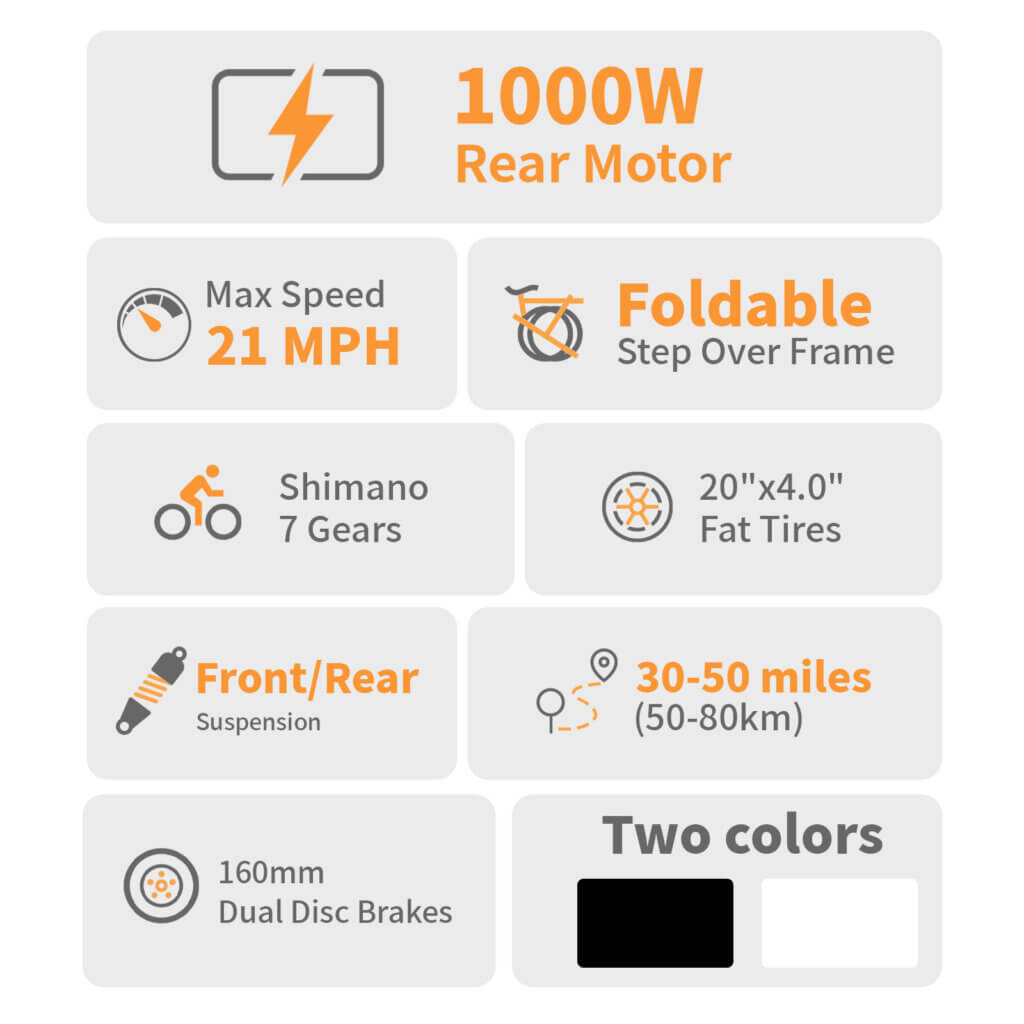
Its major terrain-oriented features include:
20×4.0 All-Terrain Fat Tires
Designed for improved stability and traction across multiple surfaces.
Front & Rear Dual Suspension
Helps absorb vibration and impacts on rough roads and trails.
500W Motor / 1000W Peak
Provides electric assistance for daily riding and moderate climbs.
Shimano 7-Speed Gears
Provides flexibility when terrain changes.
160mm Dual Disc Brakes
Provides responsive braking and control.
Four Riding Modes
Allows riders to select different levels of electric assistance depending on the situation.
Fat Tire Electric Bike vs Standard E-Bike
| Feature | X38 Fat Tire E-Bike | Standard Narrow-Tire E-Bike |
|---|---|---|
| Tire Width | 20×4.0 | Usually narrower |
| Stability | High on varied surfaces | More road-oriented |
| Gravel Riding | Suitable | Model dependent |
| Sand Riding | Better suited | More challenging |
| Snow Riding | Better suited with proper conditions | More limited |
| Urban Riding | Yes | Yes |
| Suspension | Front & Rear | Depends on model |
| Terrain Versatility | High | Varies |
The comparison does not mean a fat tire bike is better for every rider.
For riders who primarily use smooth roads and prioritize minimum rolling resistance and low weight, a conventional road-oriented e-bike may be more appropriate.
But for riders who want one bike for city streets, gravel, trails, and weekend adventures, the wider and more versatile configuration of the X38 offers a compelling option.
Who Should Consider a Fat Tire Electric Bike?
The X38 can be particularly suitable for riders who:
- Commute during the week
- Explore trails on weekends
- Live in areas with uneven roads
- Frequently ride on gravel
- Want additional tire stability
- Enjoy outdoor recreation
- Need one e-bike for multiple environments
It can also be attractive to businesses looking for a versatile electric bike model for outdoor recreation, rental, tourism, and lifestyle mobility applications.
【站内内链2:X38 OEM & ODM定制服务——适合放在“businesses / rental / tourism”段落】
Is a Fat Tire Electric Bike Comfortable for Long Rides?
Comfort depends on several factors, including:
- Tire pressure
- Rider position
- Suspension setup
- Saddle design
- Riding speed
- Terrain
The X38 combines wide tires with front and rear suspension to create a more cushioned riding experience.
The suspension helps manage impacts while the fat tires provide additional cushioning and traction.
For longer rides, riders should also adjust the saddle and handlebar position correctly and maintain appropriate tire pressure.
Frequently Asked Questions
Are fat tire electric bikes good for off-road riding?
Yes. Fat tire electric bikes are well suited to many recreational off-road environments because their wide tires can provide additional stability and traction. However, riders should always match the bike and tires to the specific terrain and follow local trail rules.
Can a 20×4.0 electric bike ride on sand?
A fat tire design can be advantageous on loose surfaces such as sand because the wider tire distributes the load over a larger area. Riding technique and tire pressure remain important.
Are fat tire electric bikes good for snow?
They can perform better than narrow-tire bicycles in certain snow conditions, but ice and compacted snow can still be hazardous. Riders should reduce speed and use appropriate equipment.
Is dual suspension necessary for an electric bike?
Not every rider needs dual suspension. However, front and rear suspension can be beneficial for riders who frequently encounter rough roads, gravel, trails, or uneven terrain.
Can X38 be used for city commuting?
Yes. Although X38 is designed with all-terrain capability, its 20×4.0 tires, 500W motor, suspension, multiple gears, and four riding modes also make it suitable for everyday urban riding.
Can X38 be customized for different markets?
Yes. Easyway provides OEM and ODM solutions for distributors, wholesalers, retailers, and brands looking to develop or customize electric mobility products.
【站内内链3:Contact Us 联系我们——建议放在FAQ之后或CTA按钮位置】
Conclusion: More Terrain, More Possibilities
A modern electric bike doesn’t have to be limited to one type of road.
For riders who want to move from city streets to gravel paths, parks, mountain roads, or suitable recreational trails, a fat tire electric bike can provide greater versatility.
The X38 combines 20×4.0 all-terrain fat tires, front and rear suspension, a 500W motor with 1000W peak output, Shimano 7-speed gears, and 160mm dual disc brakes into one platform designed for both everyday riding and outdoor exploration.
Its biggest advantage is versatility.
Instead of choosing a bike specifically for city roads or another bike for weekend adventures, riders can use one adaptable electric bike for a broader range of riding environments.
Whether the destination is across town or beyond the pavement, the X38 is built to make the journey more comfortable, stable, and enjoyable.
Explore X38 for Your Market
For distributors, wholesalers, retailers, rental companies, and mobility brands looking for a versatile fat tire electric bike, X38 can also serve as a platform for OEM and ODM development.
Looking for a versatile fat tire electric bike for your market? Contact Easyway to discuss wholesale, OEM, or ODM opportunities.