
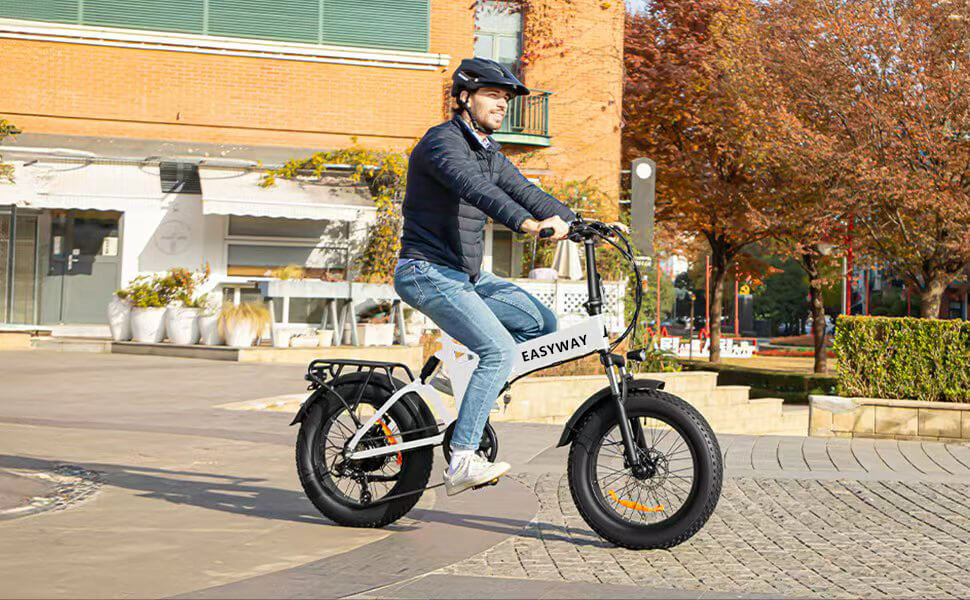
How X38 Makes Everyday E-Bike Riding Safer and More Confident

AI Summary
Electric bike safety is not determined by a single component. A well-designed e-bike needs to combine braking performance, rider visibility, road awareness, and appropriate riding modes. The X38 is equipped with 160mm dual disc brakes, bright front and rear lights, an LCD display, four riding modes, front and rear suspension, and a 21 MPH maximum speed. These features work together to provide riders with greater control and awareness during commuting, recreational riding, and low-light conditions.
What Makes an Electric Bike Safe?
When people talk about electric bike safety, they often focus on the battery or motor.
Those components are certainly important, but riding safety involves much more.
A complete electric bike safety system can include:
- Braking performance
- Rider visibility
- Lighting
- Speed control
- Tire grip
- Suspension
- Rider position
- Display information
- Riding modes
- Electrical system design
The X38 combines several of these elements into one electric bike platform.
Its safety-oriented configuration includes:
160mm dual disc brakes
Front and rear suspension
Bright front headlight and rear taillight
LCD display
Four riding modes
20×4.0 fat tires
These features are designed to address different aspects of everyday riding rather than relying on a single component.

Why Braking Performance Matters on an Electric Bike
An electric bike can travel faster and accelerate more easily than a conventional bicycle.
That makes braking performance especially important.
The X38 uses 160mm dual disc brakes, providing braking at both the front and rear wheels.
Disc brakes are widely used on bicycles because they can provide consistent braking performance across a range of riding conditions.
For an electric bike, effective braking can be particularly useful when:
- Approaching intersections
- Riding downhill
- Avoiding unexpected obstacles
- Riding in crowded areas
- Carrying additional weight
- Transitioning from higher to lower speeds
However, no braking system can eliminate stopping distance.
Stopping distance also depends on:
- Riding speed
- Rider reaction time
- Road surface
- Tire condition
- Weather
- Rider weight
- Brake condition
Therefore, riders should always maintain an appropriate speed and leave sufficient stopping distance.
Why Dual Disc Brakes Are Useful for Everyday Riding
The X38’s dual disc brake setup distributes braking between the front and rear wheels.
When braking correctly, both wheels can contribute to slowing the bicycle.
This can help riders maintain control while reducing speed.
For example, when approaching a busy intersection, a rider may need to reduce speed smoothly rather than make a sudden stop.
Progressive braking allows the rider to control how quickly the bicycle slows down.
For new electric bike riders, learning how to use both brakes smoothly is an important part of developing safe riding habits.
NHTSA’s bicycle safety guidance recommends checking that a bicycle works properly before riding and specifically notes that brakes should be checked.
Visibility Is Another Important Part of E-Bike Safety
Being able to see the road is only one side of nighttime cycling.
Other road users also need to see the rider.
This is why lighting is an important feature on an electric bike.
The X38 is equipped with:
Bright Front Headlight
and
Rear Taillight
These lights help improve the bike’s visibility when riding in low-light environments.
They can be particularly useful during:
- Early morning commuting
- Evening commuting
- Cloudy weather
- Underground or shaded roads
- Low-light park paths
- Dusk
The exact legal requirements for bicycle lighting vary by location, so riders should always check local regulations.
NHTSA’s bicycle safety guidance recommends a white front light and red rear light/reflectors when riding at night or when visibility is poor.
Why Front and Rear Lights Work Together
A headlight and taillight serve different visibility functions.
Front Headlight
The front light helps illuminate the road ahead and makes the bicycle more visible to approaching road users.
Rear Taillight
The rear light helps vehicles and other riders recognize the bicycle from behind.
Together, they create a more complete visibility system.
NHTSA notes that active bicycle lighting can improve the detection and recognition of cyclists by motorists, while also explaining that lighting laws vary among states.
For X38 users, lighting should therefore be viewed as part of a broader visibility strategy that also includes appropriate clothing, reflectors, road awareness, and responsible riding.
Four Riding Modes Give Riders More Control
Another important aspect of riding safety is the ability to control how the bicycle behaves.
The X38 provides four riding modes:
1. Classic Bike Mode
The rider uses the bicycle like a conventional bike.
This mode can be useful when the rider wants exercise or does not need electric assistance.
2. Pure Electric Mode
The motor provides propulsion without continuous pedaling, where permitted under applicable local regulations.
This can reduce physical effort, but riders should use appropriate speed and control.
3. Pedal Assist Mode
The motor assists the rider while pedaling.
This is particularly useful for commuting, hills, and longer rides.
4. Walking Assist Mode
Provides low-speed assistance while walking alongside the bicycle.
This can make it easier to move the bike when pushing it manually.
Why Riding Modes Matter for Different Situations
A single riding mode cannot suit every environment.
Consider a typical commute:
Residential street → Bike lane → Hill → Busy intersection → Office
Each section can require a different level of assistance.
On a flat road, the rider may choose pedal assist.
When climbing, additional assistance can reduce physical effort.
When walking the bike through a crowded area, walking assist may be more convenient.
When exercising in a park, classic bike mode can provide a traditional cycling experience.
This flexibility gives riders more control over their relationship with the motor.
The LCD Display Helps Riders Stay Aware
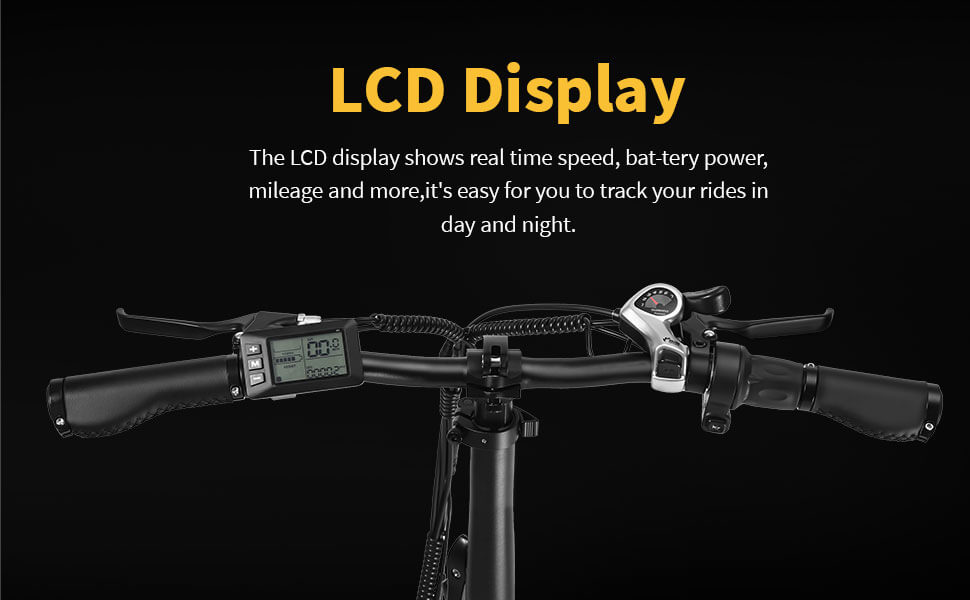
The X38 includes an LCD display that provides riding information such as:
- Current speed
- Battery level
- Mileage
- Riding information
Having this information available while riding allows the rider to monitor the condition of the bicycle without relying entirely on guesswork.
For example, knowing the current speed can help riders maintain a pace appropriate for the road.
Battery information can also help riders decide whether to continue using a higher assistance level or conserve energy.
The display therefore functions as more than a simple speedometer.
It is part of the rider’s information system.
How Suspension Can Support Better Control
The X38 also features front and rear suspension.
Suspension is usually associated with comfort, but it can also contribute to rider control on uneven roads.
When the wheels encounter bumps, potholes, or rough surfaces, suspension can help the bike respond to the terrain.
This can be useful on:
- Uneven pavement
- Gravel
- Park paths
- Rough roads
- Light off-road routes
The combination of suspension and 20×4.0 fat tires provides the X38 with a stable platform for different riding environments.
However, suspension does not mean riders can safely maintain high speed over rough terrain.
The safest approach is still to reduce speed when road conditions become unpredictable.
20×4.0 Fat Tires Provide a Stable Riding Platform
The X38 uses 20×4.0 all-terrain fat tires.
The wide tire profile is designed for stability across different surfaces.
This can be useful when moving between:
- Asphalt
- Gravel
- Dirt
- Park paths
- Uneven roads
Tire pressure also matters.
Overinflated or underinflated tires can affect handling, comfort, and traction.
Riders should follow the manufacturer’s recommended tire pressure range and adjust riding behavior according to the terrain.
How Speed and Safety Should Work Together
The X38 has a listed maximum speed of 21 MPH.
However, maximum speed should never be treated as a target speed for every riding environment.
A safe riding speed depends on:
- Road conditions
- Traffic
- Weather
- Visibility
- Pedestrian activity
- Rider experience
- Local regulations
For example, 21 MPH may be inappropriate in a crowded pedestrian area even if the bicycle is technically capable of reaching that speed.
On an open road or appropriate bike route, the rider may have more room to maintain speed.
The key principle is simple:
Use the speed appropriate for the environment—not simply the maximum speed available.
Safety Starts Before the Ride
A safer ride begins before the rider turns on the motor.
Before each ride, riders should consider checking:
Tires
Make sure the tires are properly inflated and show no obvious damage.
Brakes
Test the front and rear brakes before starting.
Lights
Check that the front and rear lights operate correctly when riding in low-light conditions.
Battery
Make sure the battery is securely installed.
Display
Confirm that the display and controls are functioning correctly.
Riding Position
Make sure the saddle and handlebars are properly adjusted.
NHTSA’s bicycle safety guidance similarly recommends checking the bicycle, including tire inflation and brakes, before heading out.
Why UL Certification Matters for E-Bike Safety
Riding safety and electrical safety are different areas.
A bicycle can have good brakes and lights while its electrical system still requires appropriate safety evaluation.
The X38 supports UL certification, which is particularly relevant when targeting markets where UL-certified e-bike systems are required or valued.
UL Solutions explains that UL 2849 addresses electrical systems for e-bikes and evaluates combinations involving the electrical drivetrain, battery system, and charger system.
For B2B buyers, this is important because electrical certification can become part of market-entry and distribution requirements.
However, certification requirements vary by market, so buyers should verify the specific requirements applicable to their destination country, state, or city.
Safety Is a System, Not One Feature
The X38 illustrates why electric bike safety should be evaluated as a complete system.
Consider the following:
20×4.0 Fat Tires
↓
Stability and road contact
Front + Rear Suspension
↓
Control over uneven surfaces
160mm Dual Disc Brakes
↓
Responsive deceleration
Front + Rear Lights
↓
Improved visibility
LCD Display
↓
Ride information
Four Riding Modes
↓
Flexible control
UL Certification
↓
Electrical safety reference
No single component makes an e-bike completely safe.
Instead, these features work together with responsible riding behavior.
X38 Safety-Oriented Features at a Glance
| Feature | X38 Configuration | Main Benefit |
|---|---|---|
| Front Brake | 160mm Disc | Controlled braking |
| Rear Brake | 160mm Disc | Balanced braking |
| Headlight | Bright LED | Front visibility |
| Taillight | Bright Rear Light | Rear visibility |
| Display | LCD | Speed & battery information |
| Riding Modes | 4 | Flexible control |
| Front Suspension | Yes | Helps absorb impacts |
| Rear Suspension | Yes | Improved comfort/control |
| Tires | 20×4.0 Fat Tire | Stability |
| Max Speed | 21 MPH | Practical performance |
| Certification | UL Supported | Electrical safety reference |
Who Can Benefit From X38’s Safety-Oriented Design?
The X38 can be suitable for a wide range of riders.
Daily Commuters
For people riding to work or school, braking, lighting, and visibility are particularly important.
Recreational Riders
For weekend riders, suspension and fat tires provide additional versatility.
Urban Riders
For city environments, multiple riding modes allow riders to adjust motor assistance according to traffic and road conditions.
Evening Riders
The front and rear lighting system provides an important visibility feature for low-light riding.
B2B Customers
For distributors and retailers, a combination of safety-oriented features can create a clearer product positioning strategy.
How Can Businesses Position X38?
For distributors and retailers, X38 does not need to be marketed simply as another fat tire electric bike.
Its product positioning can focus on:
Comfort + Control + Visibility + Versatility
This creates several possible market angles:
Urban Commuting
A practical electric bike for everyday transportation.
Outdoor Recreation
A comfortable fat tire platform for leisure riding.
Evening Riding
Front and rear lighting provide an additional visibility feature.
Multi-Terrain Riding
Fat tires and dual suspension support different riding environments.
Frequently Asked Questions
Does X38 have good brakes?
X38 is equipped with 160mm dual disc brakes, with braking at both the front and rear wheels.
Does X38 have front and rear lights?
Yes. X38 features a bright front headlight and rear taillight designed to improve visibility during low-light riding.
Can X38 be ridden at night?
X38 includes front and rear lighting, but riders should still follow local lighting laws, use appropriate visibility equipment, and ride according to road and weather conditions.
How many riding modes does X38 have?
X38 has four riding modes: Classic Bike Mode, Pure Electric Mode, Pedal Assist Mode, and Walking Assist Mode.
Does X38 have an LCD display?
Yes. The LCD display provides information such as speed, battery level, and mileage.
Is X38 UL certified?
X38 supports complete UL certification. Buyers should confirm the exact certification scope and documentation required for their target market.
Are fat tires safer?
Fat tires can provide stability and traction advantages on suitable surfaces, but they do not eliminate the need for appropriate speed, braking technique, tire pressure, and safe riding behavior.
Conclusion: Confidence Comes From the Complete Riding System
A safe electric bike is not defined by one specification.
It is the result of multiple systems working together.
The X38 combines:
160mm Dual Disc Brakes
Bright Front & Rear Lights
Four Riding Modes
LCD Display
Front & Rear Suspension
20×4.0 Fat Tires
UL Certification Support
These features address different parts of the riding experience.
The brakes help riders control speed.
The lights improve visibility.
The display provides important riding information.
The four riding modes give riders flexibility.
The suspension and fat tires help the bike respond to uneven roads.
And UL certification provides an important reference point for electrical system safety in applicable markets.
For riders, the result is a more confidence-oriented electric bike.
For distributors and retailers, these features create a clear product story around safety, control, comfort, and everyday usability.
Explore X38 for Your Market
Looking for an electric bike that combines performance with practical safety-oriented features?
X38 is designed with dual disc brakes, front and rear lighting, four riding modes, dual suspension, a 20×4.0 fat tire configuration, and an LCD display.
Contact Easyway to discuss X38 wholesale, OEM, or ODM opportunities.