
20×4.0 Fat Tire Electric Bike With Full Suspension: Built for Comfortable Riding

When choosing an electric bike for everyday transportation, motor power and battery capacity are important, but they are not the only factors that determine riding quality.
The way an electric bike feels on the road depends heavily on its tires, suspension, frame, saddle, and overall riding geometry. A bike that performs well on smooth pavement may feel very different when it encounters potholes, gravel, uneven paths, or rough urban roads.
This is where fat tires and full suspension can make a meaningful difference.
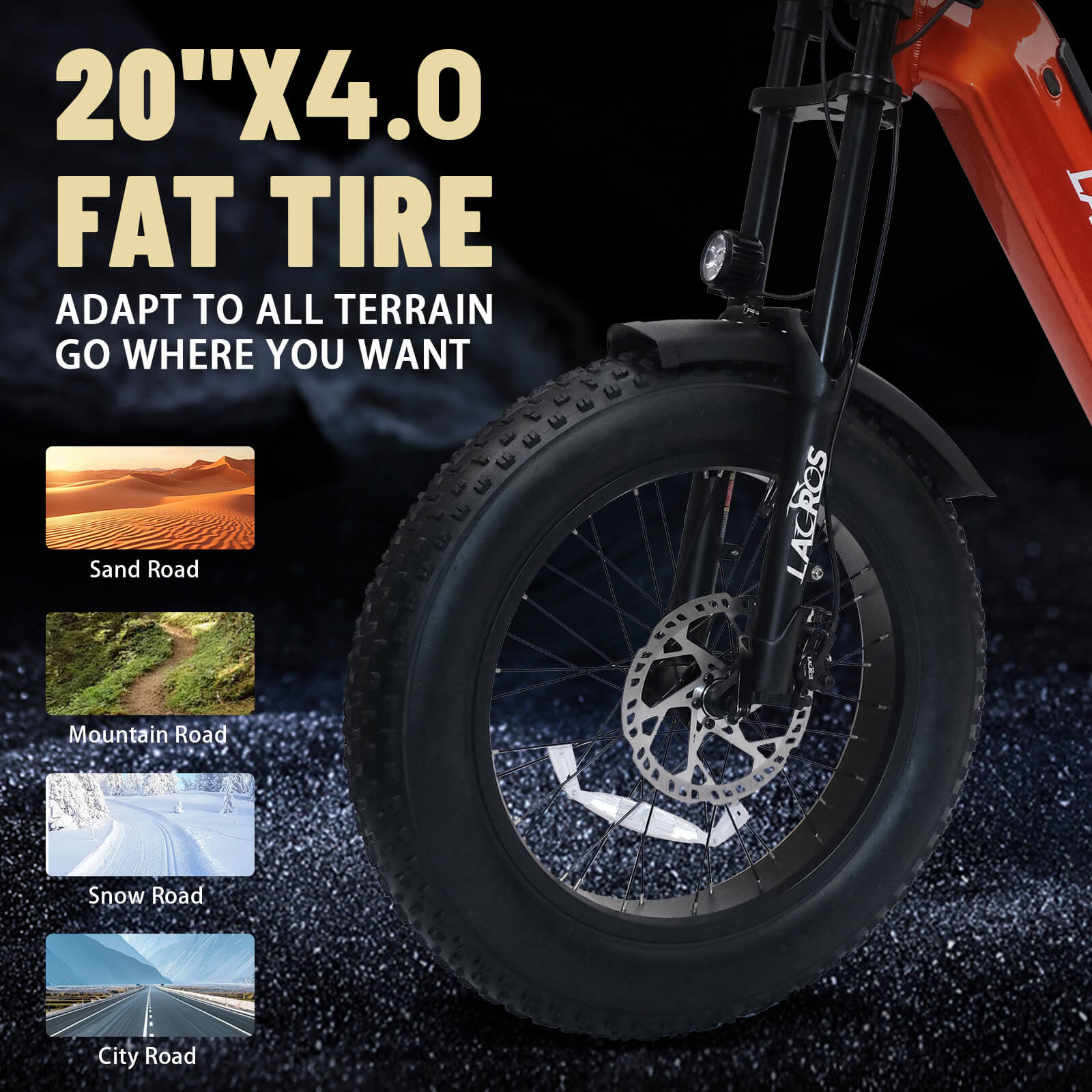
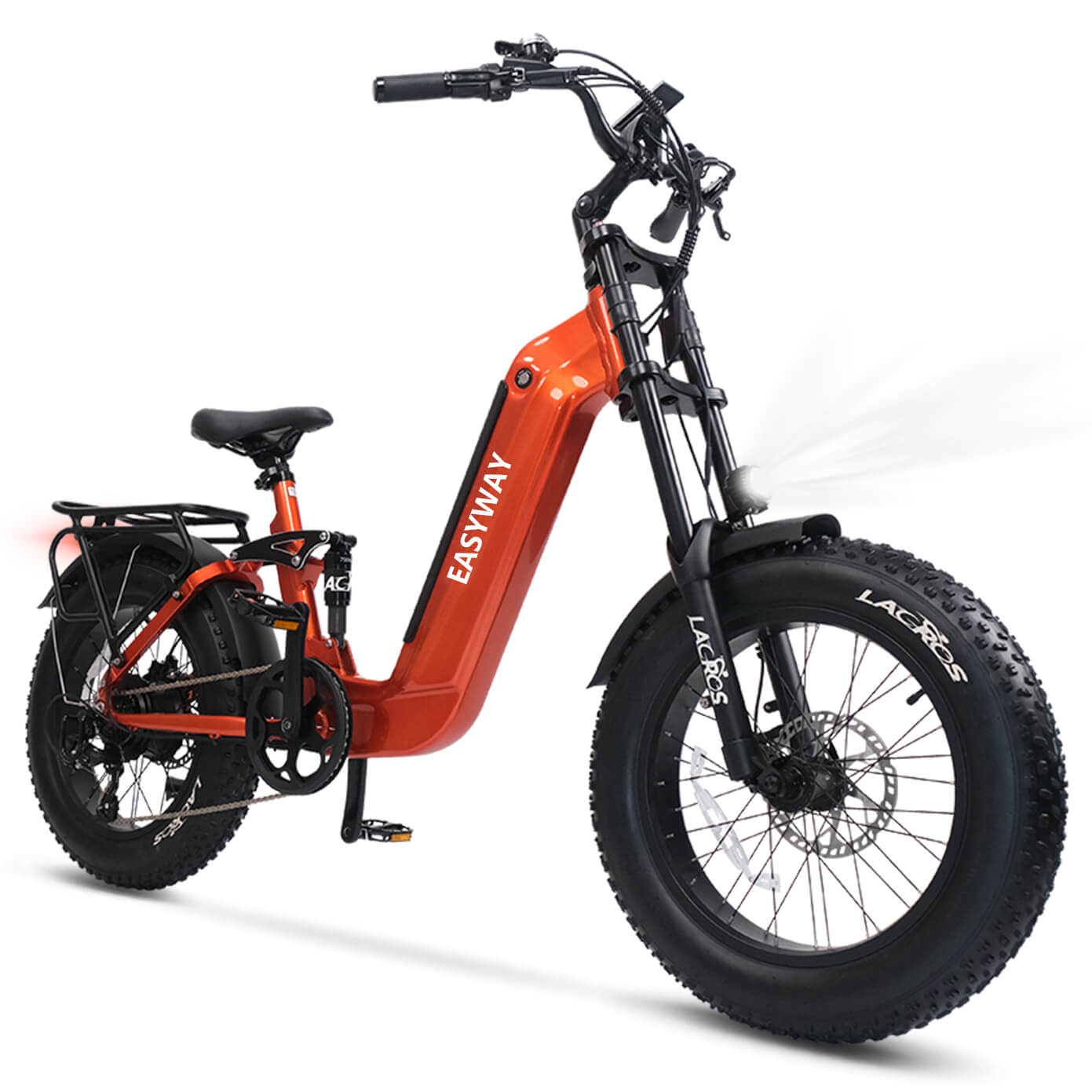
The S39 City E-Bike combines 20×4.0-inch fat tires with front and rear suspension, creating a platform designed for riders who want stability, comfort, and greater flexibility across different road conditions.
Instead of being limited to perfectly paved streets, a fat tire electric bike can provide a more adaptable riding experience for city commuting, recreational riding, park paths, gravel roads, and selected light off-road environments.
Why Are Fat Tires Popular on Electric Bikes?
Fat tires are wider than the tires found on many conventional city bicycles.
The S39 uses 20×4.0-inch fat tires, providing a significantly wider tire profile than a traditional narrow bicycle tire.
The main advantage is not simply appearance. A wider tire can create a larger contact area with the riding surface and can provide a more stable feel when traveling across surfaces that are less predictable.
This can be useful when riding on:
- Uneven pavement
- Gravel
- Packed dirt
- Park paths
- Rough urban roads
- Light off-road trails
For urban riders, this can make the bicycle feel more planted when passing over imperfections in the road.
For recreational riders, the wider tires can provide additional versatility when a route changes from pavement to gravel or another relatively firm surface.
However, fat tires should not be viewed as a guarantee that an electric bike can safely travel over every type of terrain. Road conditions, tire pressure, rider skill, weather, and the specific tire construction all influence actual performance.
What Makes 20×4.0 Fat Tires Different?
The 20×4.0 specification describes the wheel and tire dimensions.
The 20-inch wheel size provides a compact platform, while the 4.0-inch tire width creates a much wider profile.
This combination can be particularly interesting for electric bikes because it balances a relatively compact overall bicycle format with a substantial tire footprint.
For city riders, a 20-inch fat tire configuration can provide a practical combination of:
Compact Wheel Size + Wide Tire Profile + Stable Riding Feel
This makes the S39 suitable for riders who want a bike that remains relatively maneuverable in urban environments while also offering more tire volume than a conventional city e-bike.
The result is a product configuration that can appeal to commuters, recreational riders, and customers looking for a more versatile electric bike.
How Do Fat Tires Improve Riding Comfort?
One of the biggest reasons riders choose fat tire electric bikes is comfort.
The tire itself can contribute to shock absorption because the larger volume of air inside a wide tire can help smooth out some smaller road imperfections.
This does not replace a mechanical suspension system, but it can complement suspension by helping reduce some of the vibration transmitted from the road surface.
For example, a rider traveling across a rough city street may encounter:
- Small cracks
- Uneven pavement
- Road joints
- Gravel
- Small bumps
- Rough paths
A wide tire can help create a more forgiving contact between the bicycle and the riding surface.
However, tire pressure matters.
Running a tire at an inappropriate pressure can negatively affect handling, comfort, and tire performance. Riders should always follow the manufacturer’s recommended pressure range rather than assuming that lower pressure is always better.
The objective is to find an appropriate balance between comfort, stability, rolling resistance, and handling.
Why Does Full Suspension Matter on an Electric Bike?
Fat tires are only one part of the S39’s comfort-focused design.
The bike also features a front and rear suspension system.
This means the S39 is designed to absorb movement from the road through both ends of the bicycle rather than relying entirely on the tires and frame.
The front suspension uses an adjustable oil suspension fork, while the rear of the bicycle uses a spring rear shock.
Together, these components are designed to reduce the impact and vibration transferred to the rider when traveling over uneven surfaces.
Front Suspension and Rear Suspension: How Do They Work Together?
A front suspension fork primarily manages impacts coming through the front wheel.
When the front wheel encounters an uneven surface, the suspension fork can compress and help control the movement of the front end.
Rear suspension performs a similar function at the back of the bicycle.
The S39’s rear suspension helps manage movement through the rear section of the frame, complementing the front suspension system.
The advantage of having both front and rear suspension is that the rider is not relying on a single suspension point.
Instead, the bicycle is designed as a complete suspension platform.
This can be particularly useful when riding on roads where bumps and surface irregularities occur at different points throughout the route.
For longer rides, reducing unnecessary vibration can also contribute to a more comfortable overall riding experience.
Full Suspension vs. Front Suspension Only
Not every electric bike needs full suspension.
For riders who only travel on smooth city pavement, a rigid frame or front suspension system may be sufficient.
Full suspension becomes more interesting when the intended riding environment includes a wider variety of surfaces.
For example:
Smooth City Roads
Front suspension may already provide sufficient comfort.
Uneven Urban Streets
Front and rear suspension can provide additional vibration management.
Gravel and Rough Paths
Full suspension can help the bike handle repeated surface irregularities more comfortably.
Recreational Riding
A full-suspension platform can provide greater flexibility when routes change.
This is why the S39’s suspension system is best understood as part of its broader all-purpose positioning rather than simply an off-road feature.
Why Is Stability Important on a Fat Tire E-Bike?
Comfort and stability are closely related.
A rider feels more confident when the bicycle responds predictably to changes in the road surface.
The wider 20×4.0 tires provide a broad contact profile, while the suspension system helps manage bumps and vibration.
The combination can create a more planted riding feel compared with a narrow-tire bicycle.
This can be particularly useful when riding at moderate speeds across uneven urban surfaces.
However, stability does not eliminate the need for responsible riding.
The U.S. Consumer Product Safety Commission recommends checking important components before riding, including tires, brakes, handlebars, frame, cables, and other parts, and advises riders to follow local traffic laws and manufacturer instructions.
CPSC Micromobility Safety Center
For riders, this means that tire width and suspension should complement—not replace—proper maintenance and safe riding practices.
Are 20×4.0 Fat Tires Suitable for City Riding?
Yes, fat tires are not limited to off-road use.
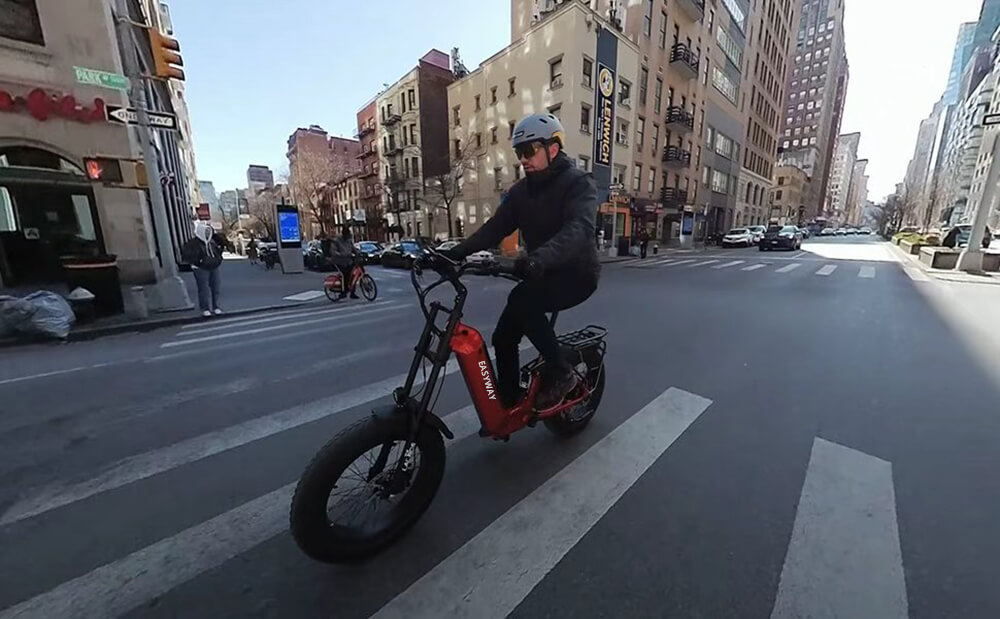
A growing number of electric bikes use wide tires because urban roads are not always perfectly smooth.
City riders may encounter:
- Potholes
- Road repairs
- Curbs
- Broken pavement
- Gravel shoulders
- Park paths
- Uneven bike lanes
A wider tire can make these transitions feel more manageable.
The S39 therefore combines its 20×4.0 tires with a compact 20-inch wheel platform, making it suitable for riders who want a city e-bike with a more rugged and versatile appearance.
It can be positioned between a traditional city commuter and a dedicated off-road electric bike.
That middle ground is particularly attractive for riders who want one bicycle for several types of everyday riding.
Can a Fat Tire Electric Bike Handle Gravel and Rough Roads?
Fat tires can be useful on gravel and relatively firm uneven surfaces because the wider tire profile can provide stability and traction.
The S39’s full suspension adds another layer of comfort when the road becomes rough.
Potential applications include:
- Gravel paths
- Park trails
- Hard-packed dirt
- Rough city streets
- Recreational routes
- Light off-road riding
However, the phrase “all-terrain” should not be interpreted as “suitable for every terrain.”
Deep mud, loose sand, steep technical trails, rocks, water crossings, and other extreme environments require specialized equipment and riding skills.
The S39 is better positioned as a versatile urban and light off-road electric bike rather than a dedicated extreme off-road machine.
How Does Tire Pressure Affect Fat Tire Performance?
Tire pressure is one of the simplest factors riders can adjust, but it has a significant influence on riding behavior.
Lower pressure can increase the tire’s ability to conform to uneven surfaces, potentially improving comfort and traction on appropriate terrain.
Higher pressure can reduce rolling resistance and may feel more efficient on smoother pavement.
However, excessively low pressure can increase the risk of rim damage, tire instability, or other problems, while excessively high pressure can reduce comfort.
Therefore, riders should use the manufacturer’s recommended pressure range and adjust within appropriate limits according to their riding conditions.
Regular tire inspections are also important.
Before longer rides, riders should check for visible damage, abnormal wear, embedded objects, and appropriate inflation.
Why Does Suspension Matter More on Longer Rides?
The importance of suspension is not limited to rough terrain.
Even relatively smooth roads can contain small imperfections that create repeated vibration.
During a short ride, this may not be noticeable.
During a longer ride, however, repeated vibration can contribute to rider fatigue.
A full-suspension electric bike can help manage some of these movements, potentially creating a more comfortable riding experience.
The S39 combines front and rear suspension with an ergonomic shock-absorbing saddle, adding another comfort-focused component to the overall design.
The result is a configuration aimed not simply at making the bicycle look rugged, but at creating a more comfortable platform for extended riding.
What Role Does the Aluminum Alloy Frame Play?
The S39 uses a 6061 aluminum alloy frame.
Frame material is important because the frame provides the structural foundation for the bicycle.
The frame needs to accommodate the motor, battery, suspension components, wheels, rider, and other equipment while maintaining an appropriate balance between strength and weight.
The S39’s aluminum alloy frame also integrates the battery into the overall bicycle design, helping create a clean product appearance.
For B2B buyers, frame construction can also influence the product’s market positioning.
A well-designed aluminum alloy frame can support a product identity centered around:
Durability + Modern Design + Everyday Usability
How Does a Full-Suspension Fat Tire E-Bike Improve the Riding Experience?
The biggest advantage of the S39 is not any single component.
It is the combination of several components working together.
20×4.0 Fat Tires
Provide a wide tire profile and stable riding platform.
Front Suspension
Helps manage impacts coming through the front wheel.
Rear Suspension
Adds suspension support to the rear of the bicycle.
Shock-Absorbing Saddle
Provides another layer of rider comfort.
6061 Aluminum Alloy Frame
Provides the structural foundation for the bicycle.
When combined, these components create an electric bike designed around a more comfortable and versatile riding experience.
【站内内链3:在“20×4.0 Fat Tires + Front Suspension + Rear Suspension”综合配置处添加 S39 产品技术参数页面内链】
Are Fat Tires Good for Long-Distance Riding?
Fat tires can be suitable for long-distance riding, but efficiency depends on tire pressure, road surface, rider weight, assistance level, and riding speed.
Wide tires generally have more rolling resistance than narrow tires on smooth pavement, but they can offer greater stability and comfort on less predictable surfaces.
Therefore, the ideal tire configuration depends on the intended use.
For riders who only care about maximum efficiency on smooth roads, a narrow commuter tire may be preferable.
For riders who want a combination of comfort, stability, versatility, and recreational capability, 20×4.0 fat tires can be an attractive choice.
This makes the S39 particularly relevant for users who do not want to choose between a pure city bike and an off-road bike.
What About Safety When Riding on Uneven Roads?
Suspension and fat tires can improve comfort, but they do not remove the risks associated with uneven terrain.
Riders should always adjust their speed according to road conditions.
CPSC guidance recommends slowing down when approaching obstacles and maintaining awareness of surrounding traffic and pedestrians.
For a fat tire electric bike, riders should also avoid assuming that a wider tire automatically provides unlimited grip.
Wet pavement, loose gravel, mud, sand, and steep slopes can significantly change traction.
Safe riding therefore depends on the complete combination of:
Tire Condition + Tire Pressure + Suspension Setup + Speed + Rider Skill + Road Conditions
Does UL 2849 Apply to the Suspension System?
UL 2849 is relevant to the electrical system of an e-bike rather than its mechanical suspension.
This distinction is important when discussing product safety and certification.
UL Solutions explains that UL 2849 evaluates combinations of the e-bike’s electrical drivetrain, battery system, and charger system. It does not evaluate the operator’s ability to maintain control while riding.
UL Solutions – E-Bikes Certification to UL 2849
For B2B buyers, this distinction helps create more accurate product marketing.
Suspension performance should be described through the mechanical specifications and intended riding applications, while electrical certification should be discussed separately.
Who Is the S39 Full-Suspension Fat Tire E-Bike Suitable For?
The S39 can appeal to several customer groups.
Urban Commuters
For riders who regularly encounter uneven roads, a wider tire and suspension system can provide a more comfortable daily experience.
Recreational Riders
The combination of fat tires and full suspension makes the S39 suitable for weekend riding and recreational routes.
Suburban Riders
Riders traveling between paved streets, parks, and mixed-surface paths can benefit from a more versatile bicycle configuration.
Comfort-Focused Riders
For customers who prioritize a smoother riding experience, the combination of fat tires, front and rear suspension, and a shock-absorbing saddle provides a strong product proposition.
E-Bike Distributors
For distributors, a 20-inch full-suspension fat tire e-bike can occupy a distinctive category within an existing urban mobility product portfolio.
Why Is This Configuration Interesting for B2B Markets?
For wholesalers and distributors, product differentiation is becoming increasingly important.
A standard city e-bike may compete primarily on price, motor power, or battery capacity.
A full-suspension fat tire model creates another way to differentiate.
The S39 can be positioned around:
Comfort
Stability
Versatility
Urban Mobility
Light Off-Road Capability
This makes the product potentially suitable for retailers looking to serve customers who want something more substantial than a conventional commuter bicycle.
For OEM and private-label brands, the same configuration can be adapted to different market positioning strategies.
S39 Fat Tire and Suspension Configuration at a Glance
The S39 combines several comfort and stability-focused components:
Wheel Size: 20-inch
Tire Size: 20×4.0 Fat Tires
Tire Type: Puncture-Resistant Fat Tires
Front Suspension: Adjustable Oil Suspension Fork
Rear Suspension: Spring Rear Shock
Frame: 6061 Aluminum Alloy
Saddle: Ergonomic Shock-Absorbing Saddle
Load Capacity: 150 kg
Water Resistance: IPX5
Together, these features create a product platform designed for riders who want more flexibility than a traditional city e-bike.
Final Thoughts: Why Choose a 20×4.0 Full-Suspension Electric Bike?
A good electric bike should match the environment where it will actually be used.
If a rider spends all of their time on smooth roads, a traditional commuter configuration may be sufficient.
But if the route includes uneven pavement, gravel, park paths, rough streets, or recreational trails, additional tire volume and suspension can make the riding experience more versatile.
The S39 combines 20×4.0 fat tires with front and rear suspension, creating a platform focused on stability, comfort, and multi-surface usability.
Its wider tires provide a substantial contact profile, while the suspension system helps manage impacts and vibration. The shock-absorbing saddle and aluminum alloy frame further contribute to its comfort-focused design.
The result is not simply an “off-road e-bike.”
It is a versatile urban electric bike designed for riders who want to go beyond perfectly paved roads.
Looking for a Full-Suspension Fat Tire E-Bike for Your Market?
For distributors, wholesalers, retailers, and OEM brands looking for a differentiated electric bike product, the S39 offers a combination of 20×4.0 fat tires, front and rear suspension, aluminum alloy construction, and urban-focused versatility.
Contact Easyway to discuss S39 wholesale pricing, OEM customization, private-label opportunities, and market-specific electric bike solutions.