
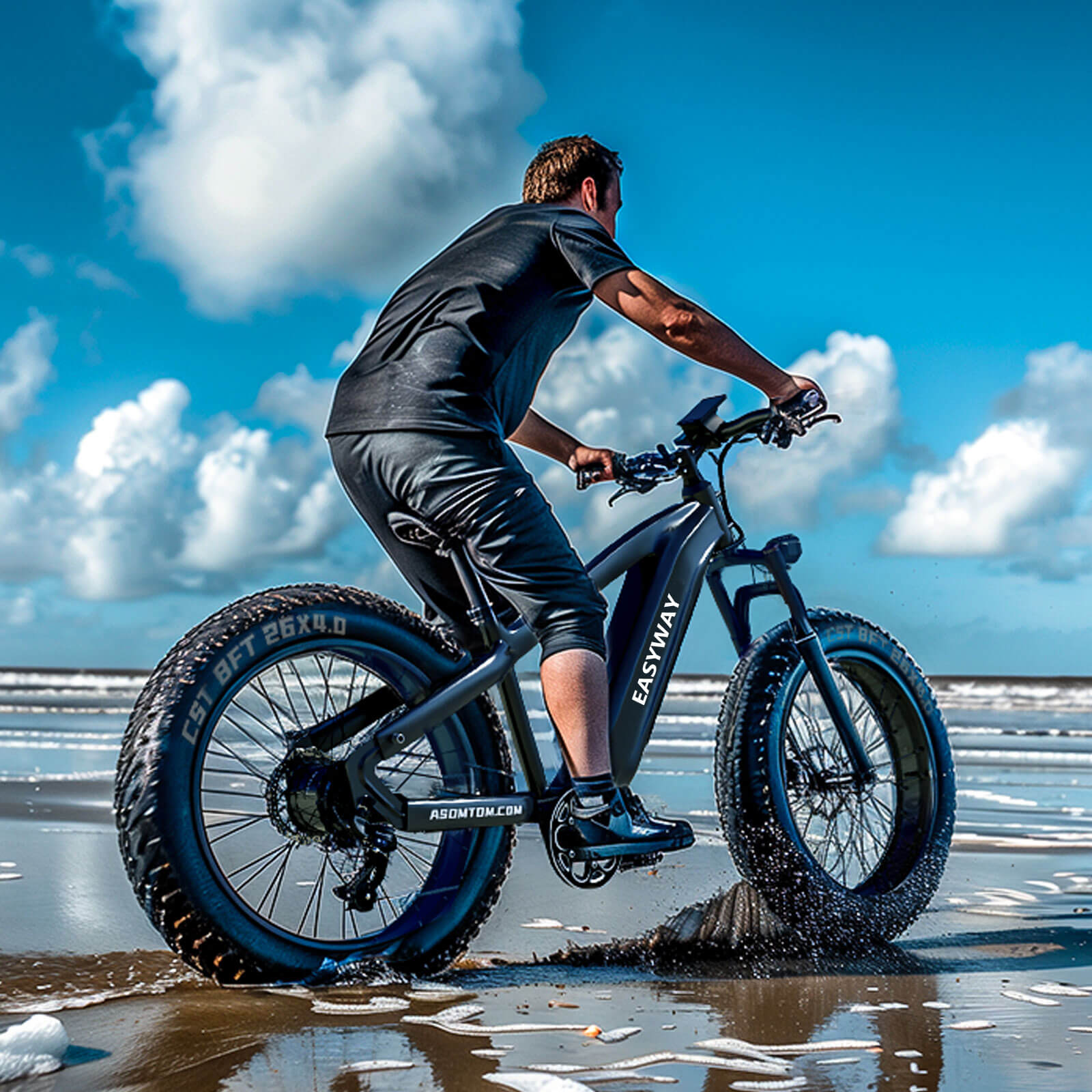
48V 750W Electric Bike Explained: Motor, Battery and Range Guide

Meta Description: What does 48V 750W mean on an electric bike? Learn how motor power, battery voltage, 15.6Ah capacity, watt-hours, controller output and riding conditions affect e-bike performance and range.
What Does 48V 750W Mean on an Electric Bike?
When comparing electric bikes, specifications such as 48V, 750W, 15.6Ah and 25A often appear together. However, these numbers describe different parts of the electrical system and should not be interpreted as interchangeable performance figures.
In simple terms:
- 48V describes the nominal voltage of the electrical system.
- 750W describes the rated motor power.
- 15.6Ah describes the battery’s electrical charge capacity.
- Wh, or watt-hours, describes the approximate energy stored in the battery.
- 25A refers to the current rating associated with the controller configuration.
A well-matched electric bike combines these components so that the motor, battery and controller work together efficiently.
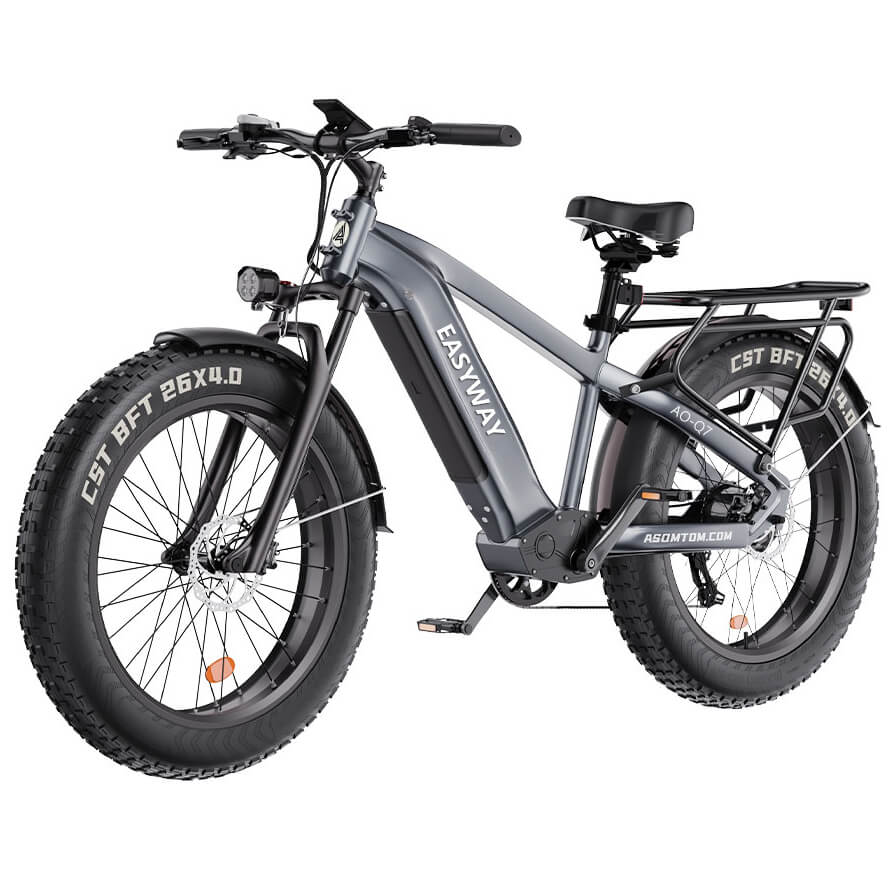
The Q7 all-terrain electric bike uses a 48V 750W BAFANG brushless hub motor, a 48V 15.6Ah lithium battery and a 48V 25A intelligent controller. This system is designed to provide strong assistance for mixed riding conditions while supporting a stated pedal-assist range of approximately 50–70 km per charge.
1. What Does 750W Mean on an Electric Bike?
Motor power is measured in watts (W).
A 750W motor rating indicates the motor’s rated power output under its specified operating conditions. It should not be interpreted simply as a speed number.
Motor power influences how much mechanical assistance the drive system can provide, particularly when the bike encounters greater resistance.
This resistance can increase because of:
- Hills
- Heavier riders
- Cargo
- Rough terrain
- Wider tires
- Higher riding speeds
- Wind resistance
The Q7 uses a 48V 750W BAFANG brushless hub motor mounted in the rear wheel.
For a fat-tire all-terrain bike, this type of configuration provides useful assistance for demanding riding situations such as hills, gravel roads and recreational off-road routes.
BAFANG itself offers several 48V motors in 750W configurations for applications including e-fat bikes, e-MTBs and other performance-oriented electric bicycles.
BAFANG Electric Bike Motor Technology
BAFANG Official Motor Components Page
2. Rated Power Is Not the Same as Peak Power
One of the most common misunderstandings in electric bike specifications is the difference between rated power and peak power.
Rated power generally describes the output a motor is designed to provide continuously under defined operating conditions.
Peak power, by contrast, refers to a higher output that may be available temporarily under appropriate conditions.
These two numbers should therefore not be compared as if they mean the same thing.
For buyers, this is important because a motor advertised primarily using a large peak-power figure may not necessarily provide the same continuous performance as another motor with a clearly stated rated output.
Bosch eBike Systems similarly distinguishes rated continuous output from maximum or peak power, explaining that maximum power may only be available temporarily because battery charge, component temperature and operating conditions can affect output.
For the Q7, the important specification is:
Rated Motor Power: 750W
That gives buyers a clearer technical reference than relying only on a short-term peak figure.
3. What Does 48V Mean?
Voltage is another major specification in an electric bicycle system.
The 48V designation refers to the nominal voltage of the Q7 electrical system.
Voltage can be thought of as one part of the relationship that determines electrical power. In simplified electrical terms:
Power = Voltage × Current
This does not mean that voltage alone determines how powerful an e-bike feels.
A complete system depends on:
- Battery voltage
- Controller current
- Motor design
- Motor efficiency
- Software settings
- Wheel size
- Rider load
- Riding conditions
The Q7 combines its 48V electrical platform with a 750W motor and a 25A controller.
This makes it important to evaluate the bike as a complete system rather than focusing only on the number “48V.”
4. What Does 15.6Ah Mean?
Battery capacity is frequently displayed in ampere-hours, or Ah.
The Q7 uses a:
48V 15.6Ah lithium battery
Ah describes the amount of electrical charge the battery can provide over time.
However, comparing batteries using Ah alone can be misleading if the batteries operate at different voltages.
For example:
A 36V 15Ah battery and a 48V 15Ah battery both show “15Ah,” but they do not contain the same amount of usable energy.
That is why watt-hours (Wh) are more useful when comparing the approximate energy content of different batteries.
Bosch eBike Systems explains that volts represent electrical voltage, ampere-hours describe battery charge capacity, and watt-hours describe the battery’s energy content and therefore have a direct relationship with potential riding range.
Understanding Volts, Amps and Watt-Hours in E-Bike Batteries
Bosch eBike Systems – Battery Knowledge
5. How Many Watt-Hours Does a 48V 15.6Ah Battery Have?
Battery energy can be estimated using a simple calculation:
Watt-hours ≈ Voltage × Amp-hours
For the Q7:
48V × 15.6Ah = approximately 748.8Wh
Therefore, the Q7 battery has a nominal energy capacity of approximately:
749Wh
This number is useful because watt-hours provide a better way to compare batteries with different voltage and Ah ratings.
For example, two e-bike batteries may both be marketed as “long range,” but comparing their Wh ratings can provide a clearer indication of how much electrical energy each battery actually stores.
However, a 749Wh battery does not mean that every rider will achieve the same range.
Energy capacity is only one part of the range equation.
Q7 48V 750W All-Terrain Electric Bike
6. How Far Can a 48V 15.6Ah Electric Bike Travel?
The Q7 has a stated range of approximately:
50–70 km in pedal-assist riding conditions
This is a useful reference figure, but electric bike range should never be understood as a guaranteed fixed distance.
Actual range can vary significantly.
A rider using low pedal assistance on flat roads may consume much less energy than a rider climbing steep slopes using high assistance.
Important range factors include:
Rider Weight
A heavier total load generally requires more energy to accelerate and climb.
Terrain
Flat pavement normally requires less electrical assistance than steep hills, loose gravel or rough trails.
Riding Speed
Higher speeds can significantly increase energy consumption because aerodynamic resistance rises as speed increases.
Pedal-Assist Level
Higher assistance levels ask the motor to contribute more power and usually consume battery energy faster.
Tire Pressure
Underinflated tires increase rolling resistance.
Temperature
Cold temperatures can temporarily reduce lithium-ion battery performance.
Starting and Stopping
Frequent acceleration typically consumes more energy than maintaining a relatively steady speed.
Bosch notes that e-bike range can be influenced by temperature, riding cadence, starting and braking, gear selection, tire pressure and total weight.
This is why a professional product page should present range as an estimated value under stated conditions rather than promising the same distance for every rider.
7. What Does a 48V 25A Controller Do?
The controller is one of the most important parts of an electric bike, even though consumers often pay more attention to the motor and battery.
The Q7 uses a:
48V 25A Intelligent Controller
The controller manages electrical power between the battery and motor.
In practical terms, it helps determine how the motor responds when assistance is requested.
Its responsibilities can include managing:
- Motor current
- Acceleration behavior
- Pedal-assist response
- Speed-related settings
- Protection functions
- Communication with the display and other electrical components
A motor cannot simply draw unlimited current from the battery.
The controller helps regulate how much current is delivered and when.
Using the simplified electrical relationship:
Power = Voltage × Current
48V and 25A represent substantial potential electrical input at the controller level, but this should not be interpreted as the motor’s continuous mechanical output. Controller input limits, motor efficiency, system programming, battery condition and riding circumstances all affect what happens in actual use.
That is another reason why comparing electric bikes using only one specification can be misleading.
8. Why the Motor, Battery and Controller Must Work as a System
An electric bike is not simply a battery connected to a motor.
The major electrical components must be properly matched.
For the Q7, the system includes:
48V 750W BAFANG Motor
+
48V 15.6Ah Lithium Battery
+
48V 25A Intelligent Controller
+
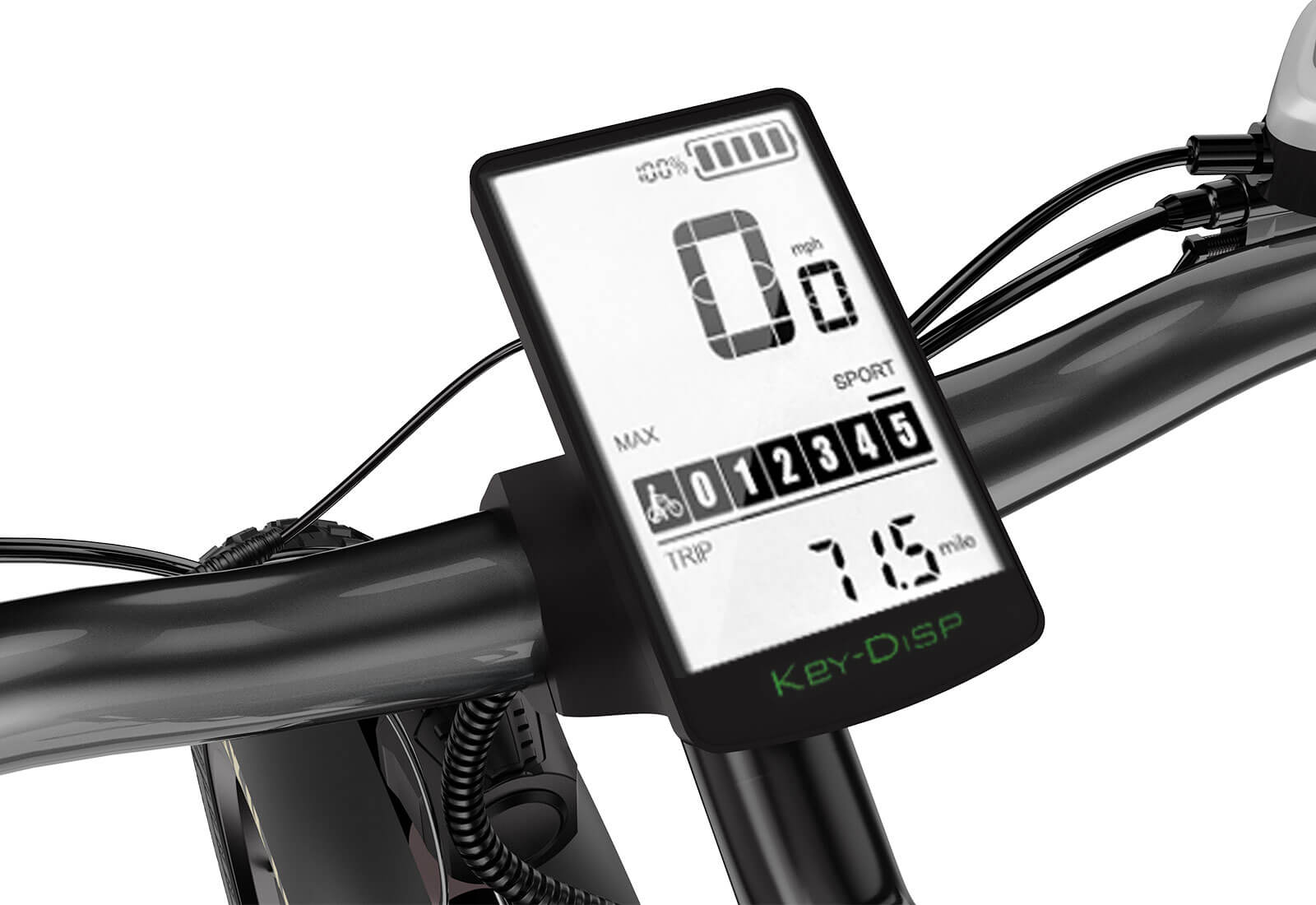
3.5-inch LCD Display
Each component performs a different role.
The battery stores energy.
The controller regulates electrical delivery.
The motor converts electrical energy into mechanical assistance.
The display allows the rider to monitor important riding information.
If one part of the system is poorly matched, the overall riding experience can suffer.
For B2B buyers, this is particularly important when evaluating OEM configurations. Changing motor power, battery voltage or controller settings should be treated as a system-level engineering decision rather than a simple component substitution.
Electric Bike OEM and ODM Customization Services
9. Does a More Powerful Motor Always Mean a Better E-Bike?
No.
A larger wattage number does not automatically mean an electric bike is better.
A complete e-bike should balance:
- Motor output
- Battery capacity
- Controller configuration
- Frame design
- Tires
- Brakes
- Gearing
- Suspension
- Intended riding environment
For example, a very powerful motor paired with a small battery may deliver strong acceleration but relatively limited range.
Similarly, a large battery cannot compensate for poor gearing, excessive weight or inefficient riding conditions.
For the Q7, the 750W BAFANG motor and approximately 749Wh battery are combined with 26×4.0 fat tires, 7-speed Shimano gearing, hydraulic brakes and full suspension.
This balanced configuration is more meaningful than evaluating the motor specification alone.
10. How Does Shimano 7-Speed Gearing Affect Efficiency?
Mechanical gears and electric assistance perform different functions.
The Q7 includes a 7-speed Shimano transmission so riders can adapt pedaling resistance to different terrain.
Lower gears are useful when:
- Starting
- Climbing
- Riding slowly
- Navigating more difficult terrain
Higher gears are useful when:
- Riding faster
- Traveling on flatter roads
- Maintaining a comfortable cadence
Correct gear selection can reduce unnecessary strain on both the rider and the electric drive system.
It can also help riders use pedal assistance more efficiently instead of asking the motor to do all of the work.
This becomes especially important when trying to maximize riding range.
11. Battery Safety Matters as Much as Battery Capacity
A battery should never be judged only by Ah or Wh.
Safety, charger compatibility and proper use are equally important.
The Q7 uses a 54.6V 2A charger matched to the 48V lithium battery system, with plug configuration adapted according to destination-market requirements.
Users should always use the charger supplied or approved for the battery system.
The U.S. Consumer Product Safety Commission advises e-bike and other micromobility users to follow manufacturer charging instructions, remain present while charging, avoid charging while sleeping and use only chargers and replacement batteries approved for the device.
CPSC Micromobility and E-Bike Battery Safety Guidance
U.S. Consumer Product Safety Commission – Micromobility Safety Center
For distributors and importers, charger and battery compatibility should therefore be confirmed during product configuration rather than treated as an afterthought.
12. What Does the Q7 Electrical System Offer in Practice?
The Q7 brings together several specifications into one all-terrain platform:
Motor: 48V 750W BAFANG brushless hub motor
Battery: 48V 15.6Ah lithium battery
Approximate Battery Energy: 749Wh
Controller: 48V 25A intelligent controller
Charger: 54.6V 2A
Display: 3.5-inch LCD display
Claimed PAS Range: 50–70 km
Maximum Configured Speed: Up to 45 km/h, subject to market configuration and local regulations
The result is a system designed for users who need stronger assistance and greater versatility than a basic urban e-bike configuration.
Actual performance should always be evaluated according to rider weight, terrain, weather, assistance level and destination-market requirements.
Frequently Asked Questions
Is a 48V 750W electric bike powerful?
A 48V 750W electric bike can provide relatively strong motor assistance, particularly compared with lower-power urban configurations. Actual performance depends on the motor design, controller, total weight, terrain, wheel size and riding conditions.
How many watt-hours is a 48V 15.6Ah battery?
Using nominal figures:
48V × 15.6Ah = approximately 748.8Wh
This can be rounded to approximately 749Wh.
How far can a 48V 15.6Ah battery travel?
There is no universal distance for every 48V 15.6Ah battery. On the Q7, the stated PAS range is approximately 50–70 km, but actual range varies according to rider weight, terrain, speed, temperature, assistance level and other conditions.
Is Ah or Wh more important when comparing e-bike batteries?
Wh is generally more useful when comparing the total nominal energy of batteries operating at different voltages. Ah is still an important capacity specification, but it should be considered together with voltage.
What does a 25A controller mean?
A 25A controller is designed around a specified current limit or operating configuration. It regulates electrical power delivery between the battery and motor. It should always be correctly matched to the motor and battery system.
Does a 750W motor use 750W all the time?
No. Actual power consumption changes continuously according to assistance demand, speed, terrain, acceleration, controller behavior and rider input.
Does riding faster reduce e-bike range?
Generally, yes. Higher speed typically requires more energy because rolling and aerodynamic resistance increase, especially at higher road speeds.
Can the Q7 motor and battery configuration be customized?
OEM requirements can be discussed according to the target market, order quantity and technical feasibility. Motor, battery, branding, color and other configuration requirements should be confirmed before production.
Contact Easyway for Q7 Wholesale and Technical Configuration
Conclusion: Understand the System, Not Just the Numbers
Specifications such as 48V, 750W and 15.6Ah are useful only when buyers understand what each number actually represents.
The Q7’s 750W BAFANG motor describes its rated motor configuration, while the 48V 15.6Ah battery provides approximately 749Wh of nominal energy. The 48V 25A controller manages power delivery between these components, while the Shimano gearing and rider’s pedal input also influence efficiency.
Most importantly, advertised battery capacity should never be translated directly into a guaranteed riding distance.
Real-world range changes with terrain, rider weight, speed, temperature, tire pressure, pedal-assist level and riding style.
For consumers, understanding these relationships makes it easier to compare e-bikes accurately.
For distributors and OEM buyers, the same knowledge helps prevent a common sourcing mistake: comparing products using isolated motor or battery numbers instead of evaluating the entire electrical system.
A well-balanced electric bike is not defined by one impressive specification. It is defined by how well the motor, battery, controller and mechanical components work together.