
How to Choose a Reliable Electric Bike Manufacturer for Wholesale and OEM

Meta Description: Learn how to choose a reliable electric bike manufacturer for wholesale and OEM projects. Compare manufacturing capability, quality control, certifications, MOQ, customization, samples, lead times and after-sales support before selecting an e-bike supplier.
Choosing an Electric Bike Manufacturer Is More Than Comparing Prices
For distributors, importers, rental operators and mobility brands, choosing the right electric bike manufacturer can have a direct impact on product quality, customer satisfaction, inventory risk and long-term profitability.
A low factory quotation may look attractive at the beginning of a project, but the real cost of sourcing includes much more than the purchase price.
Buyers also need to consider:
- Product consistency
- Component quality
- Certification support
- OEM capabilities
- Sample accuracy
- Production lead time
- Quality inspection
- Packaging
- Spare parts
- Warranty
- After-sales communication
A reliable supplier should therefore be evaluated as a long-term manufacturing partner, not simply as the company offering the lowest unit price.
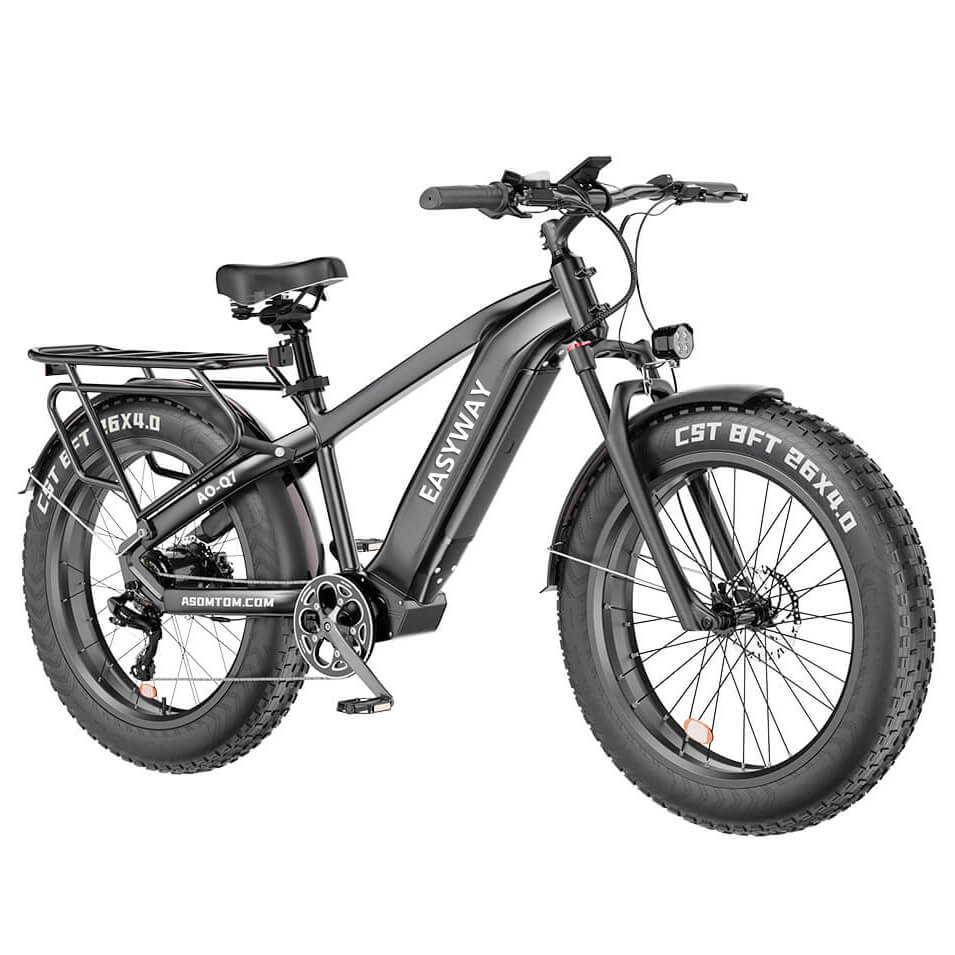
For a product such as the Q7 all-terrain electric bike, for example, a B2B buyer is not purchasing only a 750W motor and a battery. The buyer is sourcing a complete system that includes the frame, BAFANG motor, lithium battery, controller, hydraulic brakes, suspension, tires, display, charger, wiring, packaging and documentation.
The right manufacturer should be able to manage all these elements consistently from the sample stage to mass production.
1. First Check Whether the Supplier Understands B2B Manufacturing
Not every company selling electric bikes online is structured for wholesale or OEM business.
Some suppliers are mainly focused on retail sales. Others may act primarily as intermediaries and outsource most technical and production work.
That is not automatically a problem, but B2B buyers should understand who is actually responsible for:
- Product configuration
- Component sourcing
- Assembly
- Quality inspection
- Certification documentation
- Packaging
- Production scheduling
- Warranty support
A professional OEM electric bike supplier should be able to explain its production process clearly.
For example, the typical project should move through identifiable stages such as:
Requirement confirmation → Product proposal → Quotation → Sample → Sample approval → Mass production → Quality inspection → Packing → Shipment
If a supplier cannot clearly explain what happens between receiving the deposit and shipping the products, that is a warning sign.
Transparency is one of the first indicators of a reliable manufacturing partner.
2. Evaluate Product and Technical Knowledge
A strong electric bike manufacturer should understand more than model numbers.
Its sales and engineering teams should be able to explain how major components work together.
For the Q7, the electrical configuration includes:
- 48V 750W BAFANG brushless hub motor
- 48V 15.6Ah lithium battery
- 48V 25A intelligent controller
- 54.6V 2A charger
- 3.5-inch LCD display
The mechanical system includes:
- Aluminum alloy frame
- 26×4.0-inch fat tires
- Full suspension
- Front and rear hydraulic disc brakes
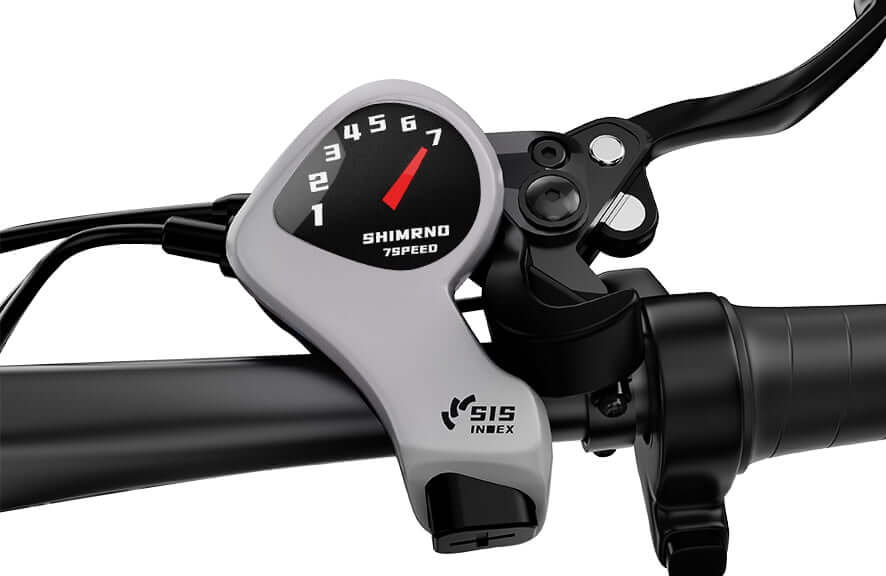
- Shimano 7-speed drivetrain
A supplier should understand why these components are selected and whether changes affect performance, compatibility or compliance.
For example, replacing a battery is not simply a matter of choosing a higher Ah number.
Changing the battery may affect:
- Pack dimensions
- Weight
- Range
- Charging
- Controller compatibility
- Cost
- Certification
- Shipping
Similarly, changing motor power can affect controller selection, vehicle performance and target-market requirements.
A manufacturer that understands these relationships is much more useful to an OEM buyer than a supplier that simply accepts every customization request without technical evaluation.
3. Examine the Manufacturer’s Quality Management Process
Quality control is especially important for wholesale electric bike orders because small inconsistencies become much more expensive at scale.
A problem affecting one retail bicycle may be manageable.
The same problem affecting 100, 500 or 1,000 bicycles can create:
- Customer complaints
- Warranty expenses
- Dealer dissatisfaction
- Replacement-part costs
- Shipping expenses
- Product returns
- Brand reputation damage
Buyers should therefore ask how the supplier controls quality during production.
Useful questions include:
- Are incoming components inspected?
- Are batteries checked before assembly?
- Are motors and controllers tested?
- Is brake performance inspected?
- Are fasteners checked?
- Is the electrical system powered on before packing?
- Is the display tested?
- Are serial numbers recorded?
- Is final inspection documented?
Quality management should be a repeatable process rather than a final visual check before shipment.
The ISO 9001 framework is internationally recognized for quality management and emphasizes controlled processes, performance evaluation and continual improvement.
ISO 9001 Quality Management Systems
4. Do Not Judge a Supplier Only by Its Certificate List
Certification is important, but buyers should avoid choosing an electric bike manufacturer simply because its website displays many certification logos.
The more important questions are:
Which product was tested?
Which configuration does the certificate cover?
Which company is listed on the document?
Is the document still applicable to the model being purchased?
Will OEM changes affect the documented configuration?
This is particularly important for electrical safety standards.
UL 2849, for example, evaluates the electrical systems of e-bikes, including combinations involving the electrical drivetrain, battery and charger.
Therefore, a buyer should distinguish between:
- A certified battery
- A certified charger
- A certified component
- A complete e-bike electrical system evaluated to UL 2849
These are not automatically the same thing.
A professional supplier should be willing to discuss exactly what documentation is available for the selected model.
5. Verify Compliance for the Destination Market
Wholesale buyers should tell the manufacturer their intended market early in the project.
A bike designed for one country may require changes before being sold in another.
Potential differences include:
- Motor configuration
- Maximum assisted speed
- Throttle configuration
- Charger plug
- Lighting
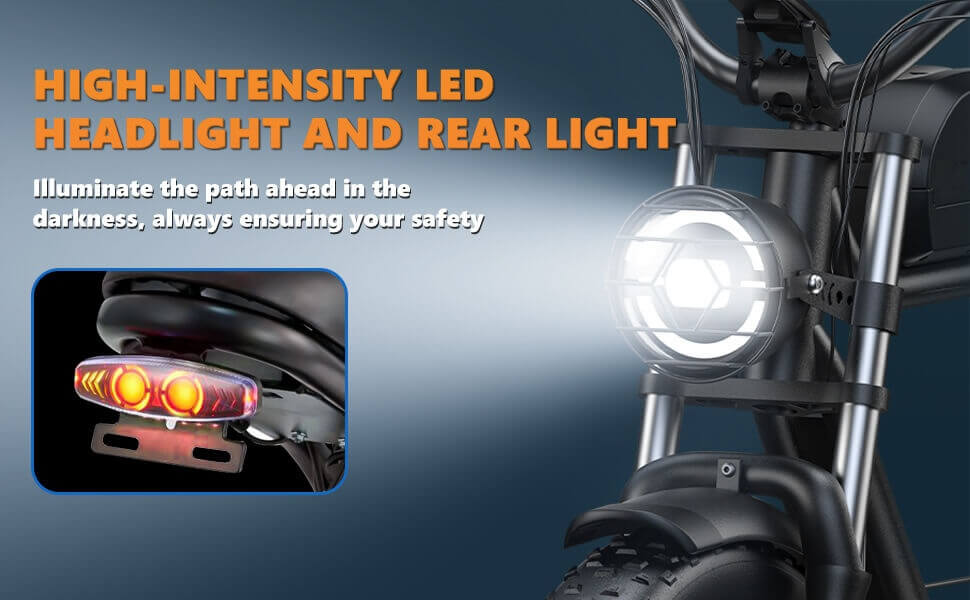
- Reflectors
- Labels
- Manuals
- Battery documentation
- Product testing
- Certification requirements
This is particularly important for private-label and OEM projects.
If the buyer places its own brand on a product, regulatory responsibilities can become more significant depending on the destination market.
For European-market products, for example, the European Commission explains that manufacturers are responsible for identifying applicable requirements, conducting the relevant conformity assessment, preparing technical documentation and issuing the EU Declaration of Conformity where required.
That means a CE logo alone should never replace proper compliance verification.
European Commission – Manufacturer Responsibilities for CE Marking
For international sourcing projects, the safest approach is:
Define the destination market before finalizing the product specification.
6. Ask About OEM and ODM Capabilities
For buyers building their own brand, OEM capability is one of the most important supplier-selection criteria.
However, “OEM supported” can mean very different things depending on the manufacturer.
Basic OEM services may include only:
- Logo stickers
- Frame color
- Carton printing
More complete OEM and ODM services can include:
- Frame color
- Logo
- Decals
- Battery configuration
- Motor specification
- Brake configuration
- Display
- Lighting
- Tire options
- Packaging
- Manuals
- Charger plugs
- Market-specific configurations
Easyway, for example, supports electric bike OEM/ODM projects involving branding, colors, packaging, battery and motor configurations and market-related certificate support depending on the selected model and destination.
Electric Bike OEM and ODM Manufacturing Services
7. Always Use a Sample to Validate the Product
For a new supplier or customized product, moving directly from quotation to a large production order creates unnecessary risk.
A sample gives the buyer an opportunity to evaluate:
- Appearance
- Frame finish
- Motor performance
- Battery
- Range
- Braking
- Suspension
- Display
- Wiring
- Packaging
- Assembly
- Accessories
For OEM projects, the sample is also useful for confirming:
- Logo placement
- Color
- Decals
- Packaging artwork
- Labels
- User manual
- Charger
- Customized components
The approved sample can then become an important reference for mass production.
However, buyers should document the final approved specification rather than relying only on the physical sample.
A good purchase specification should clearly state what was approved.
8. Understand MOQ Before Negotiating the Price
MOQ, or minimum order quantity, is another important part of supplier selection.
A very low MOQ may be attractive to new brands, but customization becomes more difficult when quantities are extremely small.
Manufacturers need to coordinate minimum quantities from upstream suppliers for components such as:
- Frames
- Batteries
- Motors
- Decals
- Cartons
- Saddles
- Tires
- Displays
Easyway’s standard OEM project MOQ is 50 units, while model combinations and customization requirements can be discussed according to the project.
For buyers, the goal should not necessarily be to obtain the lowest possible MOQ.
The better question is:
What quantity allows us to test the market while still receiving a commercially practical OEM configuration?
A 50-unit project can be appropriate for distributors or developing brands that want to validate demand before increasing volume.
9. Compare Total Value, Not Only Unit Price
Suppose Supplier A offers an electric bike for $20 less than Supplier B.
That does not automatically mean Supplier A provides better value.
The buyer should compare what is included.
For example:
- Battery specification
- Motor brand
- Brake type
- Frame material
- Packaging
- Accessories
- Spare parts
- Certification support
- Inspection
- Warranty
- Communication
- Production reliability
A small price difference can quickly disappear if the buyer later needs to replace batteries, resolve quality complaints or air-freight missing spare parts.
For B2B sourcing, total ownership and after-sales cost can be more important than the initial factory price.
The purpose of supplier evaluation is therefore to identify the manufacturer capable of providing the required balance of:
Price + Quality + Compliance + Service + Delivery
10. Ask How Mass Production Is Controlled
One of the biggest B2B sourcing risks is receiving an excellent sample but inconsistent bulk production.
Buyers should therefore ask:
How do you ensure that mass production matches the approved sample?
The manufacturer should control major elements such as:
- Bill of materials
- Motor model
- Battery specification
- Controller
- Display
- Brake system
- Frame color
- Decals
- Accessories
- Packaging
If alternative components may be used because of supply-chain availability, that process should also be communicated clearly.
Unauthorized component substitution is a serious concern because it can affect:
- Performance
- Appearance
- Warranty
- Certification
- Customer expectations
For larger projects, buyers can also request production photos, inspection records or third-party pre-shipment inspection.
11. Check Production Lead Time and Scalability
A supplier may perform well on a 50-unit trial order but struggle when an order grows to 300 or 500 units.
This is why buyers should ask about both current lead time and production scalability.
Important questions include:
- What is the sample lead time?
- What is the mass-production lead time?
- What factors can delay production?
- How early should repeat orders be placed?
- Can the factory handle seasonal demand?
- How are component shortages managed?
Easyway states that its OEM sample production normally takes approximately 7–14 days, while typical OEM mass-production time is around 35–60 days after details are confirmed and the required payment stage is completed, with more complex projects potentially taking longer.
These numbers should be confirmed again for each actual project because production schedules can vary by model, quantity and customization.
12. Evaluate Packaging and Export Experience
A good electric bike can still arrive damaged if packaging is inadequate.
Electric bikes are relatively large, heavy products with components that can be vulnerable during international transportation.
Buyers should examine:
- Carton strength
- Internal protection
- Fork protection
- Display protection
- Battery protection
- Accessory placement
- Packaging dimensions
- Gross weight
- Loading quantity
For OEM buyers, packaging can also serve as a branding tool.
Custom packaging may include:
- Brand logo
- Product model
- Product images
- Barcode
- Shipping marks
- Safety labels
- Localized information
Export experience is therefore another meaningful supplier-selection factor.
13. Check Spare Parts and After-Sales Support
The relationship between a manufacturer and distributor should not end when the container leaves the factory.
Electric bikes contain mechanical and electrical components that may require replacement during normal use.
Before placing an order, buyers should discuss spare parts for items such as:
- Display
- Controller
- Charger
- Brake pads
- Brake components
- Derailleur
- Throttle
- Sensors
- Wiring
- Battery-related components
A reliable supplier should have a clear method for handling technical questions and warranty claims.
For distributors, after-sales support is particularly important because the distributor often becomes the first point of contact for the final customer.
Wholesale Electric Bikes for Distributors and Mobility Brands
14. Red Flags When Choosing an Electric Bike Supplier
Buyers should be cautious if a supplier:
- Cannot explain where the bikes are manufactured
- Frequently changes specifications without explanation
- Refuses to provide available compliance documentation
- Promises that one certificate works in every country
- Cannot identify the battery or motor specification
- Gives unrealistically short lead times
- Avoids sample testing
- Has unclear warranty terms
- Provides inconsistent quotations
- Cannot explain quality inspection procedures
Another warning sign is a supplier that agrees to every technical request immediately.
Professional manufacturers sometimes need to say:
“We need to check whether this configuration is technically or legally suitable.”
That answer can actually indicate stronger engineering discipline.
15. Q7 as an Example of a Wholesale All-Terrain E-Bike
For distributors targeting the all-terrain, outdoor and recreational segments, Q7 provides an example of a product that combines established components with OEM options.
Its main configuration includes:
48V 750W BAFANG brushless hub motor
48V 15.6Ah lithium battery
48V 25A intelligent controller
26×4.0-inch fat tires
Full suspension
Front and rear hydraulic disc brakes
Shimano 7-speed transmission
Aluminum alloy frame
Maximum load: 150 kg
PAS range: approximately 50–70 km
IPX5 water-resistance rating
The standard OEM MOQ starts from 50 units, with customization options that may include branding, frame colors, packaging and other product configurations according to the project.
However, distributors should still confirm the final specifications, documentation and compliance requirements for their own destination market before ordering.
Frequently Asked Questions
How do I find a reliable electric bike manufacturer?
Start by checking production capability, quality-control procedures, technical knowledge, product documentation, OEM services, sample support, manufacturing lead time and after-sales service. Do not make the decision based only on price.
What should I ask an e-bike supplier before ordering?
Ask about motor and battery specifications, MOQ, sample availability, certification documentation, lead time, OEM options, inspection, spare parts, warranty and packaging.
What is a normal MOQ for OEM electric bikes?
MOQ varies between manufacturers and models. Easyway’s standard OEM MOQ is 50 units, while final quantities depend on model combinations and customization requirements.
Should I order an electric bike sample before mass production?
Yes. A sample can help verify product performance, appearance, components, branding and packaging before the bulk order is approved.
Can an electric bike manufacturer customize my brand?
OEM manufacturers can commonly customize logos, colors, decals and packaging. More advanced projects may also involve motor, battery, brake, display and other configuration changes depending on technical feasibility and order quantity.
How can I verify an electric bike certificate?
Ask the supplier for the relevant document and check the manufacturer name, product model, applicable standard, certification body and configuration. When possible, verify it through the certification organization’s official database or contact channel.
Is CE marking the same as a third-party certificate?
No. CE marking is part of the EU conformity framework and should not simply be treated as a generic third-party quality certificate. The applicable conformity assessment, technical documentation and Declaration of Conformity need to match the relevant product requirements.
How long does OEM electric bike production take?
Lead time depends on the model, quantity and customization. Easyway states that standard OEM projects typically take approximately 35–60 days after specifications are finalized and the relevant order requirements are completed.
Final Checklist for Choosing an Electric Bike Manufacturer
Before approving a supplier, a B2B buyer should be able to answer:
Can the supplier explain the product technically?
Can it provide consistent samples and mass production?
Does it have a repeatable quality-control process?
Can it provide the relevant certification and compliance documents?
Can it customize the product for my brand and market?
Are MOQ and lead time suitable for my business?
Does it provide spare parts and after-sales support?
Can it support future repeat orders as my business grows?
If the answer to these questions is clear, the buyer is in a much stronger position to build a sustainable supplier relationship.
A reliable electric bike manufacturer should not simply sell a bike.
It should help the buyer manage the complete process from product selection and sample validation to customization, mass production, quality control, documentation and export delivery.
For distributors, importers and emerging e-bike brands, this manufacturing capability can ultimately be more valuable than choosing the lowest quotation.
Contact Easyway for Electric Bike Wholesale and OEM Projects