
How to Start an Electric Bike OEM Project: From Product Idea to Mass Production

Meta Description: Learn how to start an electric bike OEM project from product planning and sample development to customization, certification, quality control and mass production.
How to Start an Electric Bike OEM Project
Starting an electric bike OEM project can be an attractive opportunity for distributors, retailers, mobility brands and entrepreneurs that want to build their own product line.
However, successful OEM production is not simply a matter of putting a logo on an existing electric bike.
A complete OEM project may involve:
- Market positioning
- Product selection
- Technical specifications
- Battery and motor configuration
- Branding
- Frame and color customization
- Packaging
- Certification
- Sample development
- Quality control
- Mass production
- Shipping
- After-sales support
The most effective approach is to treat OEM as a step-by-step product development process.
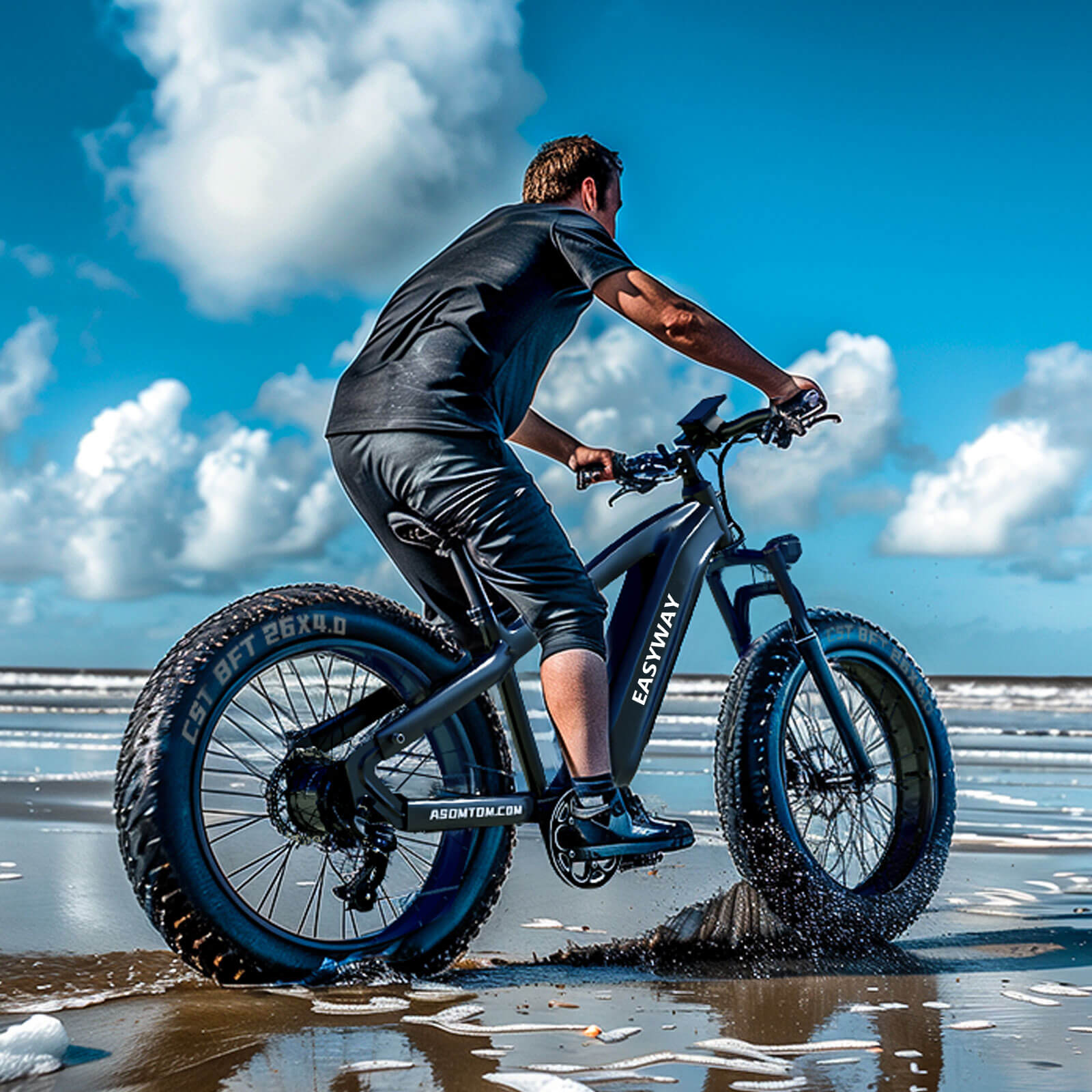
For example, the Q7 all-terrain electric bike can be used as a starting platform for a project requiring a 48V 750W BAFANG motor, 48V 15.6Ah lithium battery, 26×4.0 fat tires, full suspension, hydraulic disc brakes and Shimano 7-speed transmission.
But before mass production begins, the buyer and manufacturer need to agree on exactly what the final product will be.
1. Start With the Target Market
The first step in an electric bike OEM project should not be choosing a motor.
It should be defining who will buy and use the product.
Different customer groups may have completely different requirements.
For example:
Urban Commuters
They may prioritize:
- Comfortable riding
- Practical range
- Low maintenance
- Integrated lighting
- Easy storage
- Road-friendly specifications
Outdoor Riders
They may prioritize:
- Suspension
- Fat tires
- Motor power
- Hydraulic brakes
- Battery capacity
- Frame durability
Rental Operators
They may prioritize:
- Durability
- Easy maintenance
- Theft prevention
- Replaceable components
- Fleet management
- Consistent specifications
Distributors and Retail Brands
They may prioritize:
- Competitive wholesale pricing
- Brand customization
- Packaging
- Certification
- Stable supply
- Spare parts
Therefore, the first OEM question should be:
What problem is this electric bike supposed to solve?
Once the answer is clear, the product specification becomes much easier to define.
2. Define the Product Positioning
After identifying the target customer, the buyer should define the product category.
For example:
- City electric bike
- Mountain electric bike
- Fat tire electric bike
- Cargo electric bike
- Folding electric bike
- Commuter e-bike
- All-terrain electric bike
The Q7 is positioned as an all-terrain / mountain electric bike.
Its configuration supports this positioning through:
26×4.0-inch fat tires
Full suspension
48V 750W BAFANG motor
Hydraulic disc brakes
48V 15.6Ah battery
Shimano 7-speed transmission
This combination creates a product concept rather than a collection of unrelated specifications.
A successful OEM project should follow the same principle:
Product positioning → customer requirements → technical configuration.
3. Build the Initial Technical Specification
Once the product concept is defined, the buyer and manufacturer can create a preliminary specification sheet.
For an electric bike, this usually includes:
Motor
- Rated power
- Voltage
- Motor type
- Hub or mid-drive
- Brand
- Torque
- Controller compatibility
Battery
- Voltage
- Ah capacity
- Cell type
- Battery format
- Removability
- BMS
- Charger
Frame
- Material
- Frame size
- Geometry
- Maximum load
- Color
- Logo position
Mechanical Components
- Tires
- Brakes
- Fork
- Rear suspension
- Gears
- Saddle
- Pedals
- Handlebar
Electronics
- Controller
- Display
- PAS
- Throttle
- Lighting
- Wiring
At this stage, the specification does not have to be perfect.
The goal is to create a clear starting point for engineering discussion.
4. Confirm Which Specifications Are Customizable
Not every component should be customized simply because customization is technically possible.
Every change can affect:
- Cost
- MOQ
- Lead time
- Performance
- Compatibility
- Certification
- Spare parts
- Packaging
For example, changing the frame color is usually much simpler than changing the battery architecture.
Changing the motor may require a different controller.
Changing the battery may require changes to the charger, battery case or wiring.
Changing the maximum speed may also affect the product’s legal classification in the destination market.
Therefore, OEM customization should be divided into levels.
Basic Customization
Usually includes:
- Logo
- Decals
- Frame color
- Packaging
- User manual
Medium Customization
May include:
- Display
- Lighting
- Tires
- Saddle
- Accessories
- Charger plug
- Battery capacity
Advanced Customization
May involve:
- Frame design
- Motor
- Battery architecture
- Controller
- Electrical system
- Geometry
The more extensive the changes, the more important engineering validation becomes.
5. Discuss Compliance Before Finalizing the Product
Certification should not be treated as something added after production.
It should be considered during product development.
This is particularly important for OEM projects because changing components after certification or testing may require additional evaluation.
For the European Economic Area, the European Commission explains that manufacturers need to identify applicable EU legislation and standards, verify product-specific requirements, carry out the applicable conformity assessment, prepare technical documentation and issue an EU Declaration of Conformity where required.
This means an OEM buyer should tell the manufacturer the target market before the final specification is locked.
For example:
United States
may require one set of product and electrical safety considerations.
European markets
may involve CE-related conformity requirements and applicable standards.
Other markets may have their own:
- Speed requirements
- Power limits
- Charger requirements
- Labeling
- Battery rules
- Documentation
- Testing requirements
Important OEM Principle
Do not finalize the product first and ask about compliance later.
Instead:
Target market → applicable requirements → product configuration → testing/documentation → mass production
European Commission – CE Marking for Manufacturers
6. Develop the First Sample
Once the technical specification is confirmed, the next step is usually sample development.
The purpose of an OEM sample is not only to create a product that looks good.
It should allow the buyer to verify whether the specification works in the real world.
The sample can be evaluated for:
- Appearance
- Riding position
- Motor performance
- Battery installation
- Charging
- Braking
- Suspension
- Tire performance
- Display
- Wiring
- Frame finish
- Logo
- Color
- Packaging
For a Q7-based OEM project, the sample can also be used to confirm details such as:
- 48V 750W BAFANG motor
- 48V 15.6Ah battery
- 26×4.0 tires
- Hydraulic brakes
- Full suspension
- Shimano 7-speed system
The buyer should record any changes after sample testing.
This creates a clear transition from:
Prototype → Approved Sample → Mass Production
7. Test the Sample Before Approving Mass Production
Sample approval should be based on actual evaluation rather than appearance alone.
A professional sample review can include:
Mechanical Testing
Check:
- Frame
- Fork
- Wheels
- Brakes
- Suspension
- Tires
- Gears
Electrical Testing
Check:
- Motor
- Battery
- Controller
- Charger
- Display
- PAS
- Throttle if applicable
- Wiring
Riding Testing
Evaluate:
- Acceleration
- Braking
- Stability
- Comfort
- Hill performance
- Handling
- Range
Documentation Testing
Verify:
- Labels
- User manual
- Charger information
- Product specifications
- Certification documents where applicable
For B2B buyers, it is useful to create a formal sample approval checklist.
That document can become the reference for production.
8. Confirm Branding and Packaging
Branding is one of the most visible parts of an OEM project.
A private-label electric bike can include branding on:
- Frame
- Battery
- Display
- Decals
- Saddle
- Packaging
- User manual
- Accessories
Packaging should also be considered part of the product experience.
A professional OEM package may include:
- Brand logo
- Product model
- Product information
- Barcode
- Shipping marks
- Safety information
- Installation instructions
For distributors, customized packaging can make a significant difference when products are sold through retail stores or online channels.
9. Confirm the Bill of Materials
Before mass production, the buyer and manufacturer should agree on the final Bill of Materials, commonly called the BOM.
The BOM should define the actual components used in the approved product.
For example:
- Motor model
- Battery model
- Controller
- Charger
- Display
- Brake system
- Tires
- Fork
- Rear shock
- Derailleur
- Frame
- Saddle
- Pedals
- Accessories
This is extremely important because a product can look almost identical while containing different internal components.
The BOM helps reduce uncertainty and prevents unauthorized substitutions.
If a component becomes unavailable, the manufacturer should communicate the proposed replacement and evaluate whether it affects:
- Performance
- Price
- Certification
- Appearance
- Compatibility
For larger OEM projects, BOM control is one of the foundations of consistent mass production.
10. Establish Quality Control Before Production
Mass production should not begin with the assumption that the approved sample will automatically be reproduced perfectly.
Quality control should be planned in advance.
A typical production quality process may include:
Incoming Component Inspection
↓
Assembly Inspection
↓
Electrical Testing
↓
Mechanical Testing
↓
Road/Riding Test Where Applicable
↓
Final Inspection
↓
Packaging Inspection
↓
Pre-Shipment Inspection
A quality management system helps manufacturers create repeatable processes rather than relying only on individual workers.
ISO describes ISO 9001 as a globally recognized quality management standard covering the establishment, implementation, maintenance and continual improvement of a quality management system.
ISO 9001 Quality Management Systems
11. Manage Battery and Product Documentation Carefully
Battery documentation is becoming increasingly important for international electric bike projects.
For OEM buyers, the battery should not be treated as just another accessory.
The project should clearly identify:
- Battery voltage
- Capacity
- Cell type
- Battery configuration
- BMS
- Charger
- Charging specifications
- Transport documentation where applicable
- Market-specific requirements
For projects targeting Europe, battery-related rules are also evolving.
In July 2026, the European Commission published guidance concerning the removability and replaceability provisions for portable and light means of transport batteries under the EU Batteries Regulation.
This illustrates an important principle for OEM buyers:
Regulatory requirements can change during the lifetime of a product.
Therefore, manufacturers and brands should review applicable requirements before each major product launch rather than relying indefinitely on old documentation.
European Commission – EU Battery Regulation and Battery Requirements
12. Confirm MOQ and Production Lead Time
Once the sample is approved, the buyer needs to confirm the commercial production conditions.
Important items include:
- MOQ
- Unit price
- Payment terms
- Production lead time
- Packaging cost
- Spare parts
- Shipping terms
- Inspection requirements
For Q7 OEM projects, Easyway’s standard OEM MOQ is 50 units, while actual requirements can depend on customization and configuration.
The company also states that OEM sample production normally takes around 7–14 days, while typical OEM production is approximately 35–60 days after product details are confirmed and the relevant order requirements are completed.
Actual production time should always be reconfirmed based on:
- Quantity
- Customization
- Component availability
- Certification requirements
- Packaging
- Production schedule
Easyway Electric Bike OEM & ODM Services
13. Move From Sample to Mass Production
Once all specifications have been approved, the project can move into mass production.
At this stage, the buyer should have a finalized package containing:
- Approved sample
- BOM
- Technical specifications
- Branding files
- Packaging artwork
- Labels
- User manual
- Charger specification
- Certification documentation
- QC requirements
- Commercial order
This documentation creates a single reference point for the project.
The more detailed the documentation, the lower the risk of misunderstanding during production.
For repeat orders, the same system can also make it easier to maintain consistency.
14. Inspect Before Shipment
Before shipment, buyers can use several inspection methods.
Factory Inspection
The buyer or appointed inspector checks the goods at the manufacturing facility.
Pre-Shipment Inspection
A defined percentage of products is randomly inspected before shipment.
Functional Testing
Selected units are checked for:
- Power-on
- Display
- Motor
- Brakes
- Lights
- Battery
- Charger
- Electrical functions
Packaging Inspection
Inspect:
- Carton
- Accessories
- Labels
- Manuals
- Shipping marks
For larger orders, independent third-party inspection can also be considered.
The exact inspection method should depend on order size, product complexity and the buyer’s quality requirements.
15. Prepare for After-Sales Support
OEM does not end when the container is shipped.
The next stage is customer support.
Before the first mass order leaves the factory, the buyer should understand:
- Warranty policy
- Spare parts availability
- Troubleshooting
- Battery replacement
- Controller replacement
- Display replacement
- Brake maintenance
- Technical support
For distributors, having spare parts available can significantly reduce customer downtime.
A manufacturer that can support the product after shipment provides greater long-term value than a supplier focused only on the initial order.
Wholesale Electric Bikes for Distributors and Brands
16. Protect Your Brand With a Standardized OEM Process
One major advantage of OEM manufacturing is the ability to build a recognizable product line.
But brand consistency requires more than putting a logo on the frame.
The manufacturer should consistently reproduce:
- Product appearance
- Colors
- Components
- Packaging
- Product specifications
- Performance
- User documentation
For a growing brand, this consistency becomes increasingly important.
A customer who purchases the same model six months later should receive essentially the same product configuration unless a documented improvement has been agreed.
That is why BOM control, sample approval and production QC become increasingly valuable as order volume grows.
17. A Practical Electric Bike OEM Workflow
A simple OEM workflow can be summarized as follows:
Step 1 — Define the Market
Identify the target customer, country and product category.
Step 2 — Select the Product Platform
Choose an existing model or begin a new product-development project.
Step 3 — Confirm Specifications
Define motor, battery, controller, frame, brakes, tires and other components.
Step 4 — Confirm Compliance
Identify applicable regulations, standards and documentation for the target market.
Step 5 — Develop the Sample
Produce and evaluate the first customized unit.
Step 6 — Approve the Sample
Confirm appearance, performance, branding and specifications.
Step 7 — Finalize BOM and Packaging
Create the production reference documents.
Step 8 — Start Mass Production
Manufacture according to the approved specification.
Step 9 — Conduct QC
Inspect electrical, mechanical, cosmetic and packaging quality.
Step 10 — Ship and Support
Complete export logistics and establish after-sales support.
This structured approach makes OEM projects easier to manage and reduces avoidable production risks.
Frequently Asked Questions
What is an electric bike OEM project?
An electric bike OEM project is a manufacturing project where a buyer works with a manufacturer to produce electric bikes under the buyer’s brand or according to customized specifications.
How much customization is possible?
Customization can range from logos and colors to packaging, battery, motor, display and other components. More extensive changes require additional engineering evaluation and may affect MOQ, cost, lead time and compliance.
Should I make a sample before mass production?
Yes. A sample provides an opportunity to verify product performance, appearance, branding and specifications before committing to a larger production order.
What information should I provide to an OEM manufacturer?
At minimum, provide the target market, product category, desired quantity, technical requirements, branding requirements and preferred delivery timeline.
What is the MOQ for Q7 OEM?
Easyway’s standard OEM MOQ for Q7-related projects starts at approximately 50 units, subject to final customization and configuration.
How long does an electric bike OEM project take?
The timeline depends on whether the project uses an existing model or requires substantial engineering changes. Sample production and mass production should be planned separately, and certification requirements can also affect the schedule.
Does changing the battery affect certification?
It can. Changing major electrical components may affect the documented product configuration and therefore should be evaluated before production.
Can I sell the OEM electric bike under my own brand?
Yes, OEM projects are commonly used by distributors and brands to sell products under their own branding. However, the legal and compliance responsibilities of the brand owner or importer depend on the destination market and how the product is placed on the market.
For example, the European Commission states that importers and distributors have specific obligations, and an importer or distributor marketing a product under its own name may take on manufacturer responsibilities under applicable EU rules.
Conclusion: Build the OEM Project Step by Step
A successful electric bike OEM project should not begin with:
“How low can you make the price?”
It should begin with:
“What product does my market need?”
From there, the project can move through:
Market → Product → Specification → Compliance → Sample → Testing → Branding → BOM → Mass Production → QC → Shipment → After-Sales
This structured process helps reduce mistakes and creates a clearer relationship between the buyer and manufacturer.
For an existing platform such as the Q7, buyers can start with a proven configuration featuring a 48V 750W BAFANG motor, 48V 15.6Ah lithium battery, 26×4.0 fat tires, full suspension and hydraulic disc brakes, then discuss the level of customization required for their market.
The key to successful OEM manufacturing is not simply finding a factory that can put your logo on an electric bike.
It is finding a manufacturing partner that can help turn your market idea into a clearly defined, tested, documented and consistently produced product.
Contact Easyway to Start Your Electric Bike OEM Project
If your project is still at the product-planning stage, the best next step is to prepare a clear specification covering target market, product type, quantity, motor, battery, branding and certification requirements before requesting a final OEM quotation.